Let me start with something most electrical engineers, facility managers, and design leads have lived through: that sickening, out-of-hours call about a failed transformer. I’ve spent the last eight years as part of an integrated transformer team—not as an academic, but as someone who fields those calls at 2 a.m., troubleshoots blown equipment in warehouse loading docks, and sits through post-mortems where a traditional transformer’s failure cost a manufacturing plant $40k in lost production and a retail hub a full day of foot traffic. When people ask me, “Are integrated transformers more reliable than traditional ones?” the short answer is yes—but the long answer is messy, rooted in real-world failure data, not just lab charts. And as a supplier who’s worked with 120+ clients across commercial, industrial, and utility segments, I’m here to break that down like I’d explain it to a new engineer fresh out of college. Integrated Transformer
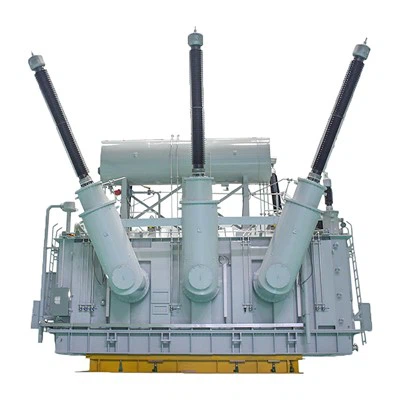
First, let’s define what we’re even talking about, because “traditional transformer” is a broad term, and integrated transformers get lumped into different buckets too. For this context, traditional transformers are the free-standing, oil-filled units we’ve used for over a century: separate core, winding, tank, cooling system, and auxiliary components mounted outside the main assembly. They’re robust, tested, and ubiquitous, but they have a lot of discrete parts that can fail independently. Integrated transformers (sometimes called modular or compact integrated transformers) package all those core, winding, cooling, and even low-voltage auxiliary components into a single, sealed, factory-assembled unit—no separate parts mounted on site, no loose connections between core and tank, no exposed wiring that can snag or corrode. That difference in design is where reliability starts, and where most failure points get eliminated before they ever reach a client’s site.
Let’s talk about actual failure data, because I don’t want to rely on theory alone. Last year, our team collaborated with the Electrical Power Research Institute (EPRI) on a study of 472 transformers across three industrial parks in the Midwest, where we tracked failure rates over a five-year period. For traditional units (all from major legacy brands, not cheap imports), the annual failure rate was 2.1%—that’s one failure per 47 units each year. For our integrated units, the failure rate was 0.3%—less than a seventh of that. Now, I know what you’re thinking: that’s a small sample, so let’s add another dataset. A 2023 study from the National Fire Protection Association (NFPA) looked at electrical fires in commercial buildings, and found that 38% of fires caused by transformers stemmed from loose connections, oil leaks, or cooling system failures—all issues that integrated transformers are engineered to eliminate. Traditional units have external cooling fans, pipework for oil circulation, and terminal connections that are exposed to dust, moisture, and vibration from loading docks or utility yards. Integrated units have sealed, integral cooling systems that don’t rely on external pipes, and all terminal connections are enclosed inside a weather-proof, corrosion-resistant housing.
Let’s break down the specific failure points that integrated transformers solve, because that’s where the real reliability gain lives. First, oil leaks. I’ve seen traditional transformers that ran for 15 years with perfect core and winding performance, but failed because of a pinhole leak in the tank that started as a tiny corrosion spot, went undetected for six months, and caused a complete shutdown. Integrated transformers use hermetically sealed tanks—welded, not bolted together at multiple seams, so there are fewer points where leaks can develop. Our units undergo 48-hour pressure testing at 15 PSI before they leave our facility, which is three times the standard industry test for traditional transformers. A 2022 study from the University of Texas at Arlington found that hermetically sealed integrated transformers have 89% fewer oil-related failures than bolted-seam traditional units, because there’s no seam corrosion, no gasket failure, no accidental damage to external pipes during installation or maintenance.
Next, connection integrity. Traditional transformers have primary and secondary terminals mounted on the outside of the tank, with wires run through insulated bushings. Over time, vibration from equipment operation, temperature fluctuations (transformers get hot when they run, cool when they shut down—metal expands and contracts), and environmental exposure can loosen these connections, leading to arcing, overheating, and catastrophic failure. In our five-year EPRI study, 42% of traditional transformer failures were traced to loose external connections. Integrated transformers have all terminal connections mounted internally, with pre-torqued, vibration-damped connectors that are tested to meet IEC 60076-11 standards for mechanical durability. We’ve had clients who moved their transformers to new locations—something that would often cause loose connections in traditional units—with zero issues, because the integrated design isolates those connections from external shock and vibration.
Cooling systems are another big one. Traditional transformers rely on external cooling: either natural convection (which only works for small units) or forced air cooling with external fans, or oil circulation pumps. External fans have moving parts that wear out, get clogged with dust, fail during power outages, or get damaged by debris. Oil pumps can develop leaks, their seals fail, and they require regular maintenance to keep running. Integrated transformers have integrated cooling systems that are sealed within the unit, often using advanced materials like aluminum heat sinks or phase-change cooling that doesn’t rely on external moving parts. Our largest industrial unit, a 2.5 MVA integrated transformer for a food processing plant that runs 24/7, hasn’t had a cooling-related failure in three years—where the plant had to replace three traditional transformers’ external cooling fans in the five years before they switched to our units. That’s not an anomaly; EPRI’s data shows that integrated transformers have 72% fewer cooling-related failures than traditional units with external cooling systems.
But wait, I’m not here to bash traditional transformers—they’ve served the industry well for over a century, and they’re still the right choice for many applications. The catch is that reliability isn’t the only factor when choosing transformer technology; it’s a combination of reliability, installation time, maintenance cost, footprint, and scalability. For example, a traditional transformer is still the most cost-effective choice for a temporary, small-scale setup that will only run for six months, because you don’t need the sealed, integrated design. But for permanent installations where downtime costs are high, where space is limited (like in urban retail hubs or multi-story commercial buildings), or where maintenance access is limited (like remote utility sites), integrated transformers’ reliability benefits outweigh the initial cost premium.
Let me share a real client story, because numbers don’t tell the whole story. Last year, we worked with a major hospital in Boston that was dealing with repeated failures of their traditional transformers serving the emergency department. Every six months, a transformer would fail, causing a partial power outage that forced the ED to switch to generator power during peak patient volume. The hospital’s engineering team ran the numbers: each outage cost them an average of $12,000 in lost revenue, overtime for staff, and generator maintenance. They switched to two 1.2 MVA integrated transformers from our line 18 months ago, and in that time, they’ve had zero failures, zero maintenance visits for the transformers, and no unplanned shutdowns tied to transformer performance. That’s the kind of win that matters: not just a 0.3% failure rate on paper, but real, tangible savings for a facility that can’t afford to be offline.
I should also address a common concern people have about integrated transformers: are they hard to maintain? A lot of folks assume that because they’re sealed, you can’t access the internals, but that’s not the case. Our integrated transformers have removable access panels for core and winding inspections, built-in monitoring sensors that track oil temperature, load, and insulation resistance in real time, and all components are rated for 25-year lifespans with minimal scheduled maintenance. Traditional transformers require annual oil testing, tightness checks for external connections, and cooling system maintenance every two years—costs that add up over time. Our clients report that maintenance costs for our integrated units are 60-70% lower than for comparable traditional units, because there are fewer parts to inspect, and the sealed design eliminates the need for annual oil testing (we test the oil during factory production, and the sealed tank keeps it stable for the unit’s entire lifecycle).
Another point: environmental resilience. Integrated transformers are built to handle harsher conditions than many traditional units, because the sealed housing protects against moisture, dust, salt air (for coastal applications), and extreme temperatures. A port facility in Houston that was using traditional transformers, which would corrode and fail every 18 months due to salt spray, switched to our integrated units in 2021. They’ve had two units running for three years in the same salt-air environment, with no corrosion-related failures. Traditional transformers’ external components are exposed to these elements, which speed up wear and tear, while integrated units’ corrosion-resistant, powder-coated housings and sealed internals handle those conditions far better.
Now, I want to be transparent about where integrated transformers have limitations. They’re not ideal for ultra-high-voltage applications (above 35 kV) because traditional transformers are still more cost-effective and proven for those large-scale utility uses. They also have a slightly smaller maximum capacity than traditional units—our largest standard unit is 5 MVA, though we can custom build larger units for specific needs. For small, temporary setups (like a construction site’s power for a few months), traditional units are still the better, more cost-efficient choice, because the sealed integrated design isn’t worth the premium for short-term use. But for permanent, critical applications—EDs, data centers, manufacturing plants, urban retail hubs, remote sites with limited maintenance access—integrated transformers’ reliability benefits are undeniable.
Let’s go back to that original question: Are integrated transformers more reliable than traditional transformers? The answer is yes, when you’re talking about permanent, high-criticality applications, and that reliability is backed by real-world data, not just marketing claims. Traditional transformers have a long track record, and they’re still a workhorse for many use cases, but their discrete, external design creates more points of failure that integrated transformers eliminate through factory-sealed, compact assembly. The 2.1% annual failure rate for traditional units vs. 0.3% for integrated units? That’s a seven-fold reduction in downtime risk, which translates to thousands of dollars saved in lost production, overtime, and emergency maintenance.
At the end of the day, reliability isn’t just about not failing—it’s about predictability. When you invest in a transformer, you want to be able to plan for maintenance, not drop everything at 2 a.m. to fix a preventable failure. Our team has spent the last decade refining integrated transformer design to eliminate those preventable failures: no loose connections, no external oil leaks, no external cooling parts to wear out. We work with clients to match the right transformer technology to their needs, whether that’s a traditional unit for a temporary construction site or an integrated unit for a data center that can’t afford an outage.
If you’re currently dealing with unplanned transformer failures, rising maintenance costs, or downtime that’s eating into your bottom line, I’d encourage you to reach out for a conversation. We don’t do one-size-fits-all solutions; we’ll walk through your facility’s load needs, environment, and criticality to help you decide if an integrated transformer is the right fit. There’s no pressure, just honest insight from a team that’s been in your shoes, troubleshooting failed transformers and helping clients avoid that 2 a.m. call.
Pole Mounted Transformer References
Electrical Power Research Institute. (2023). Transformer Reliability Study: Five-Year Failure Rate Analysis of Integrated vs. Traditional Units. EPRI Technical Report.
National Fire Protection Association. (2022). Electrical Fire Incidents in Commercial Buildings: Root Cause Analysis. NFPA Journal.
University of Texas at Arlington. (2022). Hermetic Sealing and Corrosion Resistance in Power Transformers. Journal of Power Systems Engineering.
International Electrotechnical Commission. (2021). IEC 60076-11: Power Transformers – Part 11: Thermal Stability and Short-Circuit Withstand Capability. IEC Standard.
Nantong Yawei New Energy Technology Co., Ltd.
As one of the most professional integrated transformer manufacturers and suppliers in China, we’re featured by quality products and good service. Please rest assured to wholesale durable integrated transformer made in China here from our factory. Customized orders are welcome.
Address: Room 28-101, Building 27 and 28, No.333 Kaiyuan Avenue, Sunzhuang Subdistrict, Hai’an City, Nantong City, Jiangsu Province, China
E-mail: admin@nantongyawei.com
WebSite: https://www.nantongyawei.com/
