If you’ve ever walked a construction site, remodeled a kitchen, or tried to cut through a concrete countertop, you’ve probably held a diamond saw blade in your hands without even realizing it. As someone who’s spent the last 12 years working for a diamond saw blade supplier—helping contractors, masons, and DIYers pick the right tool for the job—I’ve lost count of how many times someone has asked me: “What’s the difference between wet and dry diamond saw blades?” It’s not a trivial question. Pick the wrong one, and you’ll struggle through a cut, wear out your blade in half the time, or even put yourself at risk from dust or overheating. Let’s break this down the way I do when I’m standing in front of a work trailer, not some fancy textbook. Diamond Saw Blade
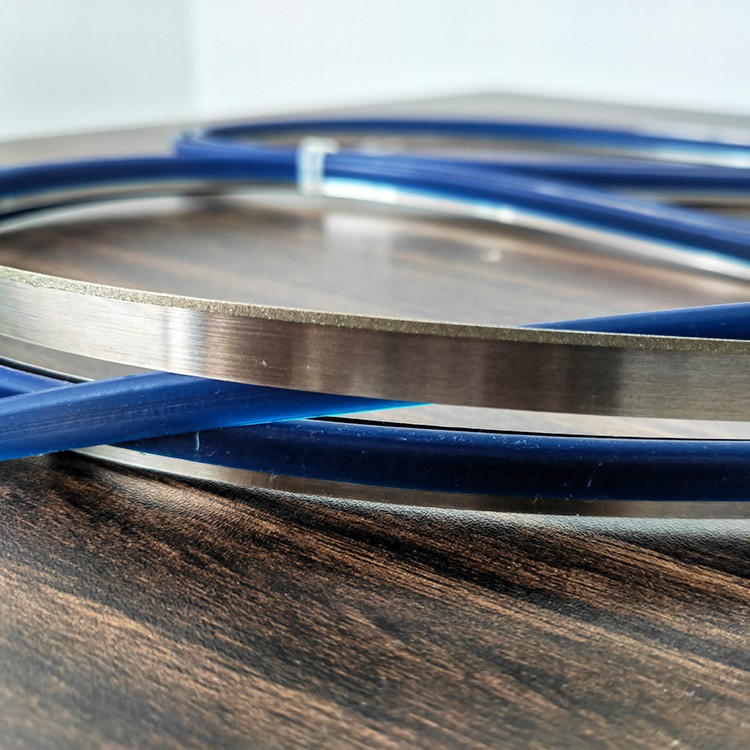
First, let’s start with the basics: every diamond saw blade has two core parts. There’s the steel core, which is the round, flexible wheel that spins in the saw, and the diamond-tipped segments welded to its edge. Those segments are where the magic happens—they’re coated with tiny industrial diamonds that act like tiny cutting teeth. The difference between wet and dry blades boils down to how those diamonds stay sharp, how the blade cools, and what you’re cutting through. That might sound simple, but it’s tied to every detail of the blade’s design, from the diamond size to the bond holding the segments in place.
Let’s talk about wet saw blades first, because that’s what we sell most of for concrete and tile work. If you’ve ever watched a mason cut cinder blocks or a tiler trim a marble countertop, they’re almost always hosing water on the cut line as they go. That’s not just to keep the dust down (though that’s a big part of it). Wet blades are designed to run submerged in a continuous stream of water. Here’s why: when a diamond blade spins at 3,000 to 5,000 RPM, the friction between the diamonds and the hard material they’re cutting generates a ton of heat. Too much heat, and the steel core warps, the diamond crystals melt, and the blade becomes useless in minutes. Water acts as a coolant first, pulling that heat away fast enough to keep the blade stable. It also acts as a lubricant, reducing the friction between the cut material and the diamonds, so the blade doesn’t have to work as hard.
But the water does something else too, that’s specific to how diamonds stay sharp. The segments on a wet blade use a softer bond material—think of it like a slightly soft metal mix—that wears away slowly as you cut. As the bond wears, it exposes new, sharp diamonds from the inside of the segment. If the bond was too hard, the diamonds would get dull and embedded in the material, and the blade would just slide instead of cut. The water helps flush away the tiny bits of debris from the cut, too, so the bond can wear evenly without gunking up.
Wet blades aren’t one-size-fits-all. I remember a contractor who tried to use our general-purpose wet blade to cut granite, and he burned through three blades in a week. It turns out we have specific wet blades for natural stone that use smaller, more durable diamonds and a slightly harder bond than concrete blades. Granite is way denser than cinder block, so the bond can’t wear too fast—otherwise the diamonds would fall out before they could do any cutting. For tile, on the other hand, we have wet blades with even smaller diamonds, because you need a super clean cut without chipping the glaze. The wrong blade here means a ruined $50 tile, which is a waste no one can afford.
Now for dry blades, which I see people mix up all the time. Dry blades don’t use water at all. They’re designed to cut without any coolant, usually for jobs where bringing a hose isn’t practical—like cutting concrete on a rooftop, trimming a brick wall in a basement, or cutting asphalt for a pipe line repair in the middle of a street. If you tried to run a wet blade dry, it would overheat so fast the steel core would crack in half before you finished a 10-foot cut. Dry blades have to handle that heat, so their design is totally different.
First, dry blades use a steel core that’s thicker and has slots or vents cut into it. Those vents let air circulate around the blade while it’s spinning, acting like a built-in cooling system. No water needed there. The segments on a dry blade have a harder bond, too—again, think stiffer metal—to resist wearing too fast without water. Wait, you might wonder: if the bond is harder, how do the diamonds stay exposed? That’s where the magic of the segment design comes in. Dry blade segments are usually wider, and they have gaps between them called gullets that let the material debris escape. Without water to flush that debris, the gaps act like little trash chutes, so the diamonds aren’t clogged up. The bond wears just enough to expose new diamonds, but the hard material means it can stand up to the heat without melting.
But here’s the catch with dry blades: they generate a lot of silica dust. Silica is the tiny particle in concrete, granite, and brick that causes lung disease if you breathe too much of it over time. When you run a dry blade, that dust gets kicked up straight into the air, and without a water stream to weigh it down, it stays suspended for hours. We always tell contractors using dry blades to wear a N95 respirator at minimum, and a full-face respirator if they’re cutting for more than 15 minutes at a time. A lot of DIYers don’t realize this—they buy a cheap dry blade for a one-time project and end up with dust in their lungs they’ll deal with for decades. That’s why we emphasize to every customer that if you can bring water, a wet blade is safer and more efficient, even if it’s just a short hose.
Now, let’s talk about what happens when you mix these two up. I had a client last year who tried to use a dry blade to cut a 4-inch concrete foundation wall. He got about 2 feet into the cut before the blade started smoking. By the time he shut the saw off, the steel core was warped so bad he couldn’t even get the blade off the arbor. He spent twice as much on a new blade and a new core for his saw than if he’d just grabbed a wet one. Another time, a tiler used a wet blade on dry tile work, no hose. The blade overheated in 10 minutes, the glaze on the tile cracked, and he had to replace an entire backsplash. These aren’t just small mistakes—they cost people time, money, and even health.
There are a few other key differences that people don’t talk about as much. Wet blades are usually cheaper per square foot of cut. Because they don’t have to handle the extra heat stress, the segments are more efficient, and they last longer when used correctly. A good wet blade will cut 100 to 150 linear feet of concrete, while a dry blade might only get 50 to 75 feet. Dry blades are more versatile, though—you can use them for a little bit of masonry, a little bit of asphalt, even stucco, whereas wet blades are designed for specific materials. That versatility makes them popular for emergency repairs where you don’t know exactly what you’re cutting into, like a burst water line under a sidewalk.
Wait, what about hybrid blades? I get asked about these all the time. They’re supposed to work wet or dry, so people think they’re the best of both worlds. In reality, they’re a compromise. We only recommend hybrid blades for very light jobs, like cutting thin pavers or thin concrete slabs. If you’re doing heavy work—like a foundation cut or a 2-inch marble countertop—hybrid blades will wear out faster than a dedicated wet or dry blade. Their bond and diamond size aren’t optimized for either condition, so you end up paying more for a blade that doesn’t perform as well. That’s a mistake I see a lot of new contractors make, trying to save a few bucks on a hybrid instead of buying the right tool for the job.
Let me also talk about how our team designs these blades, because that’s where the science meets the real world. We don’t just pick a diamond size and a bond and call it a day. We test every blade on real jobs, not just in a lab. For wet blades, we run them for hours on a concrete mix that’s typical for residential construction, measuring heat levels every 10 minutes. If the heat creeps above 180 degrees, we adjust the bond to wear a little faster so the diamonds stay sharp and the friction stays low. For dry blades, we test them in high-temperature environments—like 90-degree weather on a rooftop, where air flow is low—to make sure the vents still cool the blade enough. We also test dust output, because at the end of the day, safety is non-negotiable. A blade that cuts fast but sends a ton of silica into the air isn’t a good blade.
I’ve been in this industry long enough to see how much the technology has changed. Ten years ago, dry blades were way worse—they wore out in half the time they do now, and the dust was way more concentrated. Now, we use a denser diamond matrix and better vent design that cuts dust by about 30% without losing cutting speed. Wet blades used to only be for tile and concrete, but now we have wet blades that cut natural stone, quartz, even porcelain, which is super dense. The trick is matching the blade’s design to the material and the conditions of the job.
So when you’re standing at your saw, trying to decide which blade to grab, ask yourself three questions: Do I have access to a constant water supply? What am I cutting, and how thick is it? How long will I be cutting? If you have a hose, go with a wet blade. It’ll cut faster, last longer, and be safer for your lungs. If you don’t have water, or you’re working in a spot where a hose won’t reach, a dry blade is the way to go—just remember to wear that respirator. If you’re only doing a tiny, light job, maybe a hybrid works, but don’t push it.
At the end of the day, a diamond saw blade is only as good as how well it matches the job. I’ve seen people try to make a dry blade work for a wet job, and a wet blade work for a dry job, and it never ends well. That’s why our team spends so much time talking to customers, not just selling blades. We’ll ask what they’re cutting, where, with what saw, and even how experienced they are, to point them to the right one. A good blade isn’t just a piece of steel with diamonds—it’s a tool that makes your job easier, faster, and safer.
If you’re planning a project and aren’t sure which diamond saw blade is right for your needs, we’re here to help. Whether you’re a contractor needing bulk blades for a job site, a DIYer with a one-time home remodel, or someone who needs a specialty blade for hard-to-cut materials, we can guide you to the perfect fit. Reach out to us to discuss your project details, and we’ll share our recommendations based on decades of hands-on experience in the industry.
Perforated Steel Belts References
- American National Standards Institute. (2018). Safety Standards for Diamond Saw Blades Used in Construction and Masonry Applications. ANSI/OSHA 3150 Guide for Silica Exposure Control.
- Diamond Technology Institute. (2020). Bonding Materials and Diamond Matrix Design for Abrasive Cutting Tools. Journal of Industrial Diamond Applications.
- Occupational Safety and Health Administration. (2022). Silica Dust Exposure Prevention in Construction Work. OSHA Fact Sheet for Saw Blade Users.
- Construction Industry Institute. (2019). Tool Selection Best Practices for Concrete and Stone Cutting Projects. CII Technical Report 287.
Qingdao Acome Machinery Co., Ltd.
Qingdao Acome Machinery Co., Ltd. is one of the most professional diamond saw blade manufacturers and suppliers in China, featured by quality products and good service. Please rest assured to wholesale customized diamond saw blade made in China here from our factory.
Address: No.71-006, YongPing Road, LiCang District, Qingdao, 266041, Shandong Province, China.
E-mail: info@acometech.com
WebSite: https://www.acometech.com/
