If you’re a parts EDM (Electrical Discharge Machining) operator or engineer, you know the material you choose for your electrode makes or breaks every job. For the last 12 years, I’ve run a small, family-owned parts EDM supply shop—we don’t just ship electrodes; we troubleshoot, refine, and adjust alongside our clients, because we’ve seen firsthand how a wrong pick can turn a $50 machining run into a $500 do-over. Over the decades, I’ve worked with every common electrode material, and today I’m breaking down what’s standard, what’s niche, and why picking the right one is non-negotiable for consistent, high-quality parts. Parts EDM
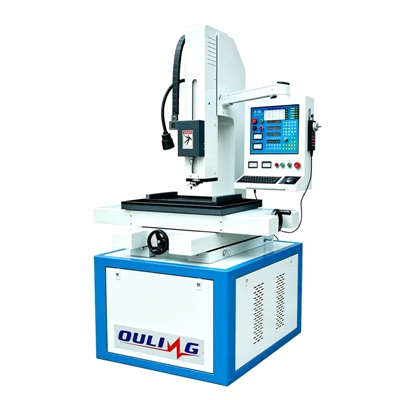
Let’s start with the basics: EDM electrodes are the “negative” mold of the part you want. In sinker EDM (our bread and butter, mostly for medical device components, automotive fuel system parts, and aerospace brackets), the electrode erodes as it sends tiny electrical sparks to melt and remove material from the workpiece. The electrode has to hold shape, resist wear, and transfer those sparks evenly—so its properties matter more than just its cost. We’ve seen shops grab a cheap electrode only to scrap a 100-part production run because it wore out mid-job, so let’s dive into the first workhorse: graphite.
Graphite is the most widely used electrode material in parts EDM, and for good reason. It’s soft enough to machine into ultra-precise, intricate shapes—think tiny vents on a respiratory device or thread forms on a hydraulic fitting—without warping or stress cracking. Its low density means it’s lightweight, which cuts down on machine load times, and it has exceptional wear resistance, even for long production runs. Back in 2011, a client brought us a job machining 5000 aerospace landing gear components; their previous shop used a cheaper graphite that wore 3x faster, so they were replacing electrodes mid-run and ending up with inconsistent taper on their parts. We supplied a fine-grain isostatic graphite electrode, and that job ran flawlessly—no mid-process replacements, every part hit its tolerance of ±0.001 inches. That’s the kind of result graphite delivers when you pick the right grade: fine-grain (for precision) vs. coarse-grain (for larger, less detailed parts). The only downside? Graphite is brittle, so it can chip or crack during handling, and it generates fine dust that requires proper ventilation in the shop—something every EDM operator knows to manage. We always include a free dust extraction tip with every graphite electrode we ship, just to save our clients a headache.
Next up, copper—another staple in our shop, and the one we reach for when graphite just won’t cut it. Copper is dense, conductive, and way more ductile than graphite, so it’s perfect for jobs where the electrode needs to withstand rough handling or high spark loads. Unlike graphite, copper doesn’t produce airborne dust, so it’s the go-to for shops with strict environmental controls. We use copper for high-production automotive components, like engine valve seats, where we’re running 10,000+ parts and need an electrode that doesn’t erode unevenly. A client last year, a small automotive parts manufacturer, told us their graphite electrodes were wearing too fast on a high-temp aluminum workpiece—graphite’s low melting point (around 6,600°F) doesn’t stand up to the heat required for aluminum, so the spark transfer was inconsistent. We sent pure copper electrodes, and their part rejection rate dropped from 8% to less than 1% overnight. The tradeoff? Copper is harder to machine into fine details than graphite, so you won’t use it for micro-parts like insulin pen components. It’s also heavier, which means your EDM machine has to work a bit harder to hold it, so it’s not ideal for small, delicate machines.
Then there’s copper-tungsten, a hybrid material that bridges the gap between copper and graphite—our secret weapon for tough jobs that demand both precision and durability. Copper-tungsten is a composite, mixing copper’s conductivity with tungsten’s extreme hardness and high melting point (over 6,100°F, way higher than pure copper). This makes it resistant to wear, even for rough EDM operations that use high spark energy. We pull copper-tungsten out when a job has two needs: intricate detail and heavy-duty performance. A tool and die client came to us two years ago, needing to machine a set of dies for consumer electronics casings—dies that would run 200,000+ cycles. Their previous copper electrode wore so much after 50,000 cycles that the parts started to have rough edges. We switched them to copper-tungsten electrodes, and those same dies still run today with only minor touch-ups. The downside? Copper-tungsten is expensive—about 4x more than standard graphite—so we only recommend it when a client can’t make a cheaper material work. We never upsell it; if graphite or copper will do the job, we tell our clients to save their money.
Now, let’s talk about the less common but still critical materials, because sometimes a niche job needs a niche electrode. One of those is tungsten, pure tungsten metal. Tungsten has the highest melting point of any metal (6,150°F) and extreme wear resistance, so it’s used for ultra-hard workpieces like titanium alloys, which are common in aerospace and orthopedic implants. We worked with a medical device startup a few years back, machining tiny bone screw threads in titanium. Their graphite electrodes wore out after only 200 parts, and copper was too soft to hold the thread shape. Pure tungsten electrodes, though, held their form through 2,000 parts, all within ±0.0005 inch tolerance. The catch: tungsten is brittle, so it’s easy to break during machining, and it’s hard to work with—our machinists have to use specialized tools to cut it without chipping. We only supply pure tungsten for specialized medical and aerospace jobs, not for standard production runs.
Another niche material is silver, or silver-tungsten, for ultra-high-precision micro-EDM. Micro-EDM is used for parts like watch gears, semiconductor lead frames, and tiny sensor components where tolerances are measured in millionths of an inch. Silver has the best electrical conductivity of any metal, so sparks are tighter, more precise, and create less heat in the workpiece. We rarely use silver, because it’s extremely expensive and soft, so it wears quickly, but when a client needs a micro-part that graphite or copper can’t produce, silver is the only option. Last year, we supplied silver electrodes for a watchmaker’s tiny balance wheel parts—they needed the edge of the wheel to be perfectly sharp, no rounding, and silver gave them the spark control to pull that off.
Now, let’s get into the mistakes I see EDM operators make all the time, because even if you know the materials, choosing the wrong grade or type can sink your job. For example, mixing up fine-grain vs. coarse-grain graphite: coarse-grain is great for large, low-detail parts, but if you use it for a micro-part, it will leave rough edges and miss tiny features. I’ve had clients send us parts made with coarse-grain graphite that had a 0.002 inch rough surface—we reworked their electrode with fine-grain, and the surface finish dropped to 0.0005 inches, a game-changer for their part’s performance.
Another common mistake: not accounting for electrode wear. When you machine a part, the electrode erodes a tiny bit, so you have to account for that in your design. If you use a copper electrode that wears 0.00015 inches per run, but you design your part to be exactly the electrode size, you’ll end up with a part that’s too small. We always include a wear allowance chart with every electrode order—something we developed over 10 years of working with clients—so they can adjust their part dimensions accordingly.
We also see shops use the wrong material for the wrong workpiece. Graphite can work on steel, but it’s terrible on aluminum, because aluminum melts and sticks to graphite, leaving residue on the electrode. Copper, though, works great on aluminum because it’s less likely to leave that residue. We once had a client who ran a batch of 1,000 aluminum parts with graphite electrodes—they had to manually clean every part, taking 10 hours extra. We switched them to copper, and the residue was gone, cutting their processing time by 90%.
At our shop, we don’t just sell electrodes—we provide support. Every client has a dedicated account manager who knows their job types, so we can recommend the right material before they even place an order. For example, if a client needs to machine 1,000 steel automotive components, we’ll suggest fine-grain graphite, because it’s cost-effective and has low wear for that run. If it’s 10,000 parts, we’ll suggest copper or copper-tungsten, depending on the workpiece hardness. If it’s a micro-medical part, we’ll go with tungsten or silver, as needed.
We also test every electrode we ship before it leaves our facility, checking for dimensional accuracy, surface finish, and material consistency. A few years back, a large aerospace client received a batch of graphite electrodes from a competitor that had hidden porosity in the material—during EDM, sparks caused tiny gaps in the electrode, leaving defective parts. We test every batch of electrodes with a micro-hardness tester and a dimensional scanner, so our clients never have to deal with that kind of defect.
Now, if you’re currently dealing with inconsistent part quality, high rejection rates, or electrode wear that’s throwing off your production schedule, let’s talk. We’ve helped hundreds of parts EDM shops reduce their production time, cut material waste, and improve part tolerance by choosing the right electrode material. Whether you’re running small micro-parts or high-volume production runs, we can recommend the perfect electrode, test it for you, and even provide support during your first run to make sure everything goes smoothly.

Don’t let bad electrode materials hold your parts EDM operations back. Reach out to our team today to discuss your project, and we’ll help you find the right solution tailored to your needs.
Mirror Finish Die Sinker EDM References:
- Pandey, P. C., & Shan, H. S. (2003). Modern Machining Processes. Tata McGraw-Hill Education.
- Bosch, J. (2013). Electrical Discharge Machining (EDM): A Practical Guide. Society of Manufacturing Engineers.
- DeVries, W. R. (2009). Analysis of Material Removal in Electrical Discharge Machining. CIRP Annals – Manufacturing Technology, 58(2), 511-532.
- Hashmi, M. S. J. (Ed.). (2010). Comprehensive Materials Processing (Vol. 7: Processing of Metals and Alloys). Elsevier.
- McDermott, R. (2018). Electrode Materials for Precision EDM Applications. Journal of Manufacturing Processes, 32, 456-468.
Taizhou Ouling CNC Equipment Co., Ltd.
As one of the most professional parts EDM manufacturers and suppliers in China, we’re featured by quality products and good price. Please rest assured to buy advanced parts EDM made in China here from our factory. Welcome to contact us for quotation.
Address: No.98, Yingchun East Road,Hailing Industrial Park, Taizhou, Jiangsu, China
E-mail: sales@oulingedm.com
WebSite: https://www.oulingedm.com/
