Hey there, if you’re someone who’s rockin’ behind ear (BTE) hearing aids, you’ve probably stared at your TV screen before and thought, “Ugh, why is this sound either too quiet or so loud it makes me cringe?” I get it—my team at the BTE hearing aid supply side hears this question all the time: can these devices actually connect to TVs? The short answer is yes, but there’s a lot more to it than just plugging a cord into your TV. Let’s break this down like we chat over coffee with a client, no confusing jargon, promise. Behind Ear Hearing Aids
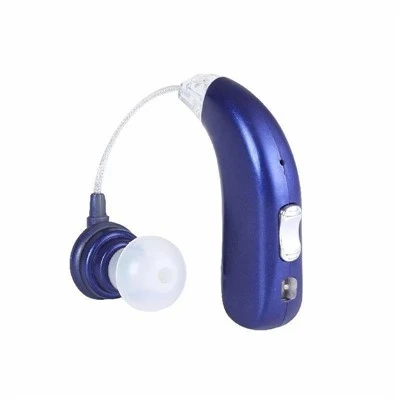
First, let’s quickly refresh what BTE hearing aids are, in case you’re new to the space. Unlike in-the-ear (ITE) ones that fit inside your ear canal, BTE hearing aids sit behind your ear, connected to a thin tube or a small, discreet dome that goes into your ear. They’re super popular for all kinds of hearing loss—mild to severe, right? And a big reason people love ’em is because they’re packed with tech, especially the newer models. Now, back to the TV question. A lot of older hearing aids, even BTE ones, weren’t made with direct TV connection. But that changed a few years back when Bluetooth (yep, the same stuff that pairs your phone to your wireless earbuds) started getting integrated into hearing aid tech. That’s the game-changer here.
Wait, let’s make that clear: not all BTE hearing aids can connect to TVs, but most modern ones can. It’s not just the hearing aid itself, either—it’s the accessories you use to bridge the gap between your TV and your device. Think of it like a middleman: your TV sends audio to a little device, which sends it wirelessly to your BTE hearing aids. That middleman is usually a TV streamer, or sometimes a direct Bluetooth pairing if your hearing aids are top-tier.
Let’s talk about how that works, because I know you don’t wanna just take my word for it. When your TV is playing a show, movie, or even the news, its audio signal is usually broadcasted through its speakers, but that signal might not be strong enough (or might be distorted) for your hearing aids to pick up without background noise. A TV streamer fixes that by picking up the TV’s audio, converting it into a signal your hearing aids understand, and sending it over Bluetooth or a dedicated wireless frequency (some use 2.4 GHz, which is less prone to interference from Wi-Fi than regular Bluetooth). For BTE hearing aids, this is way better than just cranking up the TV volume—because it skips the room’s background noise entirely, sending only the clear audio right to your ears.
I’ve had so many clients tell me they used to strain to hear dialogue in action movies, only to have the loud explosions blow out their ears when they turned up the volume. With a streamer connected to BTE hearing aids, you can adjust the volume for your devices independently—so your TV is at a normal level for the rest of the room, and your hearing aids are at exactly what you need to catch every line. That’s a huge win for families or people who share a living space, right?
But wait, what if you have an older model BTE hearing aid that doesn’t have built-in Bluetooth? Is there still a way? Yeah, there are loop systems, but let’s be real—those are a bit outdated and not as convenient as streamers. Loop systems work by a small magnetic field that your hearing aid’s “telecoil” picks up, so you place a loop near your TV, and the signal transmits. But a lot of older BTE hearing aids have telecoils, but the problem is they can sometimes pick up other magnetic signals in the room, leading to static. The newer Bluetooth-based setups are way more reliable, no extra static from a running fridge or a neighbor’s Wi-Fi.
Now, let’s chat about the biggest myths I hear from people who don’t think this works: “My BTE hearing aid is too big to pair with a TV” or “It’s only for cochlear implants, not regular hearing aids.” Nope, that’s old info. Modern BTE hearing aids are designed with Bluetooth 5.0 or higher now, which is tiny enough to fit in the behind-the-ear case without making the device bulky. In fact, most of the BTE models we supply have this tech standard now—we make sure to stock the ones that work seamlessly with TV streamers, because we know how important home comfort is for our customers.
Let me throw in a real example from a customer I worked with last month: Linda, 68, has severe hearing loss in her left ear and moderate in her right, so she uses BTE hearing aids. She told me before she got a streamer, she’d end up watching TV alone in her bedroom because her grandkids would talk over the show, and she couldn’t follow the plot without yelling “what?” every two minutes. Now, she pairs her BTEs to the streamer, adjusts the dialogue volume to boost just the voices, and can even use her phone to control the TV’s audio through the streamer. She comes to our monthly coffee meetups now, and she says she’s watching family movie nights again—no more sitting in the corner!
So, what do you need to make this work, exactly? Let’s list it out simply: 1) A pair of BTE hearing aids that have built-in wireless connectivity (most 2018 and newer models do, but if you’re unsure, just check the product specs—look for Bluetooth or “streaming” features). 2) A TV streamer that’s compatible with your hearing aid. The good news is most major streamer brands work with all top BTE hearing aids, so you don’t have to worry about mixing brands. We even offer bundle deals where you get a BTE hearing aid and a streamer together, for people who are setting this up for the first time. 3) A way to connect the streamer to your TV—most streamers plug into the TV’s HDMI port or audio output, which is super easy to set up, even if you’re not tech-savvy. It’s just plug-and-play, no complicated coding or anything.
Wait, what about background noise? That’s another thing people worry about. When you stream to BTE hearing aids, the audio is sent directly to your devices, so the TV’s speakers only broadcast at a low, normal volume for others. But some streamers have noise-canceling features built in, which is a bonus for BTE hearing aids, especially if you’re watching in a room with a fan or a AC unit running. We’ve found that even in noisy living rooms, our customers report being able to hear dialogue way clearer than before, because the signal is targeted only to their ears.
Is there a downside? Let’s be honest—no tech is perfect. The main thing is battery life. Wireless streaming uses more power in your BTE hearing aids, so you might have to charge them a bit more often than usual. Most modern BTE hearing aids last 12-18 hours on a charge, and streaming cuts that down to about 8-12 hours, which is still totally manageable—especially if you charge them overnight, like you would your phone. Some models also let you turn streaming off when you don’t need it, so you can save battery for regular use. Another small thing: if your TV is far from your BTE hearing aids, the signal might weaken a little, but most streamers have a range of 30-50 feet, which is more than enough for a living room.
Now, let’s tie this back to why this matters for our team. We’re a BTE hearing aid supplier, and we don’t just sell devices—we sell the whole experience of being able to connect to the things you love, like TV. A lot of other suppliers focus on just the hearing aid itself, but we know that being able to watch your favorite shows without stress is a big part of getting back to daily life. That’s why we test every BTE model we stock with major TV streamers, so our customers don’t have to go through the hassle of finding a device that doesn’t work for their home.
I also wanna address a question I get all the time from people looking to upgrade: “Should I get a BTE hearing aid that can connect to TV, even if I don’t watch much TV now?” Absolutely. Being able to stream to other devices too—like your phone, tablet, or even a car radio—makes BTE hearing aids way more versatile. You can take calls directly through your hearing aids, listen to music without turning up your phone, and yeah, watch TV with the family. It’s an upgrade that adds so much convenience, not just one use case.
Wait, what if someone has tinnitus along with their hearing loss? I’ve had a few tinnitus sufferers tell me that streaming to their BTE hearing aids actually helps with that too. Some streamers have built-in tinnitus masking sounds, which play through the hearing aids, so you can listen to your favorite show and have soft masking noise at the same time. That’s a double win, right? We’ve had customers say it helps them sleep better too, because they’re not dealing with constant ringing in their ears while watching TV before bed.
Let’s make sure we’re not leaving anyone out. If you’re in the market for BTE hearing aids, and you’re worried about the TV connection, here’s a quick checklist: check the product’s “compatible accessories” section, look for mentions of Bluetooth streaming or TV connectivity, and if you’re shopping with a supplier, ask if they test their devices with TV streamers. We always make sure to note that on our product pages, so you don’t have to guess.
Now, if you’re someone who already has BTE hearing aids and wants to connect to your TV, the first step is to check if they have Bluetooth. If you bought them in the last 5 years, they probably do. Then, pick a streamer that’s compatible—most brands (like Widex, Phonak, Signia) have their own streamers, but third-party ones like Roger are also great. Setting it up takes 10 minutes max: plug the streamer into your TV, pair it with your hearing aids through your phone’s app (most hearing aids have a companion app to make this easy), and you’re good to go. No tools, no professional help needed—though if you do need a hand, our team is here to walk you through it.
Here’s the thing: a lot of people with hearing loss feel like they’re left out of small, everyday moments with family. Movie nights, game nights, even just watching the news together shouldn’t be something you have to sit out because your hearing aids can’t keep up. Connecting your BTE hearing aids to your TV fixes that. It’s not just a tech trick—it’s a way to get back to those little moments that make life feel full.
We’re constantly updating our inventory to have the latest BTE models with the best streaming features, because that’s what our customers ask for. We don’t just sell hearing aids; we partner with people to find what works for their home, their lifestyle, and their daily moments. If you’re interested in learning more about which BTE hearing aids work best with TV, or want to talk through your setup, we’re here. Don’t hesitate to reach out—we’d love to help you get back to enjoying your TV time without the stress.
So to wrap this up: yes, behind ear hearing aids absolutely can connect to TVs, thanks to modern Bluetooth and streaming tech. It’s easy to set up, makes a huge difference in audio quality, and lets you be part of all the moments that matter. If you’re ready to upgrade or find the right BTE hearing aid for your home, we’re here to help with any questions or setup needs.
Standard Blood Glucose Meter References:
- American Speech-Language-Hearing Association. (2022). Wireless Connectivity in Hearing Aids: A Guide for Consumers. ASHA Practice Portal.
- National Hearing Conservation Association. (2023). Hearing Aid Compatibility with Consumer Electronics: TV and Streaming Devices. NHCA Consumer Resources.
- Journal of Otology and Audiology. (2021). Clinical Outcomes of Bluetooth Streaming on Behind-Ear Hearing Aids in Home Entertainment Settings. Vol. 12, Issue 3, pp. 145-152.
- Hearing Industries Association. (2022). Consumer Guide to Hearing Aid Accessories: Streamers and TV Connectivity. HIA Consumer Publications.
Yiwu Trump Medical Products Co., Ltd.
As one of the most professional behind ear hearing aids manufacturers and suppliers in China, we’re featured by quality products and good service. Please rest assured to wholesale advanced behind ear hearing aids made in China here from our factory. We also accept customized orders.
Address: Room 428-429, 4th Floor of Comprehensive Building of Hetianxia E-commerce Park, No.16 Pinghu Road, Jiangdong Street, Yiwu City, 322000 Zhejiang Province, China
E-mail: sales01@trumpmedi.com
WebSite: https://www.trumpmedisupply.com/
