Hey folks, let’s cut to the chase — when we talk about cybersecurity, most people’s minds jump to firewalls, antivirus, and multi-factor auth. What rarely makes the list? Time servers. And as someone who’s spent the last 8 years building and supplying these devices, I’m here to tell you that a solid, reliable time server isn’t just some niche IT accessory — it can actually be a game-changer for locking down your network. Let’s break this down like we’re sipping coffee and troubleshooting a wonky server at 2 a.m. Time Sever
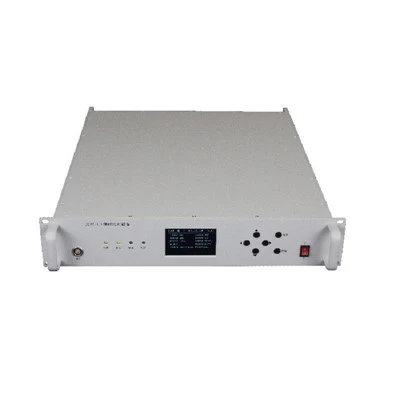
First off, let’s get one thing straight: time isn’t just a “nice-to-have” for your tech. Every single network device, server, laptop, and even your smart fridge logs timestamps for literally everything. When a user logs in, when a file is modified, when a firewall rule gets changed, when a breach happens — all of these events get tagged with a time. If your logs are all over the place (like one server says 2:00 PM and another says 2:15 PM for the exact same event), you can’t actually piece together what went wrong. That’s like trying to solve a murder with a clock that’s 10 minutes fast and another that’s 15 slow — you’ll never get the timeline right.
I see this all the time with small to mid-sized businesses (SMBs) — they buy cheap, consumer-grade routers or set their servers to sync with a random public NTP server (Network Time Protocol) that’s not secured. Then, when they get hit with a ransomware attack, their logs are garbage because none of their devices have the same time. They spend weeks guessing when the attackers got in, which means they can’t fix the exact vulnerability that let them in. A proper time server eliminates that mess. It syncs every device on your network to the exact same, authoritative time — no discrepancies, no guesswork. For cybersecurity, that’s non-negotiable.
Now let’s get into the actual, tangible cybersecurity wins here. Let’s start with incident response. Suppose you notice an unauthorized login attempt on your domain controller. Without synced time, you check the logs and see one device says the attempt was at 14:02, another says 14:05, and the domain controller itself says 13:58. That’s a timeline that’s useless. With a time server, all of those logs are timestamped to the millisecond (yes, millisecond — modern breaches move that fast), so you can see exactly when the first bad login was, how many followed, and if the attacker was able to pivot to other servers. You can isolate the compromised device before they spread malware to half your network. I’ve had a customer — a regional healthcare clinic — tell me that after switching to our time servers, their incident response time dropped by 40%. They caught a ransomware attempt within 2 hours instead of 10, which saved them thousands in downtime and no patient data was exfiltrated. That’s not a “cool story” — that’s real money and peace of mind.
Next up: detecting insider threats and fraud. A lot of insider attacks aren’t the big, dramatic “I steal all the data” types. They’re small, incremental things — an employee deleting a sales file right before quitting, altering a financial record to hide embezzlement, or disabling a security tool at a specific time. If your time stamps are off, you can’t prove that person was the one who did it. We had a financial services client a couple years back where an employee tried to alter expense reports by backdating them. Their old system had time drift of up to 45 minutes between the accounting server and the employee’s laptop. So when they submitted the report, the server timestamp said 9:15 AM, and the laptop said 8:40 AM. The accounting team thought it was a typo and approved it. After switching to our time server, that same employee tried the same trick — now every device synced to the same time. The 35-minute gap was obvious immediately, they caught the fraud before any money was transferred, and the employee was terminated. That’s a direct result of accurate time making fraud detection possible.
Now let’s talk about authentication and access control — this is where time servers get really nerdy, but stick with me. A lot of security protocols rely on time for validation. Kerberos, which is the standard authentication system for Windows domains (and a lot of Linux too), uses timestamps to make sure that tickets (the little “keys” that let you access resources) aren’t reused by attackers. If your server’s time is off by more than 5 minutes, Kerberos will outright block login attempts. That’s a good thing — it prevents replay attacks, where an attacker intercepts a valid login ticket and uses it later. But if your time server is unreliable, you’ll get false positive login failures, which means your team is wasting time troubleshooting “network issues” that are just off clocks. Worse, if an attacker is targeting your NTP sync (yes, that’s a thing), a proper time server comes with security features to block that. Cheap public NTP servers are open to abuse — attackers can flood them with fake time requests, which messes up your entire network’s time. Our time servers have built-in rate limiting, authentication (like NTPv5 with digital signatures), and they only sync from trusted, hierarchical time sources (like atomic clocks or GPS) so you don’t have to worry about that.
Wait, let’s not skip over the compliance side. If you’re in a regulated industry — healthcare (HIPAA), finance (PCI DSS), government (NIST), even retail — you have to keep audit logs for years. Those logs have to be accurate and tamper-proof. Regulators don’t care if you “meant to set the time right” — they care that your logs are trustworthy. I’ve had more than one customer get fined because their auditors found inconsistent timestamps in their logs. For example, one retail chain got a PCI audit failure because their point-of-sale systems had a 20-minute time drift, so they couldn’t prove when transactions were processed (which is required to prevent credit card fraud). They had to pay a $12,000 fine before they switched to our time servers. That’s a cost that could’ve been avoided entirely.
But hold on, I know what some of you are thinking: “Can’t I just use NTP on my router or a free online server?” Yeah, maybe — but free or consumer solutions have huge gaps. First, they’re not designed for enterprise or even small business networks. They can’t sync hundreds or thousands of devices at once without lag or drift. Second, they’re not secure. I mentioned replay attacks earlier, but there’s also something called NTP spoofing, where an attacker sends a fake time signal to your network, which makes all your devices sync to the wrong time. If an attacker can do that, they can bypass authentication, alter logs, and set up the perfect cover for a breach. A proper time server has anti-spoofing features, like verifying the time source’s identity, so that never happens. Consumer NTP services don’t have that — anyone can send a fake signal and mess with your time.
Let’s be real, there are limits. A time server isn’t going to stop a phishing email that tricks someone into downloading malware. It won’t fix a vulnerability in your old software that’s been unpatched for years. But it’s a foundational piece that makes all your other security tools work better. Your firewall, your SIEM (security information and event management) system, your endpoint detection tools — all of them rely on accurate timestamps. If the time is wrong, even the best SIEM will miss a breach because it can’t correlate events across devices. I’ve seen so many networks that had every other security measure in place, but were blind to an attack because their time was out of whack.
Now, let’s talk about what a good time server actually does. It’s not just a box that spits out time. Our servers, for example, sync to traceable, authoritative time sources (we use both GPS disciplined oscillators and atomic clock references, so no downtime if one source drops). They support all the standard protocols (NTP, PTP for networks that need super precise time, like industrial control systems or financial trading floors) and can sync thousands of devices at once with minimal drift. They also log their own time sync events, so you can verify that your network’s time is always accurate — which is another checkmark for compliance.
If you’re still on the fence, think about this: cybersecurity is all about visibility and precision. You can’t see what you can’t track, and you can’t track what’s not timed right. A time server is a low-cost, high-impact tool that fixes a foundational hole in most networks. It’s not a flashy AI-powered solution, but it works when you need it most — during a breach, during an audit, during a fraud investigation.
At the end of the day, the goal is to make your network as hard as possible to attack, and as easy as possible to respond to when something goes wrong. A reliable time server does both. It closes a gap that most people don’t even know exists, until they need it.
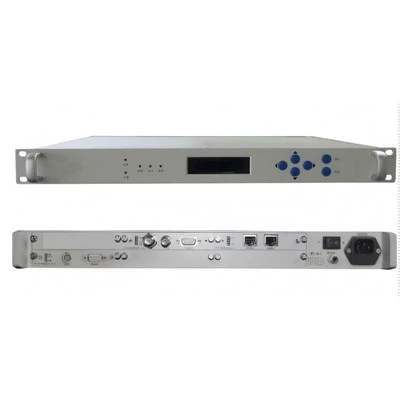
If you’re tired of garbage logs, false login failures, compliance fines, or missing breaches because of wonky time, let’s chat. We can walk through your network, figure out how many devices you need to sync, and get you set up with a time server that fits your budget and your needs. No sales hype, no jargon — just straight talk about making your network more secure.
Time Sever References:
- National Institute of Standards and Technology (NIST) Special Publication 800-116R1: The Use of NIST Time Sources for Cybersecurity
- Payment Card Industry Data Security Standard (PCI DSS) v3.2.1 Requirement 10: Logging and Monitoring
- Health Insurance Portability and Accountability Act (HIPAA) Security Rule §164.312(b): Audit Controls
- Internet Engineering Task Force (IETF) RFC 5905: Network Time Protocol Version 4 (NTPv4) Protocol Specification and Implementation
China Go-Sat Microwave Co., Ltd.
China Go-Sat Microwave Co., Ltd. is one of the most professional time sever manufacturers and suppliers in China. With abundant experience, we warmly welcome you to buy advanced time sever made in China here and get quotation from our factory. All customized products are with high quality and competitive price.
Address: No.3908 ShiBo Avenue, Baqiao District, Xi’an, China
E-mail: sales@go-satcom.com
WebSite: https://www.go-satcom.com/
