If you’ve ever spent a day at the beach, driven a truck on a bright summer afternoon, or fished on a glassy lake and pulled out a pair of polarized sunglasses to cut through that blinding glare, you might’ve thought, “Cool, these just look way better than my regular drugstore shades.” But what’s actually happening in those lenses that makes them work so differently? As someone who’s been in the polarized sunglasses supply business for over a decade—working with eyeglass manufacturers, outdoor brands, and retailers across North America and Europe—I’ve spent countless hours in our lab and on factory floors watching how this technology turns harsh, annoying light into something comfortable enough to wear for 12+ hours straight. It’s not magic, but it is a clever mix of physics, chemistry, and material science that’s been refined for over 80 years, and most people only scratch the surface of how it works. Polarized Sunglasses

Let’s start with the light we’re dealing with here, because that’s where everything starts. Sunlight looks like one bright, steady beam to our eyes, but it’s actually made of electromagnetic radiation vibrating in every possible direction—up-down, left-right, diagonal, spinning, whatever you can imagine. This is called unpolarized light, and that’s the light that bounces off every surface around us. When sunlight hits a smooth, flat surface—water, asphalt, snow, a car’s hood, even a wet wooden deck—it doesn’t scatter in all directions like it would off grass or a rock. Instead, it reflects horizontally, all that light waves vibrating in that same side-to-side direction. That’s the glare you hate: when you’re driving, it’s the glare off the hood of the car in front of you that makes it hard to read road signs; when you’re fishing, it’s the glare off the lake that hides the shadows of bass or trout below the surface; when you’re at a ski resort, it’s the glare off packed snow that gives you a headache after an hour. Regular sunglasses work by blocking half of that unpolarized light, usually with a tint that absorbs some wavelengths of blue light to reduce brightness, but they don’t do anything about that horizontal glare. That’s where polarization comes in.
The core of every polarized lens is a micro-thin film, usually less than 0.1 millimeters thick, that’s the real secret. Early versions of this film were developed in the 1920s by a physicist named Edwin Land, who was trying to create a filter to reduce glare for car headlights. He called his invention Polaroid, and that name stuck even as the technology evolved. Today, that film is made by stretching a sheet of polyvinyl alcohol (PVA) plastic, a common polymer used in everything from food packaging to eyeglass lenses. When you stretch PVA, you line up all the long, string-like polymer molecules in the same direction—think of pulling a wad of tangled string into a straight line, all parallel to each other. Then, you soak that stretched film in a solution of iodine, which binds to those aligned polymer molecules. The iodine does two key things: it makes the film absorb light, and it makes it only absorb light vibrating in one specific direction.
This is where the “polarized” part works: the aligned polymer molecules act like tiny, parallel slats in a fence. Light waves vibrating in the same direction as the slats (let’s say horizontal) pass right through, like a tennis ball bouncing straight through a fence with slats pointing left-right. Light waves vibrating perpendicular to the slats (vertical) get blocked, like the tennis ball bouncing up-down hitting the fence and bouncing back. Wait, but we just said glare is horizontal light—so that means we align those tiny slats vertically, right? Exactly. The polarized film is oriented so it only lets vertically vibrating light pass through. That horizontal glare bouncing off surfaces gets absorbed by the film, turning that harsh, blinding light into soft, comfortable light that your eyes don’t strain to adjust to.
But here’s the thing: that thin PVA film is fragile on its own. If you left it exposed, it would scratch easily, peel, or degrade from UV rays. So manufacturers like us build it into a multilayer lens structure, which is where most of the quality difference between cheap polarized sunglasses and premium ones comes in. Our standard polarized lens stack, for example, has five layers total, each with a specific job. The first layer is a hard scratch-resistant coating, usually a polycarbonate or Trivex-based coating, that stands up to being dropped, rubbed with a shirt, or dragged against sand. The second layer is an anti-reflective (AR) coating, which cuts down on reflections from the back of the lens so you don’t get that annoying glare from car dashboard lights or room lights when you’re indoors wearing them. The third layer is the actual polarized PVA film we talked about, sandwiched between two sheets of clear polycarbonate or CR-39 plastic (the same material used in prescription eyeglasses) to protect it from moisture, heat, and physical damage. The fourth layer is an ultraviolet (UV) filter block. I can’t stress this part enough: a lot of cheap polarized lenses don’t have a separate UV filter—they rely on the PVA film to block UV rays, which is a bad idea because over time UV rays break down the iodine in the PVA, making the polarization fade in just a year or two. Our UV filter is a layer that blocks 100% of UVA and UVB rays, just like the best non-polarized lenses, so not only do our sunglasses cut glare, they protect your eyes from long-term sun damage. The fifth and final layer is an anti-glare or anti-fog coating, depending on what the customer needs. For example, our polarized lenses for fishing also have a hydrophobic coating that makes water beads roll right off, so if you’re standing in a misty lake, the water doesn’t obscure your view.
Now, a common question I get: does polarization affect your ability to see screens? The short answer is, sometimes, depending on the screen. Polarized glasses will make LCD screens—like phone screens, laptop screens, gas pump screens, or airport ticket kiosk screens—look darker or even completely blank, because those screens emit polarized light themselves. Most LCD screens have a tiny polarized film built into their surface to regulate light output, so when you align your sunglasses’ filter perpendicular to the screen’s filter, the light gets blocked. That’s not a flaw in the technology, it’s a feature of how LCDs work. Our team designs our polarized lenses with a slight angle adjustment for general use, so most people don’t run into this issue with phones, but if you work around a lot of LCD screens, we can customize the orientation slightly to reduce that effect. It’s a small detail, but it’s one that sets apart suppliers that just copy a generic lens from those that actually understand how the technology works in real use.
Another misconception: polarized sunglasses don’t make you “see more” below the water—they make the glare go away so you can see what’s already there. I’ve had fishermen tell us our glasses let them spot a 12-inch bass 15 feet below the surface, and that’s exactly the technology at work. The lake surface is like a mirror; without polarization, the mirror reflects the blue sky and white clouds so brightly that the shadow and shape of the fish are completely washed out. Blocking that horizontal glare turns that mirror into a transparent window, so you can see clearly through the water. The same goes for driving: that glare off asphalt in the summer makes it look like a sheet of water, which can be dangerous. Polarization cuts through that glare so you can see the road markings, potholes, and other cars that would be hidden.
But like any technology, polarized lenses aren’t perfect for every use case. For example, if you’re hiking on uneven terrain and need to see small rocks or roots just below the surface of dirt trails, the slight tint of polarized lenses can make some details harder to pick up—though most outdoor enthusiasts we work with keep a pair of polarized sunglasses for driving and water activities, and a pair of regular tinted ones for hiking, so it’s a matter of matching the right tool to the right job. And not all polarized lenses are created equal: cheap ones use thin PVA film that fades quickly, has uneven polarization (so you’ll see a faint striped pattern when you look at a light source through them), and doesn’t block proper UV rays. We test every batch of our lenses with a polarimeter to make sure the polarization is uniform across the entire lens, so there’s no weak spot that lets glare through, and we test UV transmission to ensure it meets ANSI Z80.3 standards for eye protection.
Over the past few years, we’ve also seen new advances in polarized technology that take this core science and make it even better. A few years ago, we started offering polarized lenses with gradient tint, where the top of the lens is darker to block overhead sunlight and the bottom is lighter to let you see dashboards or water near the ground. For prescription polarized lenses, we can also apply the polarized film to different base curves, so a myopic or hyperopic wearer gets the same glare reduction as someone with non-prescription glasses, without distortion. We also work with brands to make polarized lenses in different colors: gray tints are the most popular because they don’t change the color of objects, while brown tints enhance contrast for fishing and green tints are good for bright snow conditions.
As someone who’s been in this industry for years, the feedback I hear most from customers is that polarized sunglasses aren’t a luxury—they’re a necessity for anyone who spends time outdoors. I’ve seen truck drivers tell us our glasses cut their eye strain on cross-country trips, fishermen tell us they’ve caught more fish because they can see below the surface, and parents tell us our lenses keep their kids from squinting at soccer games on bright days. The science behind it might be a little complex, but the end result is simple: clearer, more comfortable vision on days when the sun is at its brightest.
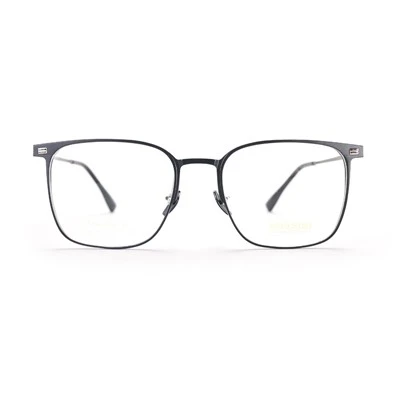
If you’re a brand, retailer, or distributor looking for a reliable supplier of polarized sunglasses, we can work with you to design lenses for any use case, whether that’s a line of fishing sunglasses, sports eyewear, or fashion-focused polarized shades. We provide samples, full testing documentation, and can customize packaging or branding to fit your needs. For more details on our lens technology, minimum order quantities, or to discuss a custom project, feel free to reach out to our sales team to start the conversation.
Rimless Glasses References:
- Land, E.H. (1951). Some aspects of the optics of polarized light. Journal of the Optical Society of America, 41(12), 957-963.
- American National Standards Institute. (2020). ANSI Z80.3: American National Standard for Ophthalmics – Nonprescription Sunglasses and Fashion Eyewear.
- Hecht, E. (2017). Optics (5th ed.). Pearson Education, Inc.
- Kaspar, L., et al. (2012). Polarizing filters for ophthalmic applications: A review. Ophthalmic and Physiological Optics, 32(4), 287-298.
- Polyvinyl Alcohol (PVA) Film for Polarized Lenses. (2019). International Journal of Polymer Science and Technology, 26(3), 145-152.
Yuhuan Longsen Glasses Co., Ltd.
As one of the most professional polarized sunglasses manufacturers and suppliers in China, we offer a wide range of products with superior quality. Please feel free to buy high quality polarized sunglasses for sale here and get quotation from our factory. We also accept customized orders.
Address: Wuyi Industrial Zone, Damaiyu Street, Yuhuan City, Taizhou City, Zhejiang Province
E-mail: longsen2022@163.com
WebSite: https://www.longsenglasses.com/
