If you’re outfitting your boat, upgrading your radio setup, or just trying to keep your vessel compliant with maritime rules, you probably already know your marine radio is non-negotiable. But a radio is only as good as the accessories paired with it—skip the right gear, and you might end up static-filled calls, missed distress signals, or even failing a coast guard inspection. As someone who’s been supplying marine radios and their parts for over a decade, I’ve seen boaters waste money on cheap, incompatible accessories that die after one season, or buy gear that’s overkill for their vessel size. Today, I’m breaking down exactly how to pick the right accessories, no confusing jargon required. Marine Radio
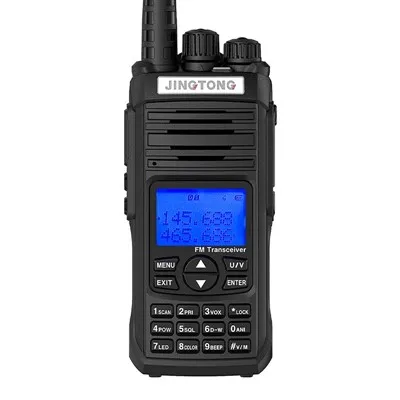
First, let’s start with the big one for any marine radio: the antenna. This isn’t just a random metal stick you bolt to your cabin top—your antenna is what sends and receives signals, so get this wrong, and your radio’s range will drop by 50% or more, even if you have a top-of-the-line unit.
First, match antenna type to your radio. Most marine radios are either VHF (very high frequency)—the standard for nearly all commercial and recreational boat communications—or single-sideband (SSB) for long-range offshore use. For VHF antennas, the length is key: a 3dB gain antenna works great for boats under 40 feet. It’s short enough to avoid hitting overhead obstructions like bridges or radar arches, but long enough to hold a strong signal. If your boat’s over 40 feet, step up to a 6dB gain antenna—it’s a bit taller, but the extra range is worth it for open water, especially if you’re traveling far from shore.
Don’t forget the antenna cable. A lot of guys grab a cheap 50-foot cable to run from the cabin to the top of the mast, but that’s a mistake. VHF signals work best with shorter cables, because longer lengths cause signal loss. If you can keep it under 20 feet, do it. If you have to run it further, get a low-loss cable (we stock LMR-400 for this, it’s the go-to for most vessels) and don’t skimp on connectors. Tighten those connectors by hand, not with pliers—you’ll crack the housing and cause signal leaks. Also, make sure the cable is marine-grade—regular RG-58 won’t hold up to salt, UV, or vibration; it’ll fray in a year.
Next, accessories that make daily use way easier. The microphone mount is something almost no one thinks about until they’re yanking their neck to reach the radio on the dash during a storm. Get a flexible, suction-cup or swivel mount that lets you position the mic right where you sit. We sell these all the time, and the number one complaint we hear is people buying a mount that only works for their exact radio model—double-check compatibility before you click add to cart.
If you use your radio for more than just casual chats, a loudspeaker is a game-changer. Cabin radios can be quiet over engine noise or when it’s windy, so a waterproof external speaker mounted on the cabin wall or bulkhead lets you hear calls clearly without cranking the volume so high it blows your speakers. Skip the tiny, $10 Amazon speakers—they’re not weatherproof, and the sound is tinny. Go for a 5-watt or 10-watt marine speaker; they’re affordable and tough enough to handle rain and salt spray.
Now, the stuff you’ll never want to use but absolutely need: emergency accessories. First, the hand mic lanyard. I can’t tell you how many times a guy has dropped their $50 radio mic overboard when they were scrambling during a distress call. Get a heavy-duty, floating lanyard—it’ll save you from replacing a mic (or worse, losing a critical communication tool) mid-voyage.
Then, the power cord. Don’t reuse old car or home power cords for your marine radio. Marine voltage is 12V for most small boats, but if you’re on a larger vessel with 24V systems, you’ll need the right cord. Make sure the cord is fused at the radio end—we recommend a 5A fuse for 12V radios, because if there’s a power surge, that fuse blows before your expensive radio does. Cheap, un-fused cords are a fire hazard, trust me. Also, run the power cord away from alternator wires and bilge pumps—electrical interference will cause static on your radio.
Wait, what if you’re a long-distance boater, not just cruising the bay? If you’re traveling offshore, an SSB radio is a big upgrade, and its accessories are different. For SSB, you’ll need an antenna tuner to match your antenna to the radio, otherwise your signal won’t transmit properly. Don’t skimp on the tuner—we’ve had customers bring in SSB radios that wouldn’t send a signal because they used a $50 off-brand tuner; a good one (we carry brands like Icom and Yaesu, which are tried and true) will set you back $150-$200, but it makes all the difference for getting a clear signal hundreds of miles away.
Another key accessory people overlook: a mounting kit. You might think bolting the radio to the dash is easy, but if your boat’s dash is fiberglass or curved, a universal mounting kit with heavy-duty brackets will keep the radio from vibrating loose during rough seas. Vibration is one of the top causes of radio failure, so don’t just prop it up or stick it with tape.
Now, let’s talk mistakes to avoid, because I see these all the time. First, don’t buy “universal” accessories that aren’t actually compatible. If your radio is a Standard Horizon, an antenna mount for a Raymarine won’t fit. Always check the model numbers before you buy—most reputable suppliers (hello, that’s us!) will list compatibility right on the product page.
Second, don’t overbuy. If you fish in local bays and stick close to shore, a fancy 6dB antenna and $300 speaker are overkill. A basic 3dB antenna and a $25 marine speaker will work fine. For offshore cruisers, though, skimping on the antenna is a bad call—you don’t want to be stuck in the middle of the Atlantic with a signal that only reaches 5 miles.
Third, weatherproofing is non-negotiable. All your accessories should be rated for marine use (IP67 or higher, if you want a number to go by). Regular electronics can handle a little dust, but saltwater will eat through them fast. We’ve had customers bring in radios with rusted connectors because they used cheap, non-marine accessories—don’t be that guy.
What about extras that make life easier? If you use your radio to log trips or chat with other boaters, a NMEA 2000 adapter lets you connect your radio to your chartplotter, so you can see calls near your current location. That’s super useful for avoiding other vessels. Or a wireless headset—great if you’re on deck, don’t want to yell, or need both hands free to handle lines. They’re waterproof, connect via Bluetooth, and work way better than regular headsets for marine use.
Now, here’s the thing: choosing the right accessories isn’t about buying the most expensive stuff. It’s about matching what you need to your vessel, your use case, and your budget. If you’re still not sure what works for your setup, don’t guess—reach out to someone who knows marine radios inside and out. At the end of the day, your radio is your lifeline on the water, and the right accessories keep it working when you need it most.

If you’re ready to upgrade your setup, or you’re not even sure where to start, we’re here to help. Whether you need a new antenna, a power cord, or advice on what works for your boat, we can walk you through every step. Don’t wait until you’re out on the water and your radio cuts out—get the right gear now, so you can focus on enjoying your time on the waves.
Marine Radio Reference
- National Oceanic and Atmospheric Administration (NOAA). Marine VHF Radio Antenna Installation Guidelines.
- International Telecommunication Union (ITU). Maritime Radio Equipment and Accessory Standards.
- American Boat and Yacht Council (ABYC). Marine Electrical System Requirements for Vessels Under 24 Meters.
Jingtong (Quanzhou) Electronics Co., Ltd.
We are one of the most professional marine radio manufacturers and suppliers in China, specialized in providing high quality customized service. We warmly welcome you to buy durable marine radio made in China here from our factory. For price consultation, contact us.
Address: No.288, Si Huang Industry Zone, Xia Mei Town, Nan An, Quanzhou, Fujian province, China 362302
E-mail: jtdjj@jtdjj.com
WebSite: https://www.jteradio.com/
