Yo, fellow gearheads and industry peeps! I’m a bearing supplier, and I know firsthand how crucial it is to keep those bearings lubricated properly. Good lubrication not only extends the lifespan of your bearings but also boosts their efficiency big time. So, let’s dive into how you can up the lubrication efficiency of bearings. Bearing

Understanding the Basics
First off, we gotta know why lubrication matters. Bearings are all about reducing friction between moving parts. When you don’t have enough lubrication or the wrong type, friction goes up. That means more heat, more wear and tear, and a shorter lifespan for your bearings.
There are three main types of lubricants: oils, greases, and solid lubricants. Oils are great for high – speed applications because they can flow easily and carry away heat. Greases, on the other hand, are thicker and stay in place better, so they’re good for slower – speed or less accessible bearings. Solid lubricants, like graphite or molybdenum disulfide, can be used in extreme conditions where traditional lubricants won’t work.
Choosing the Right Lubricant
Picking the right lubricant is like choosing the right shoes for a run. You gotta consider the application, speed, load, and temperature.
If you’re dealing with high – speed bearings, a thin – viscosity oil is usually the way to go. It can quickly coat the surfaces and reduce friction. For example, in a high – speed electric motor, a synthetic oil with a low viscosity can keep the bearings running smoothly.
For heavy – load applications, you need a lubricant with high film strength. Greases with additives like anti – wear agents are a good choice here. They can withstand the pressure and prevent metal – to – metal contact. Think about a large industrial gearbox that has to handle tons of weight; a high – quality grease will do the trick.
Temperature also plays a huge role. In cold environments, the lubricant needs to stay fluid. Synthetic oils are often better in these situations because they have a wider temperature range. In hot environments, the lubricant needs to resist oxidation and not break down easily. Some greases are formulated specifically for high – temperature applications.
Proper Lubrication Quantity
It’s not just about the type of lubricant; the amount matters too. Too little lubrication, and you won’t get enough protection. Too much, and you can end up with overheating and increased drag.
For oil – lubricated bearings, you can use a sight glass to check the oil level. Make sure it’s at the right mark. In some cases, you can calculate the ideal oil level based on the bearing size and speed.
When it comes to greases, it’s a bit trickier. You need to follow the manufacturer’s recommendations. Usually, you fill the bearing cavity to about one – third to one – half full. Over – greasing can cause the grease to churn, generate heat, and eventually lead to bearing failure.
Lubrication Methods
There are several ways to lubricate bearings, and each has its pros and cons.
Oil Bath Lubrication: This is a simple and common method. The bearing is partially submerged in an oil bath. It’s great for low – to medium – speed applications. The oil continuously lubricates the bearing and also helps to cool it. But it has some drawbacks. If the oil level is too high, it can cause excessive churning and heat generation.
Oil Mist Lubrication: In this method, oil is atomized into a fine mist and delivered to the bearing. It’s very efficient for high – speed bearings. The mist can reach all parts of the bearing and provide excellent lubrication. However, it requires a specialized system and can be a bit more expensive to set up.
Grease Lubrication: Grease is usually applied by hand or using a grease gun. It’s easy to use and can provide long – term lubrication. But it needs to be replenished regularly, especially in high – speed or high – temperature applications.
Maintenance and Monitoring
Once you’ve got the right lubrication system in place, you need to keep an eye on it. Regular maintenance is key to ensuring long – term efficiency.
Check the lubricant levels regularly. Look for signs of contamination, like dirt or metal particles in the oil or grease. If you find contamination, it’s time to change the lubricant.
You can also use condition – monitoring techniques. For example, vibration analysis can tell you if there’s any abnormal wear or damage to the bearing. Temperature sensors can detect overheating, which could be a sign of poor lubrication.
Training and Safety
Finally, make sure your staff is properly trained on lubrication procedures. They should know how to choose the right lubricant, how much to use, and how to apply it safely.
Safety is also important when dealing with lubricants. Some oils and greases can be flammable or toxic. Make sure you have the right safety equipment, like gloves and goggles, and follow all safety guidelines.
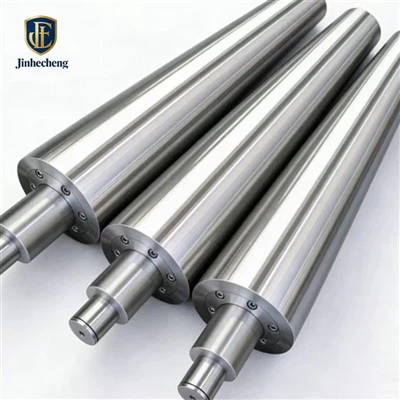
Chrome Plated Rollers So, there you have it, folks! These are some of the key ways to improve the lubrication efficiency of bearings. If you’re in the market for high – quality bearings or need advice on lubrication, don’t hesitate to reach out. I’d be more than happy to have a chat and help you find the right solutions for your needs.
References
- "Bearing Lubrication Handbook" by SKF
- "Machinery’s Handbook" for general mechanical knowledge related to bearings and lubrication
- Industry whitepapers on bearing technology and lubrication best practices from various bearing manufacturers
Qingdao Jinhecheng Machinery Co., Ltd.
Address: Aishan Industrial Park, Yanghe Town, Jiaozhou, Qingdao City, Shandong Province
E-mail: alice@jhcroller.com
WebSite: https://www.jhcroller.com/
