If you’ve ever spent time managing a forklift fleet, you know how much of a headache downtime can be. One single forklift out of commission for a full shift because its battery’s dead can throw your whole operations off—missed delivery windows, delayed warehouse restocks, even angry clients reaching out. That’s where charger type matters way more than most folks think, and three-phase forklift chargers are the unsung workhorses most fleet managers overlook until they’ve dealt with the alternatives firsthand. As someone who’s been supplying these chargers for years, I’ve heard every gripe about single-phase units: long charge times, flimsy performance under heavy load, constant breakdowns when you’re already swamped. Let’s break down why three-phase isn’t just a “nice-to-have”—it’s a total game-changer for anyone running a forklift fleet. Forklift Charger

First off, let’s keep it simple: what even is three-phase power, anyway? No need to get bogged down in electrical engineering jargon here. Single-phase power, the kind that powers your home’s outlets, sends one continuous wave of electricity to your charger. Three-phase? It sends three separate, overlapping waves. That small difference changes everything. For forklifts, which rely on big, heavy-duty batteries to run all day, that consistent, steady power is a huge win. Let’s start with the big one: faster, more reliable charging. I’ve had clients tell me they used to run their single-phase chargers overnight, just to make sure batteries were full for the next shift. With three-phase, we’re talking about cutting charge time by 20 to 40 percent. That means if you’re mid-shift and a battery dies, you can swap in a fresh one and have the depleted one topped up in a few hours, not half a day. No more waiting around for chargers to finish, no more scrambling to grab the last fully charged battery from the corner of the warehouse.
But wait, it’s not just speed—three-phase chargers are way more efficient, too. Single-phase units draw power in big, uneven bursts, which means they waste a lot of energy as heat. That means higher electricity bills, and over time, more wear and tear on the charger itself. Three-phase power spreads the load evenly, so there’s less waste. I’ve seen client energy bills drop by 15% just by switching from old single-phase chargers to three-phase ones. For a fleet that’s running 10+ forklifts, that’s hundreds of dollars a month you can put back into other parts of your operations, not just throwing it at utility companies. Plus, less heat from the charger means fewer parts breaking down. Single-phase chargers run hot all the time, especially when you’re using them back-to-back for multiple batteries. That leads to blown fuses, worn-out cords, and chargers that die when you need them most. Three-phase units run cooler, so their parts last longer, and you’ll have fewer emergency service calls mid-pickup.
Another big advantage: they handle heavy loads way better than single-phase. Let’s be real, forklifts aren’t handling tiny boxes all day—they’re lifting pallets of heavy inventory, running up and down ramps in the warehouse, and maybe even running for two full shifts without a break. When you’re running a big forklift’s battery, the charger needs to put out consistent power to keep it healthy. Single-phase chargers can struggle under that demand. I’ve had clients tell me their single-phase chargers would trip out every time they tried to charge a 48V or 80V battery mid-shift. That’s not just annoying—it can ruin your battery over time. Batteries hate being charged with inconsistent power; it shortens their lifespan by a ton. Three-phase chargers regulate power way more smoothly, so your forklift batteries stay healthier, longer. That means you’re not replacing batteries every two or three years—we’re talking extending their life by 10 to 15 percent. For a single battery, that’s $200 to $500 in savings, and if you have a fleet of 20, that’s $4,000 to $10,000 over a few years. It adds up fast.
Don’t sleep on the flexibility, either. A lot of newer forklifts—especially the bigger models, like electric sit-down or stand-up riders for heavy-duty warehouse work—are built to work with three-phase power. But that doesn’t mean you can only use three-phase chargers if you have all new gear. A lot of our clients have a mix of old and new forklifts, and three-phase chargers work with most standard forklift battery types, from lead-acid to lithium-ion. Plus, if you ever expand your fleet or add bigger forklifts later, you won’t have to swap out your chargers. Single-phase units are pretty limited in how much power they can put out, so if you add a 10,000-pound capacity forklift down the line, your old single-phase charger might not cut it. Three-phase has the headroom to grow with your operations, so you’re not making a big investment every time you add a new piece of equipment.
Now, I know what some folks are thinking: “Three-phase is more expensive upfront, right?” Yeah, at first glance, a three-phase charger might cost a bit more than a single-phase one. But when you factor in the energy savings, longer battery life, less downtime, and fewer repairs? It pays for itself in a year or two, max. Let’s do the quick math: if you’re spending $500 extra upfront, saving $300 a month on electricity and $200 a year on battery replacements, that’s $3,800 in savings over two years. You’re way ahead. And let’s not forget about downtime costs. One hour of a forklift out of commission can cost a small business hundreds of dollars in lost productivity. If a three-phase charger cuts charge time by half, that’s half the downtime per battery, which means more hours your forklifts are running and making you money.
I’ve seen this play out over and over with clients. Last year, a client with 15 forklifts was dealing with 5 to 7 hours of downtime a week because their single-phase chargers were too slow and unreliable. They switched to three-phase units, and within a month, their downtime dropped to 1 hour a week. Their energy bills went down $450 a month, and they didn’t have to replace three batteries they were planning on because the new chargers were gentler on their existing ones. That’s the kind of win you can’t ignore.
Of course, like any piece of equipment, three-phase chargers aren’t one-size-fits-all. If you have a tiny, side business with just one or two small forklifts that only run a few hours a day, a single-phase unit might work for you. But for most warehouse, distribution, or logistics operations—where forklifts are the backbone of your daily work—three-phase is the way to go. It’s not just about keeping your chargers running; it’s about keeping your whole operation moving.
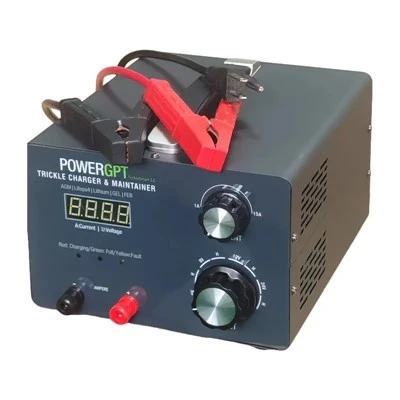
At the end of the day, the goal of any fleet manager is to minimize downtime, save money, and keep operations running smoothly. Three-phase forklift chargers check every box. They charge faster, use less energy, last longer, and keep your batteries healthier. If you’re still using single-phase units and dealing with the headaches that come with them, it’s time to make the switch. If you’re ready to stop wasting money on high energy bills and dealing with broken chargers, we’re here to help. Reach out to our team to talk through your fleet’s needs, figure out the right three-phase charger setup for you, and get your downtime back under control.
Battery Charger References
- National Renewable Energy Laboratory. (2021). Efficiency Impacts of Three-Phase Power Distribution for Industrial Equipment.
- Material Handling Industry Association. (2022). Forklift Battery Charging Best Practices for Fleet Managers.
- U.S. Department of Energy. (2020). Energy Savings from High-Efficiency Industrial Chargers.
- International Electrotechnical Commission. (2019). Standards for Three-Phase Charging Systems for Electric Industrial Vehicles.
Huizhou Qiangfeng Power Technology Co., Ltd.
Huizhou Qiangfeng Power Technology Co., Ltd. is one of the most professional forklift charger manufacturers and suppliers in China, featured by quality products and good service. We warmly welcome you to buy customized forklift charger made in China here from our factory. If you have any enquiry about quotation and free sample, please feel free to email us.
Address: No. 28, Hu’ao Avenue, Shiwan Town, Boluo County, Huizhou City, Guangdong Province
E-mail: Komco@Jinlidianqi.cn
WebSite: https://www.autobatterychargers.com/
