If you’ve ever sat in on a conversation between a craft spirit producer scaling up their operation or a chemical plant manager optimizing their separation workflow, you’ve likely heard people toss around “distillation plant” and “still plant” like they’re interchangeable. Early in my career as a distillation plant supplier, I made that mistake too—until a customer from a small artisanal gin distillery walked my floor, pointed to a 5,000-liter column unit, and said, “I thought I needed a ‘still plant’ until I saw this. You guys don’t sell the tiny batch copper pots I was ready to buy.” That comment set me on a years-long deep dive into the differences between these two setups, and it’s a distinction that’s only grown more critical as demand for consistent, scalable separation and spirit production rises. Distillation Plant
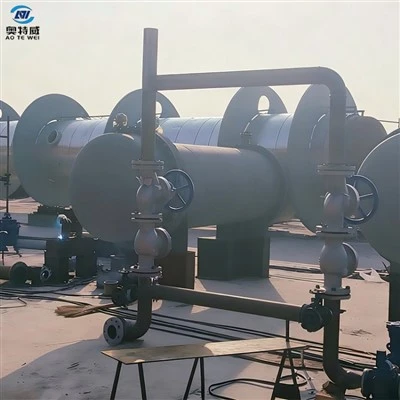
To break it down simply, the gap between a distillation plant and a still plant comes down to scale, functionality, and end-use. A still plant is a batch-focused, often modular system built for small to medium-volume production, usually centered on a simple still vessel—think pot stills or basic reflux stills—plus minimal auxiliary equipment like a condenser and collection tank. A distillation plant, by contrast, is a continuous or semi-continuous, integrated, industrial-grade system designed for high-volume, consistent, and often multi-step separation or production. But let’s dig past the surface, because the nuance is where you’ll spot the real differences that impact every part of your operation.
Start with the core design and operation. A still plant is, at its heart, a batch process system. Batch production means you load raw material—say, fermented wash for vodka, grain mash for whiskey, or even a botanical mix for gin—into the still vessel, apply heat to vaporize the alcohol or target compounds, condense that vapor back into liquid, collect the desired fraction, then empty the vessel and start over. Each run is discrete, with a hard stop between batches. That makes still plants attractive for small operators: they’re cheaper to set up, require less upfront investment, and are easy to adapt to small-batch, custom products, which is why so many micro-distilleries use them. But that batch limitation comes with a tradeoff: no two batches are ever exactly the same. Temperature fluctuations, minor variations in raw material, and even human error during loading or unloading can shift the flavor profile or purity of each run. I’ve seen craft producers love still plants for their ability to make a unique, one-off whiskey that stands out at local farmers’ markets, but struggle when they try to scale that product to regional distribution because consistency is impossible to guarantee.
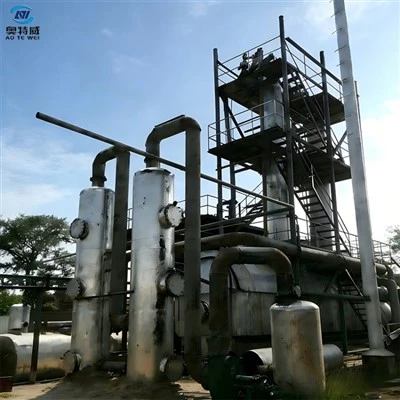
A distillation plant, on the other hand, runs on continuous or semi-continuous operation, with integrated columns, heat exchangers, pre-treatment systems, and process control technology that keeps conditions steady 24/7. The core here isn’t a single still vessel—it’s a distillation column, which is stacked with trays or packing material that lets vapor and liquid interact repeatedly, separating compounds by their boiling point with far higher precision than a basic still. This system is designed to feed raw material in one end, pull consistent, high-purity product out the other, and run for days or even weeks without a full shutdown (only minor maintenance stops). That consistency is a game-changer for producers targeting large markets: every bottle of vodka from a distillation plant will have the same alcohol content, smoothness, and clarity, because the system maintains exact temperatures, pressure, and flow rates. That’s why brands like Tito’s or Diageo rely on these systems, not small still plants.
Next up is throughput and scalability, two factors that make or break a growing business. Still plants are limited by their batch size. A standard 500-liter pot still, for example, can produce roughly 250 liters of high-proof spirit per batch, and a full day of production might yield just three to four runs. That adds up to around 1,000 liters a day, max, before you need to invest in multiple stills to keep up. For artisanal operators, that’s enough to start, but if you land a national retail contract, that output is nowhere near enough. The only way to scale a still plant is to buy more individual units, which means more floor space, more labor, more maintenance, and higher long-term costs. And even then, you can’t eliminate the batch-to-batch inconsistency that comes with parallel stills.
Distillation plants are built for scalable, high-volume output. A single 10,000-liter continuous distillation plant can produce 10,000 liters of product per day or more, depending on the application, with a fraction of the labor needed to run multiple still plants. The system is modular too: if a producer outgrows their current plant, we can add additional columns, heat exchangers, or column packing to increase throughput without a full system replacement. That’s been a huge selling point for a client of mine, a mid-sized tequila brand that started with a 2,000-liter distillation plant five years ago. As their distribution grew from Mexico to the U.S. and Canada, they added a second column to their existing setup, boosting output by 70% without needing to scrap their original investment. Still, plants are for the micro end, distillation plants are for growth—plain and simple.
End-use and product quality are where the practical differences hit hardest. If you’re a craft distillery making small-batch, single-malt whiskey or experimental botanical spirits, a still plant works because the slight variations in batch flavor are seen as a feature, not a bug. Many distillers value the “artisanal” character that comes from a hand-monitored pot still run. But if you’re a producer making neutral grain spirit for gin, vodka, or industrial alcohol, or even a chemical company separating solvents for pharmaceutical use, consistency and purity are non-negotiable. A still plant can only achieve a spirit purity of around 95% ABV (alcohol by volume) with a reflux still, but a distillation plant with a rectifying column can push that to 99.9% ABV, because the repeated vapor-liquid interaction strips out impurities consistently. That’s why so many large spirit brands rely on distillation plants, and why chemical manufacturers use them for solvent recovery and purification.
I also have to talk about support and operation, something that’s often overlooked when operators are shopping for equipment. A still plant is simple enough that most small distiller owners can run it themselves, with basic training. You don’t need a team of process engineers to monitor a 500-liter pot still; you just need someone to check the temperature, collect the heart fraction, and clean the vessel. But that simplicity cuts both ways: as you try to scale, you’ll hit a wall, and the lack of process control means you’re wasting a lot of raw material on off-spec batches. A distillation plant, while more complex, comes with full process monitoring, automated controls, and on-going technical support. When one of our distillation plant clients had a minor flow issue last year, our team of process engineers was on-site in 48 hours, adjusted the column packing, and had them back at full output by the end of the week. That’s the kind of support you can’t get with a basic still plant, which relies on the owner’s own troubleshooting skills.
Now, a lot of people ask me: is one better than the other? The short answer is no—it depends on your business goals. If you’re a hobbyist or a small artisanal producer making 1,000 liters a year for local sales, a still plant is perfect. It’s affordable, easy to use, and lets you create a unique product that stands out. But if you’re planning to grow your brand to regional or national distribution, if you need consistent product quality, high throughput, or if you’re producing spirits or chemicals that require ultra-pure output, a distillation plant is the only way to go.
I’ve worked with hundreds of producers over the years, and I’ve seen the pain of choosing the wrong equipment. There was a craft gin distiller last year who bought a still plant thinking he’d start small and expand. Six months in, he landed a deal to be in 200 stores across the Southeast, and he couldn’t keep up with demand or consistency. He ended up selling his two still plants and investing in a distillation plant from us, and he’s now on track to hit 500,000 liters of output this year. Conversely, there’s a small whiskey distillery in Kentucky that’s been using a single copper still plant for 20 years, and they have no plans to scale. Their product’s unique batch-to-batch character is their biggest selling point, and they’ve no interest in the industrial feel of a distillation plant. That’s exactly why the line between these two systems is so personal—it’s tied to what you want your business to be.
If you’re weighing which system is right for your operation, don’t make the same mistake I made early in my career. Take the time to map out your short-term and long-term goals, your required output, the purity of product you need, and your budget. Still plants have their place, but they’re not for everyone, and distillation plants aren’t just for giant corporations. We work with everyone from new micro-distilleries to large multi-national brands, helping them pick the right system for their current needs, and adjust as they grow.
Pyrolysis Plant If you’re ready to talk through your specific needs, whether you’re a small producer curious about scaling or a large brand looking to upgrade your current setup, we’re here to help. We don’t sell one-size-fits-all systems; we work with you to design a solution that fits your output, your product goals, and your budget. Just reach out to connect with our team of experts for a consultation tailored to your operation.
References
- Ettre, L. S., & Hildrum, K. I. (2001). Distillation: Principles and Practice. Wiley-VCH.
- Nielsen, S. S. (2017). Food Analysis (5th ed.). Springer.
- Lieberman, M. A., & Gildert, S. (2010). Industrial Distillation: Design and Operation. CRC Press.
- Taylor, D. R. (2015). Distillation Equipment and Processes. Gulf Professional Publishing.
- Bamforth, C. W. (2018). The Oxford Handbook of Food Fermentations. Oxford University Press.
Shangqiu Aotewei Environmental Protection Equipment Co., Ltd.
Shangqiu Aotewei Environmental Protection Equipment Co., Ltd. is one of the most professional distillation plant manufacturers and suppliers in China, also supports customized service. Please feel free to buy CE approved distillation plant at competitive price from our factory. Welcome to contact us for pricelist.
Address: No.88 Longhai Road, Liangyuan District, Shangqiu City, Henan Province, China
E-mail: colin@henanpower.com.cn
WebSite: https://www.aoteweitech.com/
