If you’re an LED ceiling light supplier, I get it—sometimes clients come to us with a familiar problem: they’ve already got a perfectly good LED ceiling light fixture installed in their office, retail space, or home, but they need more brightness to handle new signage, larger display areas, or busier foot traffic. When we first started advising on this a few years back, we used to think “just replace the whole unit” was the only solution. But after working with hundreds of small business owners, contractors, and even residential builders, we’ve learned there are science-backed, cost-effective ways to boost brightness without ripping out existing fixtures. Let’s walk through what works, what doesn’t, and how to do it right. LED Ceiling Light
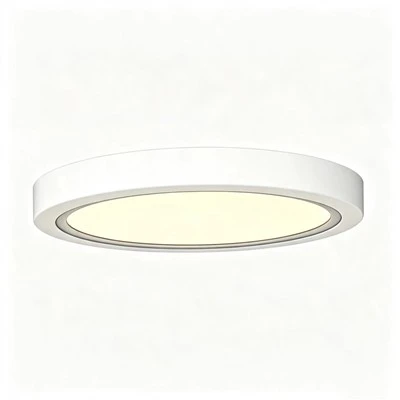
First, let’s start with a quick refresh on why LED ceiling light brightness fades over time, because you can’t fix what you don’t understand. Most of our standard LED ceiling lights use a component called a “linear LED array” or a “COB (chip-on-board) module” mounted inside a diffuser and backed by a driver (the tiny circuit board that powers the LEDs). Brightness, measured in lumens, is determined by two main factors here: the light output of the LED chip itself, and how efficiently that light escapes the fixture.
Over time, a few things kill that lumens. One is “lumen depreciation”: most high-quality LEDs lose about 2-3% of their brightness every 1,000 hours of use, which means by 50,000 hours (the average lifespan of a good LED), you’re looking at 10-15% less light than when it was new. The other big culprit is buildup on the fixture: dust, grease, or even mold gets trapped between the LED module and the diffuser, acting like a filter that blocks light. For commercial spaces like restaurants or auto shops, that grease can cut brightness by 20% or more in just 12 months.
Now, let’s get to the actionable steps. The first and easiest fix is cleaning the fixture, and I know what a lot of people get wrong here. I’ve had a client come to us last year who tried wiping their LED ceiling light with a paper towel and window cleaner, and ended up with streaks that diffused even more light. The key here is that LED diffusers (usually made of polycarbonate or acrylic) are sensitive to harsh chemicals, and the LED chips themselves are static-prone, so dust sticks extra tight.
Here’s the right way to clean: Turn off the power at the circuit breaker first—no exceptions, even if the light is off. Let the fixture cool for at least 15 minutes, because hot plastic can scratch easily. Remove the diffuser cover: most LED ceiling lights snap into place, so just twist or pull gently (if you’re unsure, reference the model number we supply, and we can send a quick guide). For the diffuser itself, use a lint-free microfiber cloth dampened with distilled water—tap water has minerals that leave spots. If there’s tough grease, mix a tiny bit of mild dish soap (unscented, no moisturizers) with distilled water, wring the cloth until it’s almost dry, and wipe in a circular motion. For the LED module, don’t spray cleaner directly on it—use a dry microfiber cloth to gently brush off dust. Skipping the cleaning step can give you a 10-15% brightness boost for free, no tools needed.
Next up, if cleaning doesn’t cut it, you can upgrade the LED module without replacing the whole fixture. This is where a lot of clients are hesitant, but it’s actually one of the most cost-effective fixes. Let’s explain why: when we design a standard LED ceiling light, we spec a driver that’s compatible with a range of module wattages. For example, a 15-watt module might work with a driver rated for up to 20 watts, so you can swap the 15W module for a 18W or 20W module that’s the exact same size and fits the same fixture.
But here’s the critical science part: not all modules are created equal. A cheap 20W module from a random supplier might put out the same lumens as a 15W module from our line, because it uses lower-quality LED chips that waste energy as heat. At our company, we test all our modules for “luminous efficacy,” which is lumens per watt (LPW). Our standard modules have an efficacy of 150 LPW, which means a 18W module gives 2,700 lumens—way brighter than a 15W module’s 2,250 lumens, all without overloading the driver or changing the fixture.
Wait, but can you just put in a higher wattage module than the driver is rated for? That’s a bad idea. The driver is calibrated to send a specific amount of power to the LEDs. If you put a 25W module on a 20W driver, the LEDs will run hotter, which speeds up lumen depreciation and can shorten their lifespan by half, or even burn out the driver. We always recommend checking the driver’s output rating (it’s printed on the driver itself, usually a number like “24V DC 20W”) and then choosing a module that’s within 10% of that wattage. For example, a 20W driver works perfectly with a 18-22W module.
Another option for brightness: upgrading the diffuser. If your current diffuser is a clear, low-transmission plastic, it might be blocking 10-15% of light. Our standard diffusers are made of frosted polycarbonate with a 90% light transmission rate, but if you have an older fixture, you might have a diffuser that’s only 70% efficient. Swapping to a high-transmission diffuser is cheap, easy, and can add noticeable brightness. Just make sure the diffuser matches the size and shape of your existing fixture—all our diffusers are molded to fit our standard ceiling lights, but we also stock universal sizes that work with most competitors’ models, which is why a lot of contractors come to us for replacement parts.
Now, what about color temperature? A lot of people don’t realize that color temperature affects how bright light looks, even if the lumen count is the same. Warm white light (2700K-3000K) feels softer, so it can seem dimmer to the human eye, while cool white (4000K-5000K) has a crisper, more vibrant glow that our brains perceive as brighter. I had a retail client last year who switched their 3000K LED ceiling lights to 5000K modules, and they reported a 20% increase in perceived brightness—even though the actual lumen count was almost identical. That’s a huge win, and it’s just a simple module swap.
But there are a few fixes that we don’t recommend, and I’ve seen a lot of people waste money on these. First, don’t add extra LEDs to the existing array. Most LED ceiling lights are wired in series or parallel, so adding extra lights will throw off the current, leading to flickering or a short circuit. Second, don’t crank up the voltage to the driver. That’s a fire hazard—overpowering the driver will overheat the fixture, which can melt plastic components or cause a fire, and it will void any warranty you have on the light. Third, don’t use a bulb adapter to swap in a higher-wattage incandescent bulb. LED fixtures are designed for low-voltage DC power, not the high-voltage AC of incandescents, so that will burn out the driver instantly.
Let’s talk about a real example to make this concrete. Last quarter, a small café owner contacted us because their existing LED ceiling lights were too dim for their new pastry display case, which they’d added to attract more evening customers. The café had 6 12-inch round LED ceiling lights, 15W each, with a 2700K color temp. We walked them through the steps: first, they cleaned each diffuser (which had grease buildup from the kitchen), and that gave them a 12% brightness boost. Then, we suggested swapping the 15W modules for our 18W 5000K modules, which fit the exact same fixtures and drivers. The total cost was less than $20 per light, and the café owner reported that the pastry display was now bright enough to draw in evening customers, with no need to replace the entire fixture. That’s the kind of solution we love at our company—cost-effective, fast, and no mess.
Now, if you’ve tried all these steps and still need more brightness, the next option is upgrading the entire fixture—but even then, you don’t have to start over. Our LED ceiling lights are designed to be retrofittable, meaning they mount to the same junction box as most standard ceiling lights, so you don’t have to do major electrical work. If you’re a contractor or a business owner looking for higher brightness, we also offer “high-lumen” versions of our standard fixtures that put out 2,000 lumens per light, compared to our standard 1,500 lumens. These use the same high-efficacy chips we were talking about earlier, so they’re more energy-efficient than older fixtures that put out similar brightness.
One last tip for long-term brightness: if you’re operating a commercial space, set a quarterly cleaning schedule. For restaurants or auto shops, where grease and dust build up fast, monthly wipes of the diffuser can keep brightness consistent. For residential spaces, a quick clean every 6 months is enough. We also offer maintenance kits for our clients, which include the microfiber cloths and distilled cleaning solution we recommend, so you don’t have to track down supplies.
At the end of the day, increasing the brightness of an existing LED ceiling light doesn’t have to mean a full replacement. It’s about understanding how the fixture works, taking small, science-backed steps, and choosing components that are compatible with your existing setup. As an LED ceiling light supplier, we’ve seen too many clients overpay for full replacements when they could get the brightness they need for a fraction of the cost with cleaning, module swaps, or diffuser upgrades.
Fixed Luminaires If you’re considering adjusting your existing LED ceiling lights for more brightness, or you’re a contractor looking for reliable retrofit solutions, we’re here to help. Whether you need technical guidance on module compatibility, replacement diffusers, or high-lumen fixtures, our team can walk you through the best options for your space. Reach out to our sales team to discuss your specific needs and get a custom quote tailored to your project.
References
- IEEE Transactions on Power Electronics: “Luminous Efficacy and Thermal Performance of High-Power LED Modules for Lighting Applications”
- Illuminating Engineering Society (IES): “LM-80 Standard for Measuring Lumen Maintenance of LED Light Sources”
- National Fire Protection Association (NFPA): “LED Lighting Fixture Safety Guidelines for Retrofit and Upgrade Projects”
Debesen (Shanghai) Optoelectronics Technology Co., Ltd.
We are one of the most professional led ceiling light manufacturers and suppliers in China, featured by quality products and good service. Please rest assured to wholesale advanced led ceiling light in stock here and get quotation from our factory. We also accept customized orders.
Address: No.258 Xiucheng Road, Fengcheng Town Economic Development Zone, Fengxian District, Shanghai
E-mail: Debesen258wendy@163.com
WebSite: https://www.debesen.com/
