If you’ve ever placed a custom plastic turned part into a finished assembly, you know the gap between a CAD drawing and a functional, precision component is rarely straightforward. As someone who’s run a small plastic turned parts supplier for 12 years, I’ve seen hundreds of jobs go sideways not because of poor design, but because of the unique challenges machining plastics pose—challenges that often slip through the cracks when engineers used to working with metal ignore the properties of the material they’re specifying. Let’s break down the most common, costly hurdles I deal with on a weekly basis, and why even the best drawings don’t guarantee a good result. Plastic Turned Parts
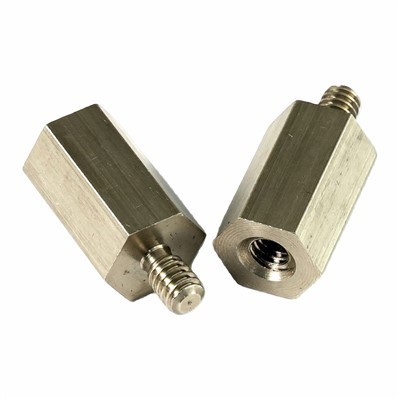
First, there’s the issue of thermal instability, which trips up even the most seasoned machinists. Most engineering plastics—think ABS, nylon, polycarbonate, and PEEK—have a much lower glass transition temperature than metals. Where a steel part can handle repeated cutting tool heat without warping or changing shape, a plastic blank will soften, expand, or even melt mid-turn if we don’t adjust our process. Last year, we had a client request a 1.25-inch diameter nylon bushing with a 0.625-inch inner bore and a tight ±0.002-inch tolerance. The initial run used the same spindle speed and coolant flow we’d use for a comparable aluminum bushing, and every single part came out with an inner bore 0.008 inches over target. We traced it to heat: the cutting edge of the tool was generating enough friction to heat the nylon blank to 175°F—just below its glass transition point, where the material starts to soften permanently. By dropping the spindle speed by 30% and switching to a water-based coolant formulated specifically for plastics (one that doesn’t leave a residue that attracts dust, another tiny but annoying detail), we got tolerances that hit within ±0.0015 inches, well within the client’s requirements. What people don’t realize is that plastic’s thermal expansion is also way higher than metal—around 50 times greater than steel, in fact. So even if we keep the part cool during machining, the way it shrinks as it cools down means we have to account for that when programming final cuts. It’s a balancing act: go too slow to avoid heat, and we risk tool chatter; go too fast, and we ruin tolerances. There’s no one-size-fits-all speed for plastics, which is why we test every new material on a single sample before ramping up a production run.
Next up, chip management, or rather the complete lack of chips when machining plastic. With metal, when a tool cuts, it shears off a solid chip that falls away from the part, giving you a clear view of the cut and not clogging tight features. Plastics don’t shear cleanly, especially when they’re soft or have high elasticity. Instead of forming a solid chip, they produce fine, stringy swarf that wraps around the tool, the workpiece, and even the spindle, creating all kinds of problems. Last quarter, we were turning a series of polycarbonate gear housings, and the swarf was so stringy that it would build up on the tool’s tip, pushing the cutter off its path and ruining the gear’s tooth profile every few parts. We tried regular chip brushes and air blowers, but both just spread the swarf around instead of removing it. The fix? We switched to a tool with a sharper rake angle—steeper, which reduces friction and makes the plastic shear instead of stretch—and added a custom vacuum line positioned within a quarter-inch of the cut zone to suck up the swarf as it formed. Even with that, we still have to stop every 50 parts to clear the line, because fine plastic dust can also clog filters over time. For harder plastics like PEEK, swarf turns into tiny, abrasive shavings that scratch finished surfaces, so we have to use tools coated with a low-friction material like diamond-like carbon (DLC) to prevent the swarf from sticking. If we skip that, the surface finish on a part can go from a smooth, uniform 12 Ra to a rough 60 Ra in just a few dozen cuts, which is a disaster for parts that need to seal or fit tight in assemblies.
Then there’s the issue of dimensional consistency, or lack thereof, which is tied to both thermal properties and material variability. Unlike metals, which are produced with consistent, uniform grain structures, plastics can vary a lot from batch to batch, even from the same manufacturer. A resin manufacturer might change a minor additive to improve moldability, which changes the material’s density, thermal expansion rate, and machinability. Last year, we got a batch of acetal blanks from a new supplier, and the parts we machined came out with a 0.003-inch variance in outer diameter between two identical blanks. We traced it back to the blanks being extruded instead of injection-molded—extruded plastics have a directional grain that makes them expand differently along the extrusion axis versus across it, something injection-molded blanks don’t have as much of. That’s a hidden challenge: even if a material is listed as the same grade, the way it’s produced can throw off your cuts. We now test every new batch of blanks by machining three small test parts before starting a full run, checking their dimensions at multiple points to spot that kind of variability early. It’s an extra step that adds a few days to the process, but it’s saved us from sending thousands of bad parts to clients over the years.
Surface finish is another common pain point, especially for parts that need to be aesthetic, chemically resistant, or lubricated. When machining metal, you can adjust tool sharpness and feed rate to get a smooth finish, but plastics have a tendency to get a fuzzy, torn surface if the tool isn’t perfectly set up. That “tear out” happens when the cutting tool pulls small chunks of plastic from the workpiece instead of shearing it clean, leaving a rough edge that can make the part prone to cracking under stress, or fail to pass a chemical resistance test because the fuzzy surface traps solvents. We recently had a client in medical devices request polyetherimide (PEI) parts with a mirror-like surface finish for a diagnostic instrument, and we spent three weeks testing tools and feed rates to get it right. The problem was that PEI is a very rigid but brittle plastic, so even a slightly dull tool would tear the surface. We ended up using a diamond-tipped tool (harder than steel, so it stays sharp longer) with a feed rate of 0.0005 inches per revolution—way slower than we’d use for aluminum—and a high-pressure coolant that flushes away swarf without leaving a residue. Even then, we only got one good part out of the first 100, because a single tiny chip on the tool tip would ruin the finish. We now inspect every part for surface finish under a 10x microscope, which adds time but eliminates rejections after shipment.
Tool wear is less talked about when it comes to plastics, but it’s a big factor in cost and consistency. Hard plastics like PEEK, UHMW, and acrylic have very high molecular hardness, which makes them abrasive to cutting tools. A standard high-speed steel tool might only last 20 parts before its edge is worn down enough to cause dimensional errors or surface damage. That means we have to use carbide tools for most high-machinability plastics, and diamond-coated tools for the harder ones, which are 5 to 10 times more expensive than standard steel tools. It also means we have to change tools far more frequently than we would for metal. Where a steel spindle might run for 10 hours before needing a tool change, a plastic turning spindle can need a change every 1 to 2 hours, depending on the material. That not only increases tool costs but also slows down production, so we have to balance tool cost with production time for every job. For low-volume runs, we’ll sometimes use cheaper carbide tools, but for high-volume runs, diamond-coated tools are worth the investment because they reduce the number of rejections from worn tools.
There’s also the underdiscussed issue of part holding, or getting a plastic blank secured without damaging it. Plastics are softer than metals, so if we use a standard metal chuck to hold a part, the jaws will leave indentations on the outer surface, which is a problem for parts that need to be smooth or sealed. We’ve had clients reject parts because of a tiny jaw mark that was less than 0.001 inches deep, even though it didn’t affect function at all. To fix that, we use soft jaws made of aluminum or even nylon that are custom-machined to fit the exact shape of the part, so the clamping force is distributed evenly around the blank instead of concentrated in three spots. For parts that need to be held from the inner diameter (like bushings or rings), we use expandable collets instead of mandrels, which grip the inside evenly without scratching. Even with that, we have to adjust the clamping force for each material—too much force on a soft plastic like LDPE will deform the part, and too little will let it slip mid-turn, ruining the part and possibly damaging the machine. It’s a small detail, but one that makes all the difference between a good part and a scrap pile.
All of these challenges add up to a fact that I’ve learned over the years: machining plastic turned parts is not just “turning metal with plastic.” Every process adjustment you make for metal has to be rethought for plastic, because the material behaves fundamentally differently. A client once told me they tried machining their own nylon parts in-house, using the same equipment they used for aluminum, and ended up with a 40% rejection rate before giving up and sending the work to us. That’s the cost of not accounting for these unique challenges: wasted material, lost production time, and damaged relationships with clients who thought plastic would be “easy” to machine.
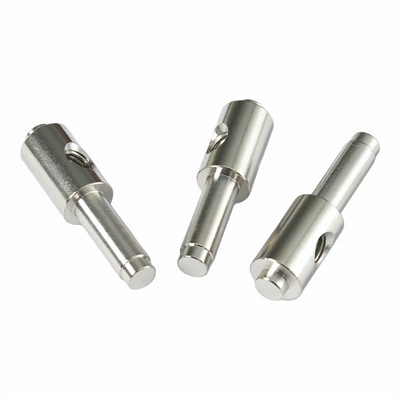
If you’re working on a project that requires custom plastic turned parts—whether it’s for automotive, medical, consumer electronics, or industrial equipment—don’t assume that any supplier can pull off a precision part. The right supplier won’t just quote a price based on your CAD drawing; they’ll ask you questions about the material grade, tolerances, surface finish, and end use, because those details determine how we adjust our processes to avoid the challenges I outlined here. We work with clients to test samples, adjust designs if needed, and ensure that every part meets your requirements without costing you more than necessary.
Stainless Steel Turned Parts If you’re looking for a reliable partner for your plastic turned parts, let’s connect to discuss your project. Whether you have a clear CAD drawing, a rough concept, or need help selecting the right material for your application, we can walk through the challenges and solutions specific to your part to deliver a high-quality component that fits your needs.
References
- Engineering Plastics: Properties and Applications, Hanser Gardner Publications, 2021.
- Machining of Plastics: Fundamentals and Techniques, Society of Manufacturing Engineers, 2019.
- Thermal Properties of Engineering Materials, CRC Press, 2020.
Huizhou Quanyi Precision Hardware Products Co., Ltd.
We’re well-known as one of the leading plastic turned parts manufacturers and suppliers in China, featured by quality products and good service. Please rest assured to buy customized plastic turned parts made in China here from our factory. Contact us for more details.
Address: Building A10, 7th Floor, Zhongchuangyingke 5G Industrial Park, Zhonghan Industrial Park, Tonghu Town, Huizhou City
E-mail: info@qycncturning.com
WebSite: https://www.qycncturning.com/
