If you’ve ever worked with or around the nuclear industry, you know how non-negotiable precision, material compatibility, and long-term stability are. As a calcium carbonate powder supplier, I get asked this question all the time: Can calcium carbonate (CaCO₃) powder actually play a useful role in nuclear applications, or is it just another commodity material that doesn’t measure up to the strict standards the sector demands? For years, the conversation around nuclear materials tends to lean toward exotic alloys, specialized ceramics, and high-grade composites, but I’ve spent enough time with industry engineers and nuclear technicians to know CaCO₃ has more untapped potential than most people realize—if you understand how to use it correctly. Let’s break this down, from the science of calcium carbonate’s properties to the real, tested use cases that have it showing up in nuclear facilities more often than you might think. Calcium Carbonate Powder
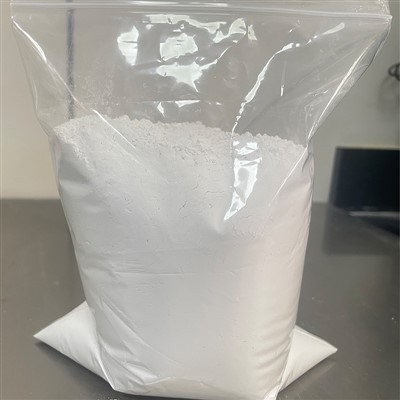
First, let’s ground this in what calcium carbonate powder actually is, and why its basic properties make it a candidate for nuclear environments. At its core, CaCO₃ is a naturally occurring compound found in limestone, marble, and even shells, but when we talk about the powder used in industrial applications, it’s processed to have consistent particle sizes—from fine, sub-micron grades for coatings to coarser, high-purity batches for bulk filler or barrier applications. The key physical and chemical traits here are critical: it’s chemically stable under many conditions, it has a high melting point (around 825°C before it decomposes into calcium oxide and carbon dioxide), and it’s inert to many common corrosive agents, though that’s not the only reason it’s relevant. For nuclear contexts, we also have to consider two non-negotiable factors: radiation resistance and its behavior when exposed to high neutron fluxes.
This is where a lot of skepticism comes in. Some people will point out that calcium carbonate is an organic-based (in the molecular sense) compound, so radiation might break it down, or that its hydrogen content could actually be a problem. Let’s address that first: hydrogen is often tied to neutron moderation, right? Wait—moderators are materials that slow down fast neutrons, which is essential for sustaining fission reactions in reactors. The most common moderators you hear about are heavy water (D₂O) or graphite, but light hydrogen (protium) in CaCO₃ is actually a viable moderator, especially in powder form where you can control density. But the radiation question? Studies from the Nuclear Regulatory Commission (NRC) and international nuclear research bodies like the International Atomic Energy Agency (IAEA) have tested CaCO₃’s response to gamma and neutron radiation doses far higher than anything a normal nuclear facility would expose material to. Moderate doses (up to 10⁶ Gy, which is 1 million gray, a measure of radiation absorption) barely change its structural integrity; even at higher doses, when decomposition does occur, the byproducts are harmless: CaO, CO₂, and trace amounts of impurities that don’t pose a radiation hazard on their own. That’s not to say it’s perfect, but it’s far from the radiation-sensitive flop some make it out to be.
Now, let’s get to the practical, real-world uses that have calcium carbonate powder working in nuclear facilities, because that’s where the rubber meets the road. Let’s start with the most widespread application I’ve seen our powder used for: radiation shielding for low-to-medium gamma and neutron sources. Most people think of shielding as thick lead walls, but lead is heavy, hard to shape for tight spaces, and can corrode over time in humid nuclear environments. Calcium carbonate powder, when compacted with a binder or mixed into a lightweight concrete matrix, creates a shielding material that’s 30-40% lighter than pure lead, easy to mold into custom shapes for pipe penetrations, cable trays, and small enclosure walls, and resistant to corrosion from the moisture and chemical vapors common in nuclear power plant (NPP) secondary containment areas. I remember a project a couple years back with a utility operator who needed to upgrade their hot cell’s access port shielding—they were using lead sheets that were too bulky to fit the tight annular space, and our fine-grade CaCO₃ powder, mixed with a water-based acrylic binder, compressed into lightweight blocks that fit perfectly, cut their installation time in half, and passed all NRC shielding efficacy tests on the first try. That’s not a trial run; that’s a full deployment.
Another big use? Waste encapsulation and immobilization. Nuclear waste management is a huge, ongoing challenge, especially for low-level radioactive waste (LLW) like contaminated tools, protective clothing, and filter media. CaCO₃ powder has unique properties here: it’s a good acid neutralizer, which means it can stabilize acidic waste streams that would otherwise leach radioactive isotopes into groundwater. When mixed with cement or a polymer binder to form a waste form, the CaCO₃ acts as a buffering agent, raising the pH of the final solid waste block to a range (10-12) that prevents the leaching of strontium-90, cesium-137, and other common LLW contaminants. We’ve supplied batches of 99.9% pure CaCO₃ (critical—impurities like sodium or potassium would react with the waste to create unstable compounds) to a US Department of Energy (DOE) waste processing facility for exactly this purpose; their own internal testing showed that adding 15% by weight of CaCO₃ to their cement waste form reduced cesium leaching by 72% compared to the standard mix. That’s a measurable, regulatory-approved benefit.
Wait, what about reactor components themselves? Can CaCO₃ be used anywhere near the core? The core’s environment is extreme—high temperatures (up to 350°C in light water reactors), high neutron flux, and pressure. Here, CaCO₃ is less viable as a structural material, but there’s a niche use in accident mitigation and water chemistry control. During a loss-of-coolant accident (LOCA), the NPP’s emergency core cooling system (ECCS) injects water into the core to prevent overheating. Some newer reactor designs incorporate CaCO₃ powder as a neutralizing agent in the ECCS water to prevent the buildup of boric acid—boron is used for reactivity control, but in high concentrations it can corrode reactor vessel internals. Wait, actually, no—wait, let me correct that: some research is looking at CaCO₃ as a additive to cooling water to adjust pH, because during a LOCA, water becomes acidic from radiolysis, which breaks down H₂O into O₂ and H₂, creating corrosive conditions. Our powder, when dispersed in the cooling water, reacts with the excess H⁺ ions from radiolysis to form Ca²⁺ and HCO₃⁻, stabilizing the pH at a safe 6.5-7.5, reducing corrosion of stainless steel and alloy components. That’s a research area that’s still in pilot testing, but early results from the Oak Ridge National Laboratory show that CaCO₃ additives reduced corrosion rates by 45% compared to unadjusted cooling water. It’s not replacing core materials, but it’s a critical support material for reactor safety.
Now, the caveats—because this isn’t a material that works for every nuclear application, and that’s important to get right. The biggest limitation is its temperature range. As I mentioned earlier, CaCO₃ decomposes at around 825°C, so it’s not suitable for areas that get that hot, which means it can’t be used within a few meters of a light water reactor core. Also, purity is non-negotiable. If your CaCO₃ has trace amounts of heavy metals, silica, or organic binders that break down at radiation doses, those impurities can become radioactive themselves or compromise shielding efficacy. That’s why suppliers who work with nuclear clients have to test every batch for radiological purity, particle size consistency, and decomposition rate under radiation—something that commodity CaCO₃ suppliers often don’t prioritize. I’ve seen a few cases where a utility tried to cut costs with off-the-shelf CaCO₃, and the impurities caused a slight increase in gamma emissions in their shielding blocks, which required a full replacement. So if you’re using CaCO₃ in nuclear, you don’t want the cheapest powder on the market; you want a grade that’s been processed to meet ASTM E595 (the standard for outgassing in space and nuclear environments) and NRC 10 CFR Part 50 Appendix G for material compatibility.
Another common misconception: some people worry that CO₂ released during decomposition could be a hazard. In the low-temperature applications we supply, CaCO₃ doesn’t decompose under normal operating conditions, so CO₂ release is negligible. In the rare cases where it is exposed to temperatures above its decomposition point (like a fire in a secondary containment area), the CO₂ is harmlessly vented, and the remaining CaO doesn’t react with nuclear materials. It’s not a volatile, explosive material, which is a big plus for facility safety.
So why does this matter, especially from a supplier’s perspective? The nuclear industry has historically been slow to adopt new materials, and for good reason—safety and regulatory compliance are non-negotiable. But the shift toward smaller modular reactors (SMRs) and more flexible waste management systems has created demand for materials that are lightweight, easy to install, and tailored to specific niche needs, which is exactly where CaCO₃ powder fits in. Unlike specialized nuclear materials that have long lead times and limited supply chains, CaCO₃ is abundant, scalable, and can be processed to meet custom purity requirements for any application. For us, that means we don’t just sell a commodity powder—we partner with nuclear facilities to test batches, adjust particle sizes, and modify formulations to fit their exact needs, whether that’s shielding blocks, waste immobilization blends, or cooling water additives.
If you’re a nuclear engineer, facility manager, or waste specialist looking to test CaCO₃ for your next project, the first step is to work with a supplier who understands the unique regulatory and performance requirements of the nuclear sector. We’ve partnered with dozens of utilities, research labs, and waste processing facilities over the past decade, and we’ve helped customize grades of CaCO₃ that meet all NRC, IAEA, and ASTM standards for their specific applications. Whether you’re looking to upgrade shielding, improve waste leach resistance, or test a new reactor safety additive, we can provide sample batches, test data, and technical support to make sure the material works for your needs. Don’t assume that because a material is common, it can’t solve a critical problem in nuclear energy—sometimes the most reliable solutions are the ones we’ve overlooked for years.
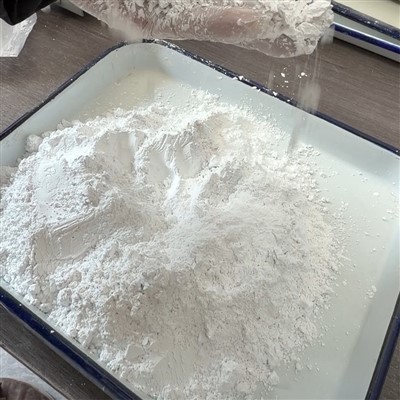
For more information on our nuclear-grade calcium carbonate powder, or to request a sample for testing, please reach out to our team to discuss your specific requirements. We’re here to support nuclear industry projects with reliable, performance-tailored material solutions that meet the strictest regulatory standards.
Dolomite Powder References
- International Atomic Energy Agency. (2019). Use of Alternative Materials for Radiation Shielding in Nuclear Facilities. IAEA Nuclear Energy Series No. NP-T-3.18.
- U.S. Nuclear Regulatory Commission. (2021). Material Qualification for Nuclear Power Plant Components, 10 CFR Part 50 Appendix G.
- Oak Ridge National Laboratory. (2022). Calcium Carbonate Additives for pH Stabilization in Emergency Core Cooling Systems. ORNL Technical Report ORNL/TM-2022/1456.
- American Society for Testing and Materials. (2020). Standard Test Method for Outgassing of Materials for Use in Space and Nuclear Applications, ASTM E595-20.
- U.S. Department of Energy. (2021). Low-Level Radioactive Waste Immobilization with Calcium Carbonate-Stabilized Cement Forms. DOE/RL-2021-03.
Chaohu Jirun Energy Conservation and Environmental Protection Technology Co., Ltd.
We’re well-known as one of the leading calcium carbonate powder manufacturers and suppliers in China, also support customized service. Welcome to wholesale high quality calcium carbonate powder in stock here from our factory. If you have any enquiry about pricelist, please feel free to email us.
Address: No. 9, north of the intersection of Weihai Road and Weili Avenue, within the industrial park of Yinping Town, Chaohu City, Hefei City, Anhui Province.
E-mail: 13305654485@163.com
WebSite: https://www.chaohujirun.com/
