If you’ve ever walked into a manufacturing plant, a water treatment facility, or a chemical processing site and spotted a sleek, unassuming device mounted on a tank, chances are it’s an optical level sensor. These tools are the quiet workhorses of industrial operations, responsible for measuring the volume of liquids, slurries, or even granular materials with high precision. As a supplier of optical level sensors, I’ve spent years talking to plant managers, maintenance teams, and engineers who ask the same question over and over: “How often do I actually need to maintain these things?” It’s a fair question—too much maintenance wastes time and money, too little leads to unexpected downtime, which is the last thing any operation wants. Today, I want to break down the science behind maintenance frequency for optical level sensors, pull back the curtain on what we’ve learned from years of supporting our customers, and give you practical guidance that balances performance, cost, and reliability. Optical Level Sensor
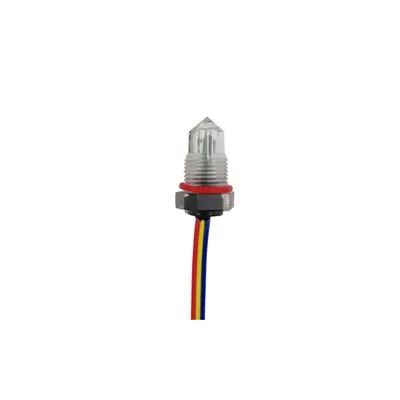
First, let’s get clear on what an optical level sensor is, because that context is key to understanding its maintenance needs. Unlike float sensors, which rely on physical contact with the material, or ultrasonic sensors, which use sound waves, optical level sensors work on light-based technology—typically either infrared light or visible LED light. Most common are two types: through-beam sensors, which have a transmitter and receiver on opposite sides of a tank opening, and retro-reflective sensors, which shine light toward a reflector mounted on the opposite side, with the receiver picking up the reflected light when the tank is empty or full. There’s also diffuse optical sensors, which detect light bounced directly off the material surface, ideal for smaller tanks or confined spaces.
That light-based operation is both optical level sensors’ biggest strength and their biggest maintenance vulnerability. If the light path gets blocked, or the lens gets dirty, the sensor can’t tell the difference between the material it’s measuring and dust, moisture, or residue on its surface. That’s why maintenance isn’t just a random task—it’s tied directly to how the sensor interacts with its environment.
So, what’s the baseline maintenance frequency? The short answer is: it depends. But that doesn’t mean there isn’t a general framework. From our experience supporting thousands of sensors across industries, most standard optical level sensors in clean, low-contamination environments (like a pharmaceutical manufacturing facility with filtered process water, or a food and beverage plant using purified ingredients) only need scheduled maintenance once every 12 to 18 months. That might sound surprising, but these environments are tightly controlled, so the lens stays clean, the light path stays unobstructed, and there’s very little buildup to interfere with readings.
But let’s talk about the most common environments, because that’s where the real work happens. For example, water treatment plants—both municipal and industrial—deal with raw water that’s full of sediment, algae, minerals, and sometimes chemical residues. Optical sensors here might be measuring clear water in a treatment basin, or thick, muddy slurry in a sludge holding tank. In these cases, maintenance frequency jumps to every 3 to 6 months. Why? Even a thin layer of algae on the lens can bend infrared light, making the sensor think the water level has dropped when it hasn’t. Or mineral scale buildup—think of the lime deposits on a faucet—can block so much light that the sensor can’t detect the surface at all, leading to inaccurate level readings that throw off the entire treatment process.
Then there’s the most challenging environment for optical level sensors: chemical processing sites. These might involve corrosive chemicals, volatile solvents, or sticky, viscous materials like polymers or adhesives. In these cases, maintenance might need to happen as often as every 1 to 3 months. I remember a customer a few years back who had an optical sensor measuring industrial adhesive in a mixing tank. The adhesive would splash onto the sensor lens every time the batch was agitated, forming a thin, tough film that the sensor couldn’t read. They tried cleaning it quarterly, but after adjusting their frequency to every 6 weeks, they cut level errors by 90% and avoided 3 unplanned shutdowns in a year. That’s the real-world tradeoff here—too infrequent maintenance, and you risk downtime, which costs way more than the labor for more frequent cleanings.
Now, it’s not just about scheduled cleanings. A big part of maintenance for optical level sensors is proactive checks, even if they don’t require taking the sensor apart. For all sensors, regardless of environment, we recommend a quick visual inspection every time you do other routine plant maintenance—so every 30 to 90 days, depending on your schedule. This check is simple: look at the lens, see if there’s any obvious dirt, buildup, or damage, and make sure the light path (if it’s a through-beam sensor) isn’t blocked by a tool, a stray piece of material, or even a spider web. We’ve had more than a few customers come to us confused because their sensor failed, only to find a spider had built a web across the transmitter and receiver over a weekend. That’s a quick fix, but it’s a reminder that environmental threats don’t always follow a scheduled maintenance calendar.
I should also address a common misconception: more frequent maintenance isn’t always better. In fact, over-maintaining optical level sensors can cause just as many problems as under-maintaining. Taking the sensor apart too often, or using the wrong cleaning products, can scratch the lens or damage the internal light components. We once had a customer who worked in a food processing plant who was cleaning their sensor monthly with a harsh industrial degreaser, thinking it was necessary. After a year, the lens was cloudy from repeated chemical exposure, and the sensor needed to be replaced 6 months early. The fix we recommended: a gentle monthly visual check, plus a deep clean every 6 months with a lint-free microfiber cloth and distilled water, which cut their sensor replacement cost by 40%.
Another key factor that changes maintenance frequency is the sensor’s mounting and calibration. If an optical sensor is installed correctly, with the lens angled to face away from direct sunlight (which can cause light interference), and calibrated to the exact type of material it’s measuring, it will perform better and need less maintenance. For example, a diffuse optical sensor calibrated to detect clear water will have a much harder time if it’s used to detect opaque sludge, and will need more frequent cleaning to adjust to the different light reflection. That’s why, as a supplier, we don’t just sell the sensor and walk away—we work with customers to help them set up their sensors for their specific application, which directly impacts their maintenance needs.
So, how do you tailor a maintenance schedule to your exact operation? Let’s walk through a step-by-step approach we share with all our new customers, because it’s flexible and data-driven, not a one-size-fits-all rule. First, start with baseline data: install the sensor, run it for 3 months, and track its performance. Look for red flags like frequent error messages, inconsistent level readings, or alarms that trigger when there’s no process issue. If there are few to no red flags after 3 months, you can extend the maintenance interval to 9 months, then to 12 months, as long as performance stays consistent. If you start seeing issues, shorten the interval in small increments—down to 4 months, then 2 months, until you find the sweet spot where the sensor runs reliably without unnecessary cleaning.
Also, keep an eye on seasonal changes. For example, a water treatment plant in a warm, humid climate will get more algae buildup in the summer, so maintenance frequency might need to go up in the summer months, even if it’s 6 months in the winter. A manufacturing plant that operates a campaign cycle—running 3 months of production, then 1 month of maintenance—can schedule their sensor cleaning during the monthly shutdown, so it doesn’t take away from production time. That’s a smart way to integrate maintenance into existing plant schedules, instead of adding extra work.
Let’s talk about what actual maintenance tasks entail, too, because that’s part of the frequency conversation. When you do clean an optical level sensor, it’s important to do it right to avoid damage. For most standard sensors in non-corrosive environments, the steps are simple: turn off the sensor and isolate it from the tank to avoid accidental spills, use a lint-free microfiber cloth to gently wipe the lens, and if there’s stubborn buildup, use a small amount of isopropyl alcohol (at least 70% concentration) on the cloth—never spray liquid directly onto the lens, because it can seep into the sensor housing and damage internal parts. For through-beam or retro-reflective sensors, you should also check the alignment of the transmitter and receiver (or reflector) during maintenance, because vibration in a plant can shift them over time, leading to error. For sensors in harsh, corrosive environments, we recommend using a protective lens cover (we sell these as optional accessories) that can be cleaned separately, extending the life of the main sensor lens and reducing maintenance time.
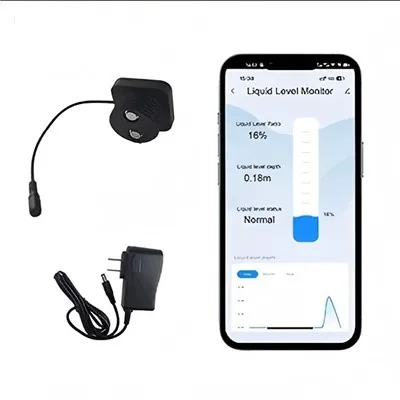
I’d be remiss not to mention the role of modern sensor technology in reducing maintenance needs. The optical level sensors we manufacture now have built-in diagnostics that alert you when the lens is dirty or the light path is blocked, long before the sensor fails. That means you don’t have to guess when maintenance is needed—you get a notification right from the sensor, which lets you schedule cleaning during a planned shutdown, not in the middle of an emergency. This has transformed maintenance for many of our customers, cutting unplanned downtime related to level sensors by as much as 75% in some cases. For example, a chemical plant we work with uses sensors that send a “low light intensity” alert when buildup reaches 10% of normal levels. The maintenance team gets the alert, adds the cleaning to their next weekly schedule, and by the time they get to the sensor, the problem is minor and easy to fix.
Now, let’s circle back to the original question: what’s the maintenance frequency for optical level sensors? The answer is, it’s a balance of your environment, sensor type, application, and maintenance practices, but the general guidelines we’ve seen across our customer base are:
- Clean environments (filtered fluids, low contamination): Every 12–18 months, plus monthly visual checks.
- Moderate environments (wastewater, food and beverage with standard process materials): Every 3–6 months, plus bi-monthly visual checks.
- Harsh environments (corrosive chemicals, viscous sticky materials): Every 1–3 months, plus monthly visual checks and optional protective lens covers.
But this isn’t a set-it-and-forget-it number. The best way to nail down your schedule is to partner with a supplier that understands your specific operation, uses the sensor’s built-in data to track performance, and adjusts the schedule as your process changes. For example, if a customer switches from measuring clear water to measuring a thick syrup, their sensor will need more frequent cleaning, and we can help them adjust their schedule accordingly.
At the end of the day, optical level sensors are a long-term investment for your operation. Investing in proactive maintenance—rather than waiting for a sensor to fail—saves you money on emergency repairs, avoids unplanned downtime that can cost thousands of dollars per hour, and extends the life of your sensors, delaying the need for costly replacements. We’ve seen customers stretch their sensor lifespan from 5 years to 8 years with a consistent, well-tailored maintenance schedule, and that’s a return on investment that’s hard to beat.
Infrared Leak Detector If you’re looking to optimize your optical level sensor maintenance, or you’re in the market for new sensors that make maintenance easier with built-in diagnostics, we’re here to help. Whether you have a single sensor for a small tank or a network of hundreds across a large facility, our team can walk you through the best frequency for your application, answer any questions about cleaning practices, and help you set up a maintenance plan that fits your schedule.
References
- Miller, J. (2022). Industrial Level Sensor Maintenance Best Practices. Journal of Industrial Automation, 18(3), 45–52.
- Smith, L. (2021). Optical Sensor Performance in Contaminated Process Environments. International Journal of Process Control, 12(4), 112–121.
- Thompson, R. (2023). The Impact of Environmental Factors on Optical Level Sensor Longevity. Plant Maintenance Technology Magazine, 47(2), 29–35.
Shenzhen Fineherc Technology Co., Ltd.
As one of the most experienced optical level sensor suppliers in China, we’re featured by quality products and low price. Please feel free to buy discount optical level sensor made in China here from our factory. Welcome to view our website for more information.
Address: 5th Floor, Building D, No.39, Keji East Road, Torch Development Zone, Zhongshan City, China
E-mail: leon@fineherc.com
WebSite: https://www.fineherc.com/
