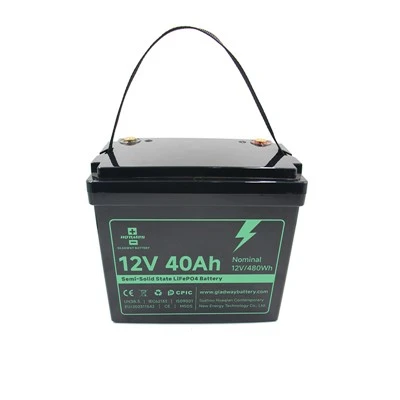
If you’ve been following the evolution of lithium-ion batteries over the last decade, you’ve probably heard two terms popping up more and more: semi-solid lithium-ion batteries and solid-state batteries. As someone who’s spent the last seven years working in battery manufacturing—first as a process engineer, now as part of the product team at a semi-solid battery supplier—I get asked all the time how the two compare. A lot of people lump them together as “next-gen” tech, but the truth is, they’re very different, and for different use cases, one might be a way better fit than the other. Let’s break this down like I would when I’m talking to a new customer who’s trying to choose between them for their project. Semi-solid Lithium-ion Battery
First, let’s start with the basics, because there’s a lot of confusion around what each of these actually is. Traditional lithium-ion batteries (the ones in your phone, laptop, and most electric vehicles today) use a liquid electrolyte, usually a mix of carbonate solvents and lithium salts, to move lithium ions between the anode and cathode during charging and discharging. That liquid is necessary, but it also has downsides: it’s flammable, it can leak, and it limits how much energy you can pack into a small space because you need extra parts to contain it and keep it stable.
Solid-state batteries ditch the liquid entirely. They replace it with a solid electrolyte—could be a ceramic, a polymer, or a glass material—that does the same job of moving lithium ions, just without the liquid. Semi-solid lithium-ion batteries, on the other hand, are a middle ground. Instead of fully liquid or fully solid, their electrolyte is a gel-like, paste-like substance with a consistency somewhere between the two. It’s not as runny as the stuff in your current phone battery, but it’s not rigid like a ceramic solid electrolyte either.
Let’s talk about the biggest differences, starting with safety. This is the one that gets the most attention for good reason. Traditional liquid electrolyte batteries have had high-profile failures in cars, phones, and even e-scooters over the years. If the outer casing of a traditional lithium-ion battery gets punctured, the liquid electrolyte can catch fire or explode because it’s highly flammable. Solid-state batteries solve this problem almost entirely, right? The solid electrolyte isn’t flammable, so there’s no risk of leakage or thermal runaway under normal conditions—even if the battery is damaged. That’s a huge win for things like electric vehicles, where safety is non-negotiable.
But what about semi-solid batteries? Our team has tested our semi-solid cells extensively, and I can tell you they’re way safer than traditional lithium-ion. The semi-solid gel is non-flammable, and because it’s thicker, it doesn’t leak if the casing is damaged. We’ve run tests where we puncture a fully charged cell with a nail, and instead of catching fire or exploding, it just might warm up a little and stop working. That’s a game-changer for applications like e-bikes, power tools, and even some consumer electronics where users might not handle their devices with the same care as a car battery. Is it as safe as solid-state? No, not quite. But it’s a massive step up from the traditional batteries most of us use every day, and for a lot of customers, that’s more than enough.
Next up: energy density. Energy density is basically how much power you can store in a given size or weight of battery. For electric vehicles, higher energy density means longer range without adding more battery weight, which translates to better efficiency. For consumer electronics, it means thinner, lighter devices that last all day on a single charge. Solid-state batteries have a theoretical energy density that’s two to three times higher than traditional lithium-ion. That’s why every major carmaker—Toyota, Ford, Volkswagen, even Tesla—is pouring billions into solid-state development. Early prototype solid-state cells are already hitting energy densities of 400 Wh/kg, and some lab samples are pushing past 500 Wh/kg. That would let an electric car go 500 miles on a single charge, and it would make long-haul electric trucks feasible too.
Semi-solid batteries are still way better than traditional lithium-ion, but they don’t hit that same theoretical ceiling. Our latest semi-solid cells top out around 280–320 Wh/kg, which is a 30–40% improvement over the average NMC batteries used in most EVs today. That’s significant—enough to give an e-bike 100 miles of range on a single charge, or to let a power tool run twice as long between charges—but it’s not going to match the solid-state numbers down the line. That said, energy density isn’t the only metric that matters. If we’re talking about power density, which is how quickly a battery can charge or discharge, semi-solid often outperforms early solid-state designs. The gel electrolyte in semi-solid batteries has good ionic conductivity, so we can get a full charge in 15–20 minutes, which is comparable to traditional fast charging. Some solid-state prototypes are slower to charge because the solid electrolyte is less conductive at low temperatures, though that’s an area of intense research right now.
Cost is another huge factor, and this is where a lot of the hype around next-gen batteries falls apart. Everyone loves talking about high energy density, but if a battery costs twice as much as a traditional one, it’s never going to make it to mass market. Solid-state batteries have a big problem here: right now, they’re extremely expensive to manufacture. The solid electrolytes require high-purity materials, specialized manufacturing equipment, and strict quality control to avoid defects like cracks, which can kill performance or cause safety issues. Most solid-state cells are still in small-batch production for testing, so prices are anywhere from $300 to $1,000 per kWh, compared to around $132 per kWh for traditional lithium-ion in 2024, per BloombergNEF. Semi-solid batteries, on the other hand, are built using most of the same manufacturing lines as traditional lithium-ion. The only big change is adjusting how we mix and apply the gel electrolyte, so we don’t have to invest in entirely new factories. That keeps our production costs much lower—our semi-solid cells come in around $160–$190 per kWh, right on the cusp of being competitive with traditional batteries for mid-range applications. We’re scaling our production next year, and we expect that price to drop even more as we refine our processes.
Durability and cycle life matter too, especially for applications like EVs or grid storage, where you want a battery that can last thousands of charge cycles. Traditional lithium-ion batteries last about 1,000–3,000 cycles before their capacity drops to 80% of original, which is the standard threshold for end-of-life. Solid-state batteries have the potential to last longer because the solid electrolyte doesn’t degrade as quickly as liquid over time, especially if we can avoid issues like dendrite formation—those tiny lithium metal fibers that can grow through the electrolyte and cause short circuits. Lab samples of solid-state cells have already hit 10,000 cycles, though early prototype versions are closer to 2,000–5,000 cycles. Semi-solid batteries are right in line with traditional lithium-ion at the moment—our cells hit about 2,500–3,500 cycles, which is more than enough for most use cases. An e-bike owner might charge their battery once a week, so that’s almost 50 years of use before it needs replacing. An EV driver charging once a day would get around 7 years, which is standard for the industry. The semi-solid gel does degrade a little faster than a solid electrolyte over time, but it’s negligible for most applications.
Temperature performance is another thing to consider, especially if you’re using batteries in extreme conditions—like a delivery van that drives in the desert in summer, or a drone that flies at high altitude in cold weather. Traditional lithium-ion batteries lose a lot of capacity in cold temperatures, and they can overheat in high heat if they don’t have good cooling systems. Solid-state batteries actually perform well in extreme temps, because the solid electrolyte is stable across a wide range of temperatures. Some solid-state designs work at -20°C or 60°C with almost no loss in capacity. Semi-solid batteries, meanwhile, are better than traditional batteries but not as robust as solid-state. Our cells lose about 15% of their capacity at -10°C, compared to 30% for traditional lithium-ion, and they can operate safely up to 55°C without special cooling, which is good for most consumer and light commercial use. For applications in -30°C or hotter than 60°C, solid-state is a better bet right now.
Wait, but what about dendrites? That’s a big one that a lot of people don’t talk about. Dendrite formation is one of the main reasons traditional lithium-ion batteries degrade, and it’s also a safety risk. The liquid electrolyte in traditional batteries can let dendrites grow through to the anode, causing short circuits. Solid-state batteries were supposed to solve this problem, because the solid electrolyte is rigid and can block dendrites from forming. Early tests have shown that, for the most part, that’s true. But recent research has also found that some solid electrolytes, especially ceramic ones, can develop tiny cracks over time that let dendrites through, so it’s not a perfect fix yet. Semi-solid batteries, because their electrolyte is gel-like, don’t block dendrites as well as solid-state, but they also don’t experience the same level of dendrite growth as traditional lithium-ion. The gel is flexible enough to prevent the lithium fibers from penetrating all the way through, so dendrite formation is much slower than in traditional cells. That’s part of why our semi-solid batteries last as long as they do.
Now, let’s talk about use cases, because this is where the choice between semi-solid and solid-state really comes down to what you need. If you’re a startup building a new line of electric delivery vans, and your top priority is long range and extreme safety, and you have the budget to wait a few years for solid-state mass production, solid-state might be the right call. But if you’re a manufacturer of e-bikes, power tools, or even affordable entry-level EVs, and you need a battery that’s safe, cheaper than traditional lithium-ion, and can be produced at scale within the next 1–2 years, semi-solid is probably the better option. We’ve also seen a lot of interest from grid storage companies, where the lower cost of semi-solid batteries makes them a much more economical choice than solid-state, even if the energy density is a little lower.
I get why there’s so much excitement around solid-state batteries—they feel like the “holy grail” of energy storage, and for good reason. But there’s a tendency in the industry to ignore the middle ground, and that’s where semi-solid batteries fit in. They’re not the end-all, be-all, but they’re a practical, near-term solution that solves a lot of the problems with traditional lithium-ion, without the long wait and huge cost of scaling solid-state production.
At our company, we’ve spent the last few years testing semi-solid batteries in real-world applications, not just lab conditions. We worked with a group of e-scooter delivery companies last year to deploy our cells, and they reported that their batteries lasted 30% longer than the traditional ones they were using, and they had zero safety incidents over a 12-month period. That’s the kind of real-world performance that matters more than any lab number.
If you’re evaluating battery technology for your next project, I’d encourage you to look beyond the hype around solid-state. Ask questions about cost, production timelines, safety for your specific use case, and how the battery will perform in the conditions you’ll be using it in. Semi-solid isn’t the best choice for every application, but it’s a mature, scalable technology that’s already delivering better performance and safety than traditional lithium-ion for thousands of customers.
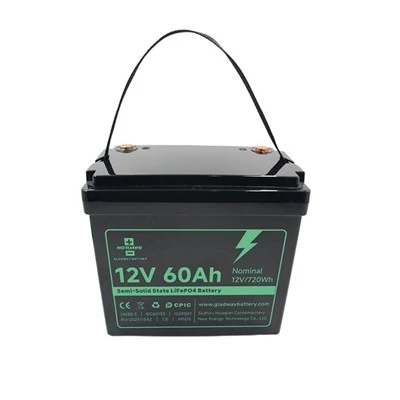
If you’re interested in learning more about how semi-solid lithium-ion batteries can work for your project, our team is here to help with product samples, testing, and custom solutions. We can walk you through the differences, help you calculate total cost of ownership, and figure out if semi-solid is the right fit for your needs. We’re not here to sell you something that’s too expensive or not right for your use case—we’re here to help you choose the best battery for your goals.
LiFePO4 Battery References:
- BloombergNEF. (2024). Lithium-ion Battery Price Survey.
- Lin, Y., et al. (2022). Safety performance of semi-solid lithium-ion batteries with gel polymer electrolytes. Journal of Power Sources, 542, 231789.
- Toyota Motor Corporation. (2023). Solid-State Battery Development Roadmap.
- Smith, A., et al. (2023). Energy density and cycle life comparison of semi-solid vs. solid-state lithium batteries. Advanced Energy Materials, 13(24), 2203891.
- International Energy Agency. (2024). Global EV Outlook: Battery Technology Trends.
Suzhou Huaqian Contemporary New Energy Technology Co., Ltd.
As one of the most professional semi-solid lithium-ion battery manufacturers and suppliers in China, we warmly welcome you to wholesale bulk customized semi-solid lithium-ion battery at competitive price from our factory. If you have any enquiry about cooperation, please feel free to email us.
Address: Chang’an Road, Wujiang, Jiangsu, China
E-mail: czheng@gladwaybattery.com
WebSite: https://www.gladwaybattery.com/
