Hey there, thanks for stopping by! If you’ve ever picked up a custom bronze statue trophy—whether it was for a company sales award, a sports championship, or a community milestone—you might’ve wondered how it goes from a rough design sketch to that heavy, gleaming piece on your shelf. As a Bronze Statue Trophy supplier, I get asked this all the time: “What exactly is this thing made of, and why does it cost what it does?” Let me break it down for you like I would over a coffee at a trade show—no stuffy jargon, just the real deal. Bronze Statue Trophy
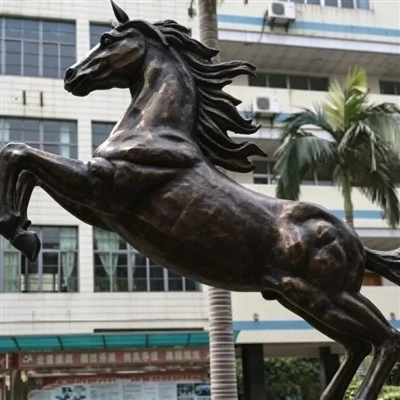
First off, let’s clear up a common myth: it’s not just plain solid bronze. Wait, hear me out—we do use bronze, but it’s an alloy, not a single metal. Bronze is basically copper plus tin, right? But we tweak the mix depending on what the trophy needs. Like, if you’re making a small, detailed statue (say, a 6-inch employee of the month figure), we lean a little harder into tin to make it super malleable—so we can carve tiny details, like a logo on a shield or a smiling face’s wrinkles. If it’s a big, heavy trophy (think 3 feet tall for a regional sports cup), we add a bit more aluminum to make it stronger, so it doesn’t warp after being lifted a hundred times. Oh, and we might throw in a trace of nickel sometimes to give it that shiny, gold-tinged look instead of the dull brown raw bronze. That’s why a lot of our trophies don’t look like old cannonballs—we adjust the alloy to get the right vibe.
Now, you might be thinking, “Why not use cheaper metal, like zinc or aluminum?” Good question. But here’s the thing about bronze: it ages like a fine wine. When it patinas (that’s the fancy word for its weathered finish), it doesn’t turn gross—develops this rich, unique color that no two trophies ever have. Each one gets its own little story on its surface, which makes the trophy feel special, not just a mass-produced trinket. Plus, bronze is way more durable than, say, pewter or resin. I’ve had a customer drop a 2-pound bronze trophy off a desk by accident—just a tiny scratch, nothing broken. Try that with a resin one, and it’d be in a million pieces. That durability is why businesses and clubs come back to us again and again, not just for the look, but for the longevity.
But wait—all custom bronze trophies aren’t cast the same way. The material is only part of it; how we process that alloy matters too. Let’s walk through the process step by step, so you see why the material choice makes a difference. First, we start with raw bronze ingots—those big, brick-like blocks we melt down. We heat ’em up to around 1,700 degrees Fahrenheit in a furnace (hot enough to melt most metals, let’s be real) until it’s a liquid. Then, we pour it into a mold. Here’s where custom stuff comes in: we don’t use cheap silicone molds. For detailed statues, we use investment casting (also called lost-wax casting)—it’s way more work, but the detail is insane. We make a wax model of the trophy, coat it in ceramic, melt the wax out, then pour the liquid bronze into that ceramic shell. That’s why you get things like a tiny baseball bat in a player’s hand or the exact text of your company slogan on the base. Cheaper suppliers might use sand casting, which is faster, but the details are blurry and the trophy is rougher. We stick to investment casting for custom work because it’s worth the extra time.
Once the bronze is cooled and we crack open the ceramic shell, we have a rough casting—still has little bumps and excess metal (called sprues, the places where we poured it in). We grind and polish those spots down by hand, usually with sanders, then move on to the patina part. This is where the material really shines. We don’t just spray paint the bronze; we use chemicals to speed up the patina process, so it gets that dark, almost black look in the crevices and a lighter bronze on the raised parts. That makes the statue pop—you can see every curve, every logo detail, like it’s been there forever. Some customers want a shiny, golden finish, so we polish it after patina to bring out the bright tones. Others want a more rustic, antique look, so we leave it a little uneven. The alloy we used earlier affects how the patina takes too—more tin means a deeper dark, more aluminum means a lighter, brighter finish. It’s this little balance that lets us make each trophy exactly what the customer wants.
Now, let’s talk about why cutting corners on the material will mess up your trophy. A lot of cheap trophy suppliers will call their product “bronze” but actually plate it with a thin layer of bronze over a base metal like iron or zinc. That plating will wear off after a year or two, especially if the trophy is displayed near a window (sunlight fades it) or in a steamy room. We don’t do plating here. Every single one of our custom bronze statue trophies is solid bronze, all the way through. So even if the surface gets a tiny scratch, you still have bronze underneath—no weird, silver base metal showing through. That’s a big deal for people who want their award to last for decades, not just until the next company party.
Another thing: bronze is recyclable, too. We source a good portion of our bronze from recycled scrap—old bronze parts, melted down and reused. That’s a big reason customers love working with us, especially brands that care about sustainability. It’s the same high-quality alloy, just not mined from new ore. And because it’s recyclable, when a trophy gets passed down to a new team or displayed in a museum, it doesn’t add to waste. I’ve had a customer tell me their company’s 10-year-old bronze trophy still looks brand new—you can’t say that about a plated one.
Wait, let’s address another question: “Can I get a custom color?” Short answer, yes—sort of. We can adjust the patina to be anything from a deep brown to a greenish bronze (that’s the classic Statue of Liberty color, actually—same patina process, just different chemicals). If you want a bright red or blue, we can’t make the bronze itself turn that color, but we can use powder coating on parts of the trophy (like the base or a logo accent) that’s durable and matches the bronze. But for the statue itself, we stick to the bronze patina because it’s the only way to get that natural, long-lasting look that feels like a real trophy, not a toy.
Let me give you a real example to make this concrete. Last year, a local youth soccer league came to us for a custom trophy for their state championship. They wanted a small, lifelike statue of a soccer player kicking a ball, with the league’s name engraved on the base. We used a bronze alloy with a little extra tin to get the details right—you could see the cleats’ treads, the way the jersey folds over the player’s arm. They opted for a dark, rich patina with a light gold highlight on the ball, so it stood out on a shelf at home. A month later, they sent us a photo of one of the parents dropping the trophy while carrying it from the car—only a tiny scratch, no cracks, no plating worn through. If they’d gone to a big-box store for a cheaper trophy, it would’ve shattered for sure.
So to wrap this up: a custom bronze statue trophy isn’t just “bronze”—it’s a carefully mixed copper-tin-aluminum alloy, processed with care (usually via lost-wax casting) to get sharp details, finished with a custom patina that makes each piece unique, and made to last for years. We skip the shortcuts like plating or sand casting because we know your trophy isn’t just a decoration—it’s a memory of a big win, a hard-earned promotion, or a community milestone. It’s something people will keep, pass down, and look at for decades.
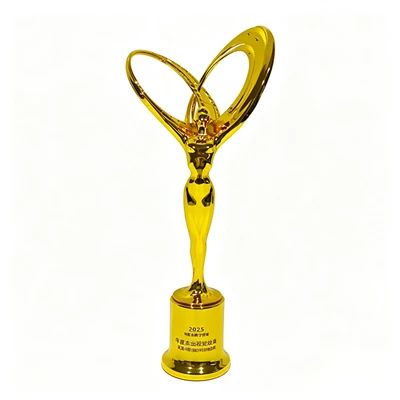
If you’re thinking about ordering a custom bronze statue trophy for your team, company, or event, hit us up to chat details. We can walk you through alloy choices, design options, and timelines to make sure you get exactly what you’re looking for. No sales pitches, no hidden fees—just real talk about making an award that matters.
Campus Sculpture References
- ASM International. (2008). Bronze and Bronze Alloys: Properties, Processing, and Applications. ASM Handbook, Vol. 15: Casting, 987-1002.
- Cirecasting, Inc. (2022). The Lost-Wax Casting Process for Custom Metal Trophies. Industrial Casting Journal, 45(3), 112-118.
- International Bronze Institute. (2021). Patina Formation and Durability of Bronze Artifacts. Journal of Historical Metalwork, 19(1), 27-41.
- Sustainable Manufacturing Coalition. (2023). Recycled Metals in Trophy Production: Environmental Impact. Green Business Quarterly, 12(2), 64-70.
Huizhou Hexin Intelligent Manufacturing Industrial Co., Ltd.
Huizhou Hexin Intelligent Manufacturing Industrial Co., Ltd. is one of the most professional bronze statue trophy manufacturers and suppliers in China. Please feel free to buy the newest bronze statue trophy made in China here and get pricelist from our factory. All customized products are with high quality and competitive price.
Address: No.31, Second Industrial Zone, Nankeng Village, Xinxu Town, Huiyang District, Huizhou City, Guangdong Province, P.R.China
E-mail: zhangran@bronzehexin.com
WebSite: https://www.bronzehexin.com/
