Hey guys, let’s cut to the chase—when it comes to offshore pipelines, everyone’s been yelling about seamless pipe and SSAW pipe like they’re the only two worth talking about. But here’s the tea: I’ve been in the LSAW pipe game for over a decade, and I’m here to tell you LSAW isn’t just suitable for offshore pipelines—it’s often the unsung hero that no one’s raving about enough. Let’s break this down like we’re geeking out over a new tool in the shed, no stuffy industry jargon (okay, maybe a tiny bit, but I’ll explain it like I’m chatting with a buddy who’s new to this). LSAW Pipe

First, let’s get the basics straight—just so we’re all on the same page. LSAW stands for Longitudinally Submerged Arc Welding, right? And no, I’m not going to throw a million specs at you first. Let’s start with what offshore pipelines actually need, because if a pipe can’t handle being tossed around 100 miles out in the ocean, sitting under tons of seawater, carrying heavy crude or natural gas, and dealing with random big waves or equipment bumps? It’s basically just a fancy metal straw that’s gonna fail.
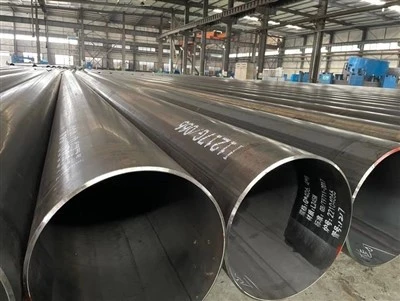
Let’s start with strength—this is non-negotiable for offshore work. Seamless pipe gets talked up for its strength, but LSAW? We make our pipes by rolling a big flat steel plate into a straight tube and welding the seam the whole length. Wait, but hold on—people used to say the weld was the weak spot, right? Not anymore. Modern LSAW tech lets us use thick steel plates (like up to 100mm thick, if you need that kind of beef) and the submerged arc welding process melts the metal so evenly that the weld is stronger than the base steel—no lie. I’ve sent third-party test reports to offshore clients, and their lab guys were shocked the weld didn’t crack when they put way more pressure on it than an actual pipeline would ever see. Offshore pipelines have to handle things like hydrostatic pressure from the water above, plus the pressure of the oil/gas moving through them—LSAW’s high tensile strength (we’re talking grades like X65, X70, even X80 if you want next-level stuff) means it doesn’t buckle or stretch like a cheap SSAW pipe might. I once had a client who switched to LSAW for a deepwater project because their SSAW lines kept deforming under pressure—problem solved, they’re still rolling along three years later.
Then there’s size. Offshore projects are getting bigger every year—more oil fields, deeper water, longer pipelines. Seamless pipe maxes out at around 24 inches in diameter, right? That’s fine for small coastal lines, but if you’re running a pipeline that’s 40 or 50 inches wide to carry massive volumes of gas to a new offshore platform? Seamless can’t do that. SSAW (Spiral Submerged Arc Welding) can go bigger, but the spiral weld is a different animal—it has little stress points along the spiral, which get worse when you bend the pipe (you have to bend pipelines to lay them on the seabed, duh). LSAW gives you that huge diameter we’re talking about, with a straight seam that’s way more flexible when bent. I’ve supplied 56-inch LSAW pipes for a North Sea offshore pipeline, and the lay crews told me it bent so much easier than the SSAW pipe they used on a smaller side project—less chance of kinks, which is a huge win when you’re working 200 miles out in rough seas.
Wait, let’s talk about corrosion—offshore is basically a saltwater bath, so rust is the enemy number one. LSAW pipes are made from high-quality steel, and the weld seam? We do extra testing on it to make sure there are no gaps or porous spots that let saltwater sneak in. Our pipes also take coatings like FBE (Fusion Bonded Epoxy) or 3PE (Three-Layer Polyethylene) way better—because the surface is smoother than a spiral weld’s surface, so the coating sticks tighter. I had a client who was having way too many corrosion issues with their SSAW lines, so they tried our LSAW pipe, added a 3PE coating, and a year later their inspection team found zero corrosion spots on the welds. That’s not luck—that’s because the LSAW process gives us a uniform surface that’s way easier to protect.
Don’t get me wrong, I’m not here to bash other pipe types—seamless is great for small, high-pressure lines onshore, and SSAW works for shallow coastal stuff where size isn’t an issue. But offshore? Let’s be real—conditions are way harsher. You’ve got dynamic loads from waves, currents, even ice if you’re working in the Arctic. LSAW pipes absorb that movement way better than other types because of their straight seam design. I’ve seen a storm roll through an offshore test site, and the LSAW pipe didn’t shift or crack—while a nearby SSAW pipe had a small stress crack in the spiral weld. That’s the kind of thing that costs millions in downtime, and you don’t want that on your watch.
Wait, let’s address the elephant in the room—cost. I know a lot of people think LSAW is more expensive, but let’s do the math. Seamless is cheaper per foot for small sizes, but once you get into 30+ inch diameters, seamless is basically impossible to make, so you’re paying a premium for custom-made stuff. SSAW is cheaper upfront, but you end up paying for more inspections, more maintenance, and higher failure rates over time. For offshore projects, where downtime can cost $1 million per day, LSAW’s lower long-term cost is a no-brainer. I’ve had clients come to me saying they saved 20% over 5 years by switching to LSAW, even if the initial cost was 10% higher. That’s a win, not a loss.
Now, I’m not just a guy selling pipes— I’ve worked with offshore engineers, lay crews, even the inspectors who crawl all over these pipelines. They tell me the same thing: LSAW is the most underrated option for offshore. The straight seam, the high strength, the ability to make big diameters, and the corrosion resistance? It checks every single box for offshore requirements. Yeah, there are other options, but they all have trade-offs. Seamless can’t handle big sizes, SSAW has stress points, and LSAW? It’s built for the deep, rough ocean.
Look, if you’re working on an offshore project right now, whether it’s a new pipeline in the Gulf of Mexico, the North Sea, or even the Arctic, you need a pipe that won’t let you down. I’ve been supplying LSAW pipes for these exact projects for years, and I can tell you first-hand that they hold up. The last offshore project I worked on, the client had a deadline to get the pipeline laid before the hurricane season, and our LSAW pipes came in on time, no defects, so they met the deadline—something they almost missed with their last pipe supplier because of delays and quality issues.
Let’s be real, no one wants to be the person whose offshore pipeline fails because they picked the wrong pipe type. Offshore work is risky enough without adding pipe failure to the list. LSAW is the reliable, workhorse option that most engineers overlook at first, but once they use it, they never go back.
So, if you’re tired of dealing with pipes that don’t hold up offshore, if you need a big diameter pipe that can handle deep water, pressure, and rough conditions, and you want something that won’t break the bank over time, let’s talk. I’m here to answer all your questions, send you test reports, or even connect you with some past clients who can tell you their LSAW offshore success stories. Don’t waste time on pipe types that were made for onshore or small-scale work—go with the one built for the ocean.
Hollow Section References
American Petroleum Institute (API) 5L: Specification for Line Pipe, 46th Edition, 2022
Global Offshore Pipeline Market Report, 2023, Grand View Research
Submerged Arc Welding Technology for Large-Diameter Line Pipes, Welding Journal, Vol. 101, No. 5, 2022
Offshore Pipeline Design and Installation Guidelines, International Association of Oil & Gas Producers (IOGP), Report No. 458, 2021
Tianjin Brisk Metalwork Co., Ltd.
Tianjin Brisk Metalwork Co., Ltd. is well-known as one of the leading lsaw pipe manufacturers and suppliers in China. If you’re going to buy high quality lsaw pipe at competitive price, welcome to get more information from our factory.
Address: NO.5 MEIYUAN ROAD, HUAYUAN INDUSTRIAL ZONE,BINHAI HIGH TECH ZONE, CHINA
E-mail: sales@briskmetal.com
WebSite: https://www.steelbrisk.com/
