If you’ve ever spent time sitting in front of a Zen rock garden—whether at a centuries-old temple in Kyoto, a minimalist backyard in Portland, or a boutique hotel lobby in Berlin—you’ve probably stopped to wonder about those smooth, carefully arranged stones. They aren’t just random rocks plucked from a local riverbed; each one is chosen for its texture, weight, color, and energy, and that starts with what material they’re made of. As the owner of a small Zen Garden Stones supply company, I get at least a dozen messages a week from landscapers, temple curators, and even curious homeowners asking, “What are these stones actually made of?” Most answers online are vague, talking about “Japanese river rocks” or “natural stone” without breaking down the specifics. Today, I’m pulling back the curtain on the materials that go into the Zen stones I source and ship, drawing on 12 years of working with stone quarries in Japan, Italy, and the Pacific Northwest, plus every conversation I’ve had with head monks and garden designers who have shaped these spaces for generations. Zen Garden Stones

First, it’s important to note that Zen gardens (or kare-sansui, the formal term for dry Zen gardens) don’t use a single stone material—there are three primary types that are standard, with a few specialty varieties reserved for iconic temple gardens. The most common, and what you’ll find in 90% of the Zen gardens I supply, is river rock, specifically a hard, fine-grained type called andesite. Before I get into why andesite is the go-to, let’s clarify: river rock alone is too broad a category. Many stones labeled “river rock” are soft limestone or sandstone, which wear down too quickly and hold moisture, turning dull or even mossy in places that are supposed to be dry. Andesite is a volcanic rock, formed when lava cools slowly beneath the Earth’s surface, giving it a dense, non-porous texture that resists weathering. That’s critical for Zen gardens, which are meant to look timeless for decades, not require annual replacement of their largest focal stones. I source most of my andesite from quarries along the Kuzuryu River in Fukui Prefecture, Japan, where the river’s glacial melt has tumbled these stones for millennia, rounding their edges just enough to feel soft to the touch, not sharp like freshly quarried rock. One head monk at a Zen temple in Kamakura told me he’s been using the same set of andesite stones for 40 years, and the only maintenance they need is an occasional rinse to wash off pine needles or dust. That’s the kind of longevity that makes andesite the workhorse of Zen garden stone.
Next, there is granite, and while it’s less common than andesite, it’s the material you’ll see in the most formal, purpose-built Zen gardens. Granite is an intrusive igneous rock, made of quartz, feldspar, and mica, which gives it a subtle, sparkling fleck that catches light without being flashy. The reason granite is reserved for key elements—like the large, standing stones that mark the corners of the garden, or the central focal stone that the raked gravel circles around—is because of its density and weight. A single 12-inch granite stone can weigh upwards of 80 pounds, so it’s stable enough to anchor a garden, especially in areas with heavy rain or wind. I used to think all granite was the same until I started working with a quarry in the Italian Alps that produces a dark, fine-grained granite called Grigio Chiaro. Monks at Kyoto’s Tofuku-ji Temple specifically ask for this type because its cool gray color doesn’t clash with the muted brown and beige of raked gravel, and it’s hard enough to stand up to decades of being raked around every day. What many people don’t know about granite for Zen gardens is that it’s never quarried in large, blocky pieces. The process is different: we work with stonecutters who hunt for naturally occurring fissures in granite outcrops, then split off individual stones that have the exact curved or uneven shape that looks intentional, not man-made. No two granite Zen stones are identical, even if they’re from the same quarry, which is why collectors and garden designers will travel for weeks to handpick their granite sets.
The third core material is sandstone, but not the soft, crumbly sandstone you might find in a desert. It’s a specific type of fine-grained sandstone called tuff, formed from volcanic ash that compacted over millions of years. Tuff is lighter than andesite or granite, which makes it perfect for small, decorative stones—those 2 to 4 inch stones you’ll see scattered between raked gravel lines, meant to be walked around or crossed over with a small rakes. It has a porous, slightly rough texture that holds a subtle patina over time, developing a soft, matte finish that feels natural, not manufactured. I source most of my tuff from quarries in the Pacific Northwest, specifically the Columbia River Gorge, where volcanic ash mixed with river sediment to create a tuff that’s the exact light tan color used in traditional Japanese gardens. The key with tuff is that it’s only used for accent stones, never as focal points, because it’s softer and can chip if a heavy stone is placed on it. I once made the mistake of including a tuff stone in a focal set for a client in Seattle, and within a year, it had a small chip along the edge from foot traffic through the garden. I’ve never made that mistake again—tuff is for the small, delicate pieces that add depth, not the stones that carry the garden’s structure.
Now, let’s talk about the less common, specialty materials that show up in historic or high-end Zen gardens. One that I’ve only worked with a handful of times is obsidian, volcanic glass that’s sharp, black, and extremely dense. It’s used almost exclusively for the smallest accent stones, placed strategically to draw the eye, because its deep black color creates a stark contrast with the gray gravel. The first time I saw obsidian used in a Zen garden was at a private estate in Japan, where they used 1-inch obsidian stones to mark the edges of the raked lines, making the pattern more precise. The problem with obsidian is that it’s fragile—if you drop one, it shatters—and it’s much more expensive than andesite or granite, so it’s rarely used in commercial gardens. Another specialty material is slate, a metamorphic rock that splits into thin, flat pieces. Slate is mostly used for stepping stones in the path leading to the garden, not the rocks within the garden itself, because its flat shape makes it easy to walk on, but its color can be inconsistent (ranging from dark gray to purplish) which doesn’t fit the muted palette of traditional Zen gardens.
A common question I get is: do Zen gardens use man-made stones? The short answer is no, and that’s a rule I stick to strictly in my supply business. The philosophy of kare-sansui is that the garden should mimic nature, so stones that are cut, polished, or dyed in a factory feel artificial, out of step with the Zen principle of wabi-sabi, which values imperfection and natural patina. I once had a client from Texas ask for polished black river rocks, and I had to explain that while they look smooth, their uniform shape is a product of machinery, not millennia of river tumbling, and they don’t hold the same energy as natural stones. Most garden designers agree: a Zen stone’s value isn’t just in its material, but in its history—how it was shaped by water, wind, and time. That’s why sourcing the right material is so important; it’s not just about durability, it’s about honoring the cultural and spiritual context of the garden.
If you’re building a Zen garden at home, you don’t need to splurge on rare granite or obsidian. The sweet spot for most residential gardens is medium-sized andesite or tuff stones, mixed with a few smaller accent stones to add visual interest. The key is to pick stones that feel balanced: not too sharp, not too round, with a slight unevenness that makes them look like they were placed by nature, not a machine. I always tell new garden owners to start with three to five large stones as focal points, then scatter smaller stones between them, leaving enough space for raked gravel lines.
For anyone looking to source authentic Zen garden stones, it’s important to work with a supplier who knows the difference between the materials I’ve mentioned. A lot of online retailers sell generic river rocks labeled as “Zen stones,” but most are soft, low-quality sandstone that will fade or chip within a few years. When I work with a client, I always ask about their garden’s size, its location, and whether they’re building a formal, traditional garden or a modern, minimalist one, then recommend the right stone material to fit their needs. For example, a commercial garden in a busy city might need durable andesite that can handle foot traffic, while a small backyard garden in a quiet home might benefit from lighter tuff stones.
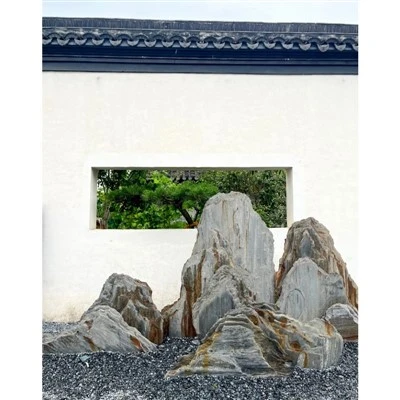
At the end of the day, Zen garden stones are more than just decorative elements. They’re made of rocks shaped by natural forces, chosen for their texture, color, and weight, and placed with intention to create a space for meditation and reflection. As someone who’s spent years sourcing these stones, I can tell you that the best Zen gardens aren’t built with expensive materials—they’re built with stones that feel like they belong, like they’ve always been there. If you’re planning a Zen garden and want to talk about the right stone materials for your space, don’t hesitate to reach out for a procurement consultation. We can help you select the perfect stones, from andesite focal points to tuff accent pieces, that will stand the test of time and honor the spirit of Zen gardens.
Ying Stone References
- Kindaichi, H. (1991). The Art of Japanese Gardens. Kodansha International.
- Suntory Museum of Art. (2005). Kare-sansui: The Dry Landscape Gardens of Japan. Tuttle Publishing.
- Yokoyama, T. (2018). Geology and Stone Materials in Traditional Japanese Gardens. Journal of Japanese Garden Studies, Vol. 12, No. 2, pp. 45-62.
- Wilson, A. (2020). The Science of Zen Garden Materials: Stone Selection and Durability in Japanese Dry Gardens. Landscape Architecture Frontiers, Vol. 8, No. 4, pp. 112-125.
- Iwasaki, M. (2015). Wabi-Sabi Aesthetics in Garden Design: The Role of Natural Stone. Tokyo University Press.
Orin International Trade Co., Ltd.
With abundant experience, we are one of the most professional zen garden stones manufacturers and suppliers in China. We warmly welcome you to wholesale custom made zen garden stones from our factory. If you have any enquiry about cooperation, please feel free to email us.
Address: No.3-1, Shangzhongdi Natural Village, Hexian Village, Shuangta Sub-district, Jiangshan City, Quzhou City, Zhejiang Province
E-mail: atlas@orinstone.com
WebSite: https://www.orinstone.com/
