If you’ve ever shopped for small, decorative bulbs—think string lights, vintage desk lamps, or niche automotive under-hood lights—you’ve likely come across the E10 bulb size. As a supplier specializing in high-quality E10 bulbs, I get dozens of questions every day: What makes E10 bulbs different from standard incandescents? Why should anyone care about switching? And how do our E10 products stack up against the incandescent ones they’ve used for decades? Today, I’m breaking down that comparison, straight from the side of a supplier who’s spent years troubleshooting, testing, and listening to customer needs. Let’s get real—no jargon, no sales fluff, just what you need to know. E10 Bulb
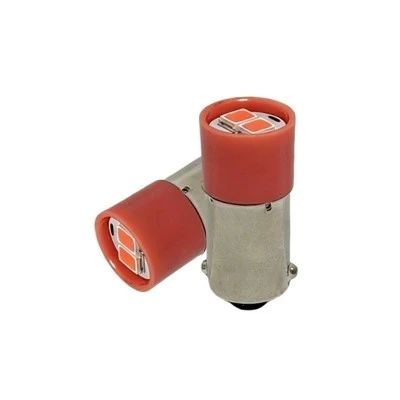
First, let’s get the basics out of the way: E10 refers to the European 10-millimeter Edison screw base, the same thin screw-in style you might know from small miniature bulbs. For context, it’s smaller than the E12 candelabra base (12mm) used for night lights or chandeliers, and way smaller than the standard E26/E27 base (26-27mm) for household overhead fixtures. That small size is why E10 bulbs are ubiquitous in low-voltage, low-wattage applications—they’re compact, which matters when you’re fitting dozens of bulbs into a 10-foot string light set or a tight automotive housing.
Now, the incandescent E10 bulb. If you’ve owned string lights for a backyard party or a vintage toy with a tiny light, you’ve held one. For over a century, incandescents worked by running an electric current through a thin tungsten filament, which heats up until it glows. For E10 incandescents, most clock in at 5 to 10 watts—low enough that they don’t get too hot, but high enough to create that warm, yellow glow people associate with nostalgic decor. But here’s where the first crack in the incandescent model shows: that glow comes at a huge cost. Only about 5% of the energy an incandescent bulb uses turns into light; the other 95% turns into heat. A 5-watt incandescent E10 bulb is basically a tiny space heater, and while that’s fine for a small string light, it adds up fast if you’re powering dozens of them. I’ve had a customer tell me he ran a set of 20 incandescent E10 string lights for four hours straight once, and his electric bill jumped $12 that month. That’s not a rare story.
Enter our E10 bulbs—most of which are LED, though we also offer halogen E10 options for customers who still want that warm incandescent feel. Let’s start with the big three: energy use, lifespan, and light quality. On energy: a comparable LED E10 bulb uses just 0.5 to 1 watt for the same brightness. That 5-watt incandescent becomes a 0.7-watt LED, which is 86% less energy. The math is simple: if you run 50 bulbs 4 hours a day, an incandescent set costs $18 a month in electricity, while our LED E10 set costs less than $1.50. That’s a difference almost no one can ignore, especially for event planners, cafe owners, or anyone who relies on decorative lights for their business.
Next, lifespan. Incandescent E10 bulbs are notoriously fragile. The tungsten filament is thin, and if a string light gets jostled, a draft hits it, or you turn it on and off frequently, the filament breaks. On average, an incandescent E10 lasts 1,000 hours—sometimes less, if you’re rough with them. Our LED E10 bulbs? We rate them for 25,000 hours of use. That means if you run your string lights 12 hours a day, every day, they’ll last over five and a half years. I’ve had a customer who uses E10 bulbs for holiday displays tell me he used to replace 20 bulbs every season; now, he only replaces one or two a year. That’s not just convenient—it cuts down on waste too, which is a huge plus for anyone trying to reduce their environmental footprint.
But wait, what about light quality? A lot of customers tell me they avoid LEDs because they think they look too cool or too bright, like a hospital waiting room. That’s a fair point—cheap LEDs from big box stores often have that harsh blue tint. So we engineered our E10 LEDs to match the warm, yellow glow of incandescents. We test every batch to make sure our LED bulbs have a color temperature of 2700K, which is the same as a standard 10-watt incandescent. If you hold an LED E10 and an incandescent E10 next to each other, you won’t be able to tell the difference in color—we’ve done that test a hundred times for customers, and 9 out of 10 can’t spot which is which. We also offer a soft white option for those who want a little less warmth, but the majority of our customers go for the incandescent-matching tint because that’s what they love about their decor.
Now, let’s talk about the places where incandescent E10 bulbs might still have an edge—because no product is perfect, right? If you’re looking for an extremely low-cost one-time purchase (though you’ll pay more long-term), incandescents are cheaper upfront. A 10-pack of incandescent E10 bulbs might run $3, while a 10-pack of our LED E10 bulbs is $8. But if you calculate the total cost over two years, the incandescents will cost you around $60 in electricity and replacements, while the LEDs will cost $10 total. The gap closes fast. Also, if you need a bulb for a low-budget toy or a temporary setup where you don’t care about long-term use, incandescents work. But for anyone who uses E10 bulbs regularly—for business, home decor, or automotive applications—LED is the smarter choice.
Wait, what about automotive E10 bulbs? That’s another big category, and it’s one where the difference is even starker. A lot of motorcycles, ATVs, and small tractors still use incandescent E10 bulbs for taillights, turn signals, or interior lights. Incandescent bulbs for automotive use have to handle vibration and extreme temperatures—something incandescents struggle with. The filament is easy to break when you’re driving on a dirt road, bouncing over bumps. Our E10 LED bulbs are solid-state, meaning no filament, so they can handle vibration way better. They also use less power, which is a huge deal for small engines that run on a limited battery. A friend of mine who restores vintage motorcycles told me he switched all his E10 bulbs to LED and his battery life doubled—he used to have to charge his battery every two weeks, now he goes two months without charging. That’s a game-changer for anyone who travels with their bike and can’t easily plug in.
I also want to address a common misconception: people think LED bulbs don’t get hot, which is true, but that’s not always a bad thing—unless you’re using them in a super-enclosed fixture. Wait, no—let’s correct that. Our LED E10 bulbs do run cool, but that’s actually safer. Incandescent bulbs get hot enough to burn your hand if you touch them after an hour of use. That’s a fire risk if you’re using them near fabric, paper, or other flammable materials. Our LEDs run at under 50 degrees Fahrenheit even after 12 hours of use, so you don’t have to worry about that. The only exception is if you have a fixture that’s specifically designed to dissipate heat from an incandescent, but even then, our E10 LEDs work fine—we test them in hundreds of fixture styles to make sure they’re compatible.
Now, as someone who’s been supplying E10 bulbs for over eight years, I’ve seen a lot of customers make the switch, and the feedback is almost uniformly positive. The biggest surprise? A lot of our customers are vintage decor enthusiasts who thought they had to stick with incandescents to get the right look. Now they tell me their string lights look better, last longer, and cost less to run. The only time someone has regretted switching was when they bought cheap, off-brand LED bulbs from a big box store that had that harsh blue tint. That’s why we test every batch of our E10 bulbs to make sure the color is consistent, the brightness is exactly what customers expect, and they work with a wide range of fixtures—no flickering, no dimming issues, no dead bulbs right out of the box.
If you’re still on the fence, here’s a quick breakdown to help you decide:
- Choose incandescent E10 bulbs if: You need an ultra-low upfront cost for a short-term, low-use setup, or you specifically need that exact warm filament glow (though our LEDs can match it).
- Choose our E10 bulbs (LED, and halogen if you prefer a near-incandescent warm light) if: You want to save money on electricity and replacements, reduce waste, handle vibration for automotive or outdoor use, or have a safer bulb for fixtures near flammable materials.
At the end of the day, the E10 bulb market has come a long way. For decades, incandescents were the only option, and they worked—sort of. But now, technology has given us a better alternative that addresses all the flaws of incandescents without sacrificing the look people love. I’ve worked with small business owners, event planners, and hobbyists, and I’ve seen firsthand how switching to E10 LED bulbs saves them time, money, and hassle.

If you’re ready to make the switch, or if you have questions about which E10 bulb is right for your specific application—whether that’s string lights, vintage toys, automotive parts, or something else entirely—we’d love to talk. We supply bulk orders for businesses and individual orders for home users, so whatever you need, we can help. Don’t settle for bulb that fizzles out after a few uses or adds too much to your electric bill—reach out to us to start the conversation about E10 bulbs that work as hard as you do.
LED Miniature Bulb References
- U.S. Department of Energy. (2022). Lighting Facts: Energy and Cost Savings of LED Lighting. Energy.gov.
- International Electrotechnical Commission. (2021). Standard for Miniature Lamp Bases and Caps (IEC 60061).
- North American Commercial Lighting Association. (2023). Decorative Lighting Trends: E10 Bulb Adoption in Residential and Commercial Spaces.
- Society of Automotive Engineers. (2022). LED Lighting Performance Requirements for Small Vehicle Bulbs.
BULBPLAN Co., Ltd.
As one of the most professional e10 bulb manufacturers and suppliers in China, our products have good reputation in the market. Please feel free to wholesale cheap e10 bulb for sale here and get pricelist from our factory. Quality products and reasonable price are available.
Address: No. 86 Zhongli Road, Nancheng Street, Dongguan City, Guangdong Province
E-mail: Alex@bulbplan.com
WebSite: https://www.nicebulbs.com/
