Setting the pre – load of a spiral spring is a crucial process that can greatly impact the performance and functionality of the spring in various applications. As a supplier of spiral springs, I have extensive experience in this field and would like to share some insights on how to set the pre – load effectively. Spiral Spring
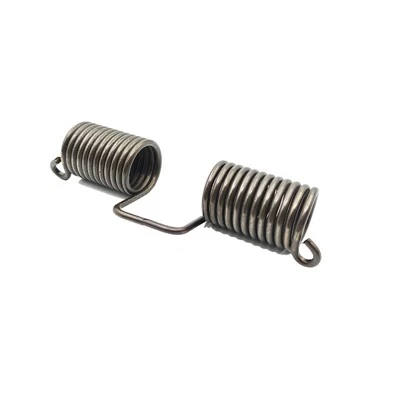
Understanding the Concept of Pre – load
Pre – load refers to the initial force applied to a spring when it is in its assembled state. It is the force that exists before any additional external load is applied. The purpose of pre – load is to ensure that the spring starts working under a certain initial condition, which can improve the stability, accuracy, and reliability of the spring’s performance. For example, in a valve spring application, the pre – load helps to keep the valve closed properly until the appropriate time, preventing leakage and ensuring efficient operation.
Factors Affecting Pre – load Setting
- Material Properties
The material of the spiral spring plays a significant role in determining the pre – load. Different materials have different elastic moduli and yield strengths. For instance, high – carbon steel springs have a relatively high elastic modulus, which means they can store more energy and withstand higher loads. When setting the pre – load, we need to consider the material’s properties to ensure that the spring does not exceed its elastic limit during the pre – loading process. - Spring Dimensions
The dimensions of the spiral spring, such as the wire diameter, coil diameter, and number of coils, also affect the pre – load. A thicker wire diameter generally results in a stiffer spring, which requires a higher pre – load. Similarly, a smaller coil diameter or a larger number of coils can increase the spring’s stiffness. Therefore, accurate measurement and calculation of these dimensions are essential for setting the correct pre – load. - Application Requirements
The specific application of the spiral spring determines the required pre – load. For example, in a precision instrument, a very accurate pre – load is needed to ensure the proper functioning of the device. In contrast, in a less critical application, a slightly wider range of pre – load may be acceptable. Understanding the application requirements is the first step in setting the pre – load.
Methods for Setting Pre – load
- Mechanical Compression
One of the most common methods for setting the pre – load of a spiral spring is mechanical compression. This involves using a press or a similar device to compress the spring to a specific length. The amount of compression is determined by the desired pre – load. We can use the spring’s force – deflection formula (F = kx), where (F) is the force, (k) is the spring constant, and (x) is the deflection. By knowing the spring constant and the desired pre – load, we can calculate the required compression length.
When using mechanical compression, it is important to ensure that the compression is applied evenly. Uneven compression can lead to stress concentration in the spring, which may cause premature failure. We usually use fixtures or guides to ensure that the spring is compressed straight and uniformly. - Heat Treatment
Heat treatment can also be used to set the pre – load of a spiral spring. By heating the spring to a specific temperature and then cooling it under controlled conditions, we can change the material’s microstructure and mechanical properties. This can result in a change in the spring’s stiffness and pre – load.
For example, tempering a spring after quenching can relieve internal stresses and adjust the spring’s hardness and elasticity. However, heat treatment requires precise control of temperature and time. Incorrect heat treatment parameters can lead to over – or under – tempering, which can affect the spring’s performance. - Adjustable Components
In some applications, adjustable components can be used to set the pre – load of the spiral spring. For example, a threaded nut or a screw can be used to adjust the position of the spring seat, which in turn changes the pre – load. This method allows for on – site adjustment and fine – tuning of the pre – load according to the actual operating conditions.
Steps for Setting Pre – load
- Determine the Required Pre – load
Based on the application requirements, we need to determine the exact pre – load value. This may involve consulting with the customer or referring to relevant industry standards. For example, in an automotive suspension system, the pre – load of the spiral spring is determined by factors such as the vehicle’s weight, suspension design, and expected road conditions. - Calculate the Spring Constant
The spring constant (k) can be calculated using the formula (k=\frac{Gd^{4}}{8D^{3}n}), where (G) is the shear modulus of the material, (d) is the wire diameter, (D) is the coil diameter, and (n) is the number of active coils. By knowing the spring constant, we can determine the amount of compression required to achieve the desired pre – load using the formula (F = kx). - Select the Appropriate Method
Depending on the spring’s material, dimensions, and application, we select the most suitable method for setting the pre – load. For small – scale production or applications where precise adjustment is required, mechanical compression may be the best choice. For large – scale production, heat treatment may be more efficient. Adjustable components are useful for applications where on – site adjustment is necessary. - Perform the Pre – load Setting
Once the method is selected, we perform the pre – load setting. If using mechanical compression, we use a press to compress the spring to the calculated length. If using heat treatment, we heat the spring to the appropriate temperature and then cool it according to the specified procedure. If using adjustable components, we adjust the position of the spring seat to achieve the desired pre – load. - Verify the Pre – load
After setting the pre – load, we need to verify that the actual pre – load meets the requirements. This can be done using a force gauge or other measuring devices. If the pre – load is not within the acceptable range, we may need to make further adjustments.
Quality Control in Pre – load Setting
Quality control is essential in the pre – load setting process. We need to ensure that each spring meets the specified pre – load requirements. This involves regular inspection and testing of the springs.
- Inspection of Dimensions
We regularly measure the dimensions of the springs, including the wire diameter, coil diameter, and number of coils, to ensure that they are within the tolerance range. Any deviation in dimensions can affect the spring’s stiffness and pre – load. - Testing of Pre – load
We use force gauges to test the pre – load of the springs. A sample of springs is randomly selected from each production batch for testing. If the pre – load of the sample springs is within the acceptable range, we can assume that the entire batch meets the requirements. - Documentation and Traceability
We maintain detailed documentation of the pre – load setting process, including the method used, the calculated values, and the test results. This documentation provides traceability and helps us to identify and solve any problems that may arise during the production process.
Conclusion
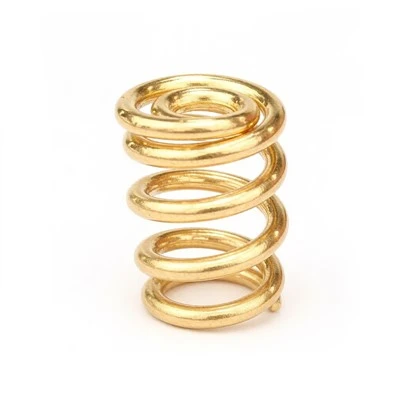
Setting the pre – load of a spiral spring is a complex but important process. As a spiral spring supplier, we need to have a deep understanding of the factors affecting pre – load, the available methods for setting it, and the quality control measures. By following the proper steps and ensuring high – quality production, we can provide our customers with spiral springs that meet their specific requirements.
Leaf Spring If you are in need of high – quality spiral springs and would like to discuss the pre – load setting and other aspects of spring design and production, please feel free to contact us for a procurement negotiation. We are committed to providing you with the best solutions and products.
References
- Budynas, R. G., & Nisbett, J. K. (2011). Shigley’s Mechanical Engineering Design. McGraw – Hill.
- Wahl, A. M. (1963). Mechanical Springs. McGraw – Hill.
- ASME Standard B18.22.1 – 2010, Compression and Extension Springs.
Shengzhou Deyuxiang Hardware Accessories Co., Ltd.
We are one of the most professional spiral spring manufacturers and suppliers in China, also support customized service. With abundant experience, we warmly welcome you to buy high quality spiral spring made in China here and get pricelist from our factory. For price consultation, contact us.
Address: No. 38, Caosheng Road, Caoqiao Street, Pinghu City, Jiaxing City, Zhejiang Province
E-mail: 877286126@qq.com
WebSite: https://www.dyx-spring.com/
