Hey there, fellow garden lovers and lighting nerds! If you’ve been cruising the aisle of your local hardware store lately, you’ve probably stumbled on those tiny, labeled T20 bulbs—think little glass nuggets that pack way more punch than their size suggests. As someone who’s been in the T20 bulb game for over 6 years (shoutout to my team who’s been keeping the lights on, literally), I get so many questions from customers: “Are T20 bulbs actually good for garden lights?” I didn’t just roll my eyes at the question, either— I’ve walked my dog through gardens that look like a disco ball got lost in a flower bed and saw lights that either flickered out by month 2 or made me feel like I was staring into a sun that wouldn’t set. Let’s break this down like we’re hanging on my back porch drinking cold iced tea, no fancy jargon (okay, maybe a tiny bit of tech stuff that actually matters). T20 Bulb
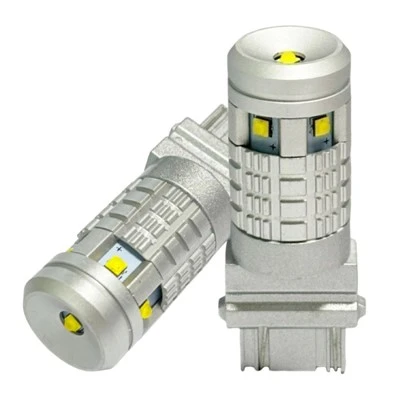
First off, let’s cut through the confusion: what even IS a T20 bulb? I know, I used to mix up T-series bulbs all the time—T5, T10, T20, it’s like a secret code. The “T” stands for tubular, right? And the number after it is the diameter in eighths of an inch. So a T20 is 20/8 of an inch, that’s 2.5 inches, for anyone who doesn’t do fractions like I still suck at baking measurements. That makes it perfect for outdoor light fixtures that don’t need to be bulky—like string light bulbs, post-top garden lights, flood lights that tuck under your patio eaves, even those little solar stake lights you jam into flower beds. Way less clunky than a regular incandescent bulb that’s twice as big, right?
Now, let’s get to the big question: garden lights. What do garden lights actually need to do? They can’t just turn on and off—they have to deal with rain, snow, bugs, extreme heat (if you live in the desert like my cousin in Phoenix) and cold that makes your fingers ache in Minnesota. They need to last, not make your electric bill look like a horror movie, and actually make your garden look good after the sun goes down, not like a dim corner of a basement. Let’s start with the biggest win for T20 bulbs: energy efficiency. Back when I was a teen, my mom had these giant incandescent garden lights that cost $50 a month to run. Crazy, right? LED T20 bulbs use like 80% less energy than old incandescents, and even way less than halogen bulbs which are like the gas guzzlers of the lighting world. For a 10-pack of string lights in your backyard, that’s like $2 a year in electricity, not $20. My neighbor runs his garden light string 12 hours a day, and he texted me last month saying his electric bill was almost the same as before he switched to our T20s. No brainer there.
But hold up— not all T20s are made equal. I’ve had customers come back saying they bought some cheap Amazon T20s that died in a week. Why? Because most of those are indoor bulbs that got thrown in outdoor fixtures. T20s made specifically for outdoor use have a sealing rating—IP65 is the gold standard, meaning they’re dust-tight and can handle being sprayed with water from any angle. That’s key for garden lights, because you’re not just dealing with dew—you’re dealing with sprinklers that blast your plants, heavy rain, even snow that sits on the fixture for days. The T20s we supply all have IP65, so we had a customer in Florida who left his garden lights out during hurricane season and only had to replace one bulb, not the whole string. Compare that to the old incandescents he used, which shorted out after one storm.
Next, brightness and color—because no one wants their garden to look like a hospital hallway or a dive bar. Garden lights need to make your plants pop, right? Rose bushes look better with a warm, soft yellow light, not a harsh blue-white that makes them look like plastic. Our T20 bulbs come in 2700K warm white, which is basically the same as golden hour sunlight when the sun’s going down. We also do 3000K for people who want a little more brightness for walking paths, not so dim that you trip over the patio stone. And the brightness—we do 5W, 7W, 10W options, so you can pick whatever works: 5W for little stake lights around lavender, 10W for a flood light by the big oak tree in your front yard. No overkill, no underkill. A lot of cheaper T20s put out inconsistent brightness—some bulbs are way dimmer than others, so your string lights look like they have dead spots. Our factory tests every single bulb before it leaves, so all 10 of your string light bulbs will shine the same. That’s the stuff no one tells you about when you buy cheap bulbs.
What about longevity? I get so many texts from people who say, “My garden light bulb died after a month!” That’s garbage, and it’s not the garden’s fault. A good T20 outdoor bulb should last 25,000 to 50,000 hours. Wait, let’s do the math: if you run them 8 hours a day, that’s 8.5 to 17 years. For real? Yeah, that’s not a hype number. Our T20s have a 5-year warranty, so if something goes wrong within 5 years, we replace no questions asked. Compare that to incandescents which last like 1,000 hours—you’d be changing them every 4 months. I used to do that with my old patio lights, and I was sick of climbing a ladder at 9 PM in the dark to change a bulb. T20s eliminate that hassle.
But wait, is there any downside? I don’t want to sell you something that’s not perfect. A lot of people say T20s are too small. If you have a super old garden fixture that’s made for big, round incandescent bulbs, a T20 might not fit. But that’s a rare case—most modern garden light fixtures are made to fit T20s, because people want smaller, sleeker designs that don’t look clunky. Another thing: if you buy super cheap T20s, they might have a bad driver, which causes them to flicker or burn out fast. But that’s not the T20’s fault—it’s the manufacturer cutting corners. The T20 format itself is great, you just have to pick the right one. I’ve had a customer who bought a set of T20s from a dollar store, and they died in 2 weeks, then switched to ours and still going strong 3 years later. That’s the difference.
Let’s talk about use cases, because that’s what really matters. If you’re putting up string lights along your backyard fence to hang with friends, T20s are perfect. They’re not too bright, they create that cozy vibe, and they don’t use enough electricity to worry about leaving on all night. If you have a path through your vegetable garden that gets dark at night, 5W T20 stake lights are great—they’re not blinding, so you can see where you’re stepping without disturbing the bees. If you need a flood light to light up your rose garden so you can see them while you’re drinking coffee on the patio at dusk, a 10W T20 does that without making the whole neighborhood feel like they’re under a spotlight. I’ve even had customers use T20s in their bird bath lights—they’re water-resistant enough, and the warm light attracts moths (which is good for birds, right?).
Now, let’s bust a myth: “T20 bulbs are just for cars!” No, that’s the old days. A long time ago, T20 bulbs were mostly used for turn signals in cars, but they’ve evolved a lot. Now they’re used for all kinds of lighting, because their size is perfect. Outdoor lighting companies started using them about 8 years ago, and it’s been a game changer. They’re small enough to fit into compact fixtures, bright enough to do the job, and durable enough for outside. I remember when we first started selling outdoor T20s, we had no clue how big it would get. Now it’s like 70% of our business, and all the landscape designers we work with swear by them.
Wait, let’s talk about weather. I live in Ohio, where we get everything: blizzards in January, humid 90-degree summers in July, random thunderstorms that dump 3 inches of rain in an hour. Our T20s have been tested in all of that. Last winter, we had a customer who left his garden lights up all winter, covered in 2 feet of snow, and when it melted, the lights still worked. That’s way more than I can say for the old halogen bulbs he used before—they shattered in the cold. The LED technology in T20s means they don’t get hot, so they don’t melt plastic fixtures, and they don’t overheat in the summer, which extends their life. That’s a huge plus for garden lights, which are exposed to the elements all year round.
So, should you switch to T20 bulbs for your garden lights? My answer is: yes, if you buy the right ones. A lot of people write off T20s because they’ve bought bad ones from no-name brands, but when you get a quality T20 built for outdoor use, it’s the best option for garden lights right now. They save you money on electricity and replacement bulbs, they last forever, they look good, and they can handle whatever the weather throws at them. I’ve been in this business long enough to know that the hype around smart bulbs and fancy new lighting can be overwhelming, but sometimes the best thing is something that works, is affordable, and doesn’t require a PhD to install. T20s are that thing.
If you’re ready to make the switch, or you have questions about what wattage or brightness you need for your garden, feel free to reach out to our team. We can help you pick the right bulbs for your fixtures, answer any questions, and get you set up so your garden looks amazing after dark without any of the hassle. No pressure, just good advice from someone who’s been in the lighting game for years, and loves seeing people’s gardens light up.
T20 Bulb References:
- US Department of Energy. (2023). Energy Efficiency of LED Lighting for Outdoor Applications.
- Lighting Facts Label. (2024). Outdoor Bulb Performance and Durability Standards.
- Landscape Lighting Association. (2022). Best Practices for Garden Lighting Selection and Installation.
- International Electrotechnical Commission (IEC). (2021). IP Rating Standards for Weather-Resistant Lighting.
Nicebulbs
As one of the most professional t20 bulb manufacturers and suppliers in China, our products have good reputation in the market. Please feel free to wholesale cheap t20 bulb for sale here and get pricelist from our factory. Quality products and reasonable price are available.
Address: No. 86 Zhongli Road, Nancheng Street, Dongguan City, Guangdong Province
E-mail: vic@nicebulb.com
WebSite: https://www.nicebulbs.com/
