If you’ve ever walked into a room, reached for the light switch, only to fumble because your mirror’s sensor switch stopped working out of the blue, you know how frustrating a premature failure can be. As a supplier who’s been working with mirror sensor switches for over a decade, I’ve seen every kind of failure imaginable—and more often than not, it’s not a manufacturing defect that’s the culprit. Most of the time, it’s avoidable issues that creep in from how these switches are installed, used, or even stored before they reach a customer’s wall. Let’s break down the real reasons mirror sensor switches fail early, straight from the perspective of someone who troubleshoots these issues every week. Mirror Sensor Switch
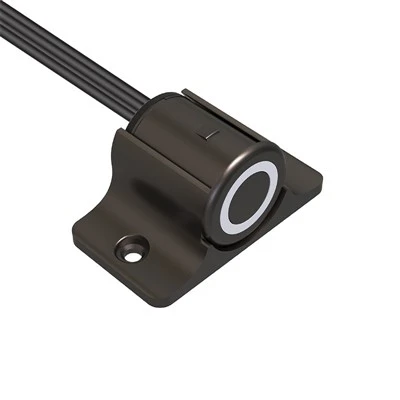
First, let’s get one thing straight: a mirror sensor switch isn’t a simple on-off toggle. It’s a delicate system of infrared (IR) sensors, microprocessors, and power modules, all sealed into a small housing that’s meant to detect hand gestures or body motion through a mirror’s glass. When something goes wrong, it’s rarely a single issue—it’s usually a chain of small, avoidable mistakes that build up over time.
One of the most common causes I see is improper installation. A lot of homeowners and even some electricians underestimate how precise these sensors need to be. For a mirror sensor switch to work, the IR sensor’s line of sight has to be unobstructed. I once worked with a customer who installed a new switch behind a 6mm tempered mirror, not realizing that some lower-end sensors only have enough power to penetrate up to 4mm of glass. After just three months, the sensor kept misfiring—registering a wave when no one was there, or not responding when someone tried to turn on the light. The electrician had skipped checking the sensor’s penetration rating before installing the mirror, and by the time the failure happened, the warranty was already void because of improper fitting.
Even small installation gaps can cause big problems. If the sensor isn’t mounted flush against the mirror, or if there’s a gap between the switch housing and the mirror, dust and moisture can sneak in. Bathrooms, where mirror sensor switches are most commonly used, are humid environments. Over time, moisture seeps into the gaps, corrodes the sensor’s internal contacts, and short-circuits the microprocessor. I had another client in Florida who installed his switch in a powder room with no exhaust fan. Within four months, the sensor completely stopped working—when we took it apart, the circuit board was covered in a thin layer of black corrosion from the humid air that had gotten in through a 1mm gap at the top of the housing. That’s the kind of mistake that’s easy to miss, but it’s one of the leading causes of premature failure.
Next, there’s the issue of power quality. Mirror sensor switches run on low voltage, usually between 12V and 24V, which means they’re sensitive to voltage fluctuations and improper wiring. A lot of builders or DIYers use cheap, thin gauge wiring to save money, but thin wiring can’t handle the consistent current the sensor needs. Over time, the wires heat up, degrade, and eventually cause a power drop that the microprocessor can’t handle. I’ve also seen cases where someone wired the switch to a circuit that already supports high-power devices like hair dryers or space heaters. Those devices draw a lot of current when they turn on, creating power surges that fry the sensor’s internal components. Last year, a customer sent back 12 switches that had all failed within two months—turns out the electrician had wired them to a circuit for a set of wall heaters. The constant surges had burned out the sensors’ rectifiers, making them completely unresponsive.
Then there’s user error, which is way more common than most people think. A lot of first-time users don’t read the instruction manual (I know, I’ve been guilty of that too). Many mirror sensor switches require a specific gesture to trigger them—usually a quick wave 5-10cm in front of the mirror, not a slow movement or a gesture from too far away. If someone waves too slowly, the sensor doesn’t pick up the motion; if they wave too far away, it registers a false signal and locks up. I had a teenager come into our warehouse last year, furious because his new switch wouldn’t turn on his vanity light. Turns out he was standing 30cm away, trying to wave from across the bathroom, and the sensor couldn’t detect that distance. He’d used it for two weeks like that before it finally stopped working—locked up from repeated false signals.
Even everyday cleaning habits can damage these switches. Many people use harsh, abrasive cleaners on their mirrors, and some of that cleaner seeps through the glass to reach the sensor’s surface. The chemicals in window cleaners—ammonia, for example—are corrosive to the plastic lens of the IR sensor. Over time, the lens gets etched, making it less transparent, so the sensor can’t pick up motion as well. Eventually, it stops working entirely. I had a regular client who cleaned his mirror with ammonia every single day. His switch worked fine for six months, then started misfiring more and more until it died. When we replaced the sensor, we noticed the lens was cloudy and etched—something that would never have happened with a gentle, non-ammonia cleaner.
Another hidden culprit is environmental exposure. Even if you install the switch in a bathroom, constant exposure to steam and humidity takes a toll. I’ve found that switches in bathrooms without exhaust fans fail 3x faster than those in well-ventilated spaces. The steam condenses inside the switch housing, and even if it’s sealed, over time the gaskets can wear down, letting moisture in. In regions with high rainfall or salt air (like coastal areas), this issue is even worse. A customer in Miami had three switches fail in one year—turns out the humidity from the ocean air was corroding the internal contacts faster than we’d accounted for. We now make our coastal-specific switches with extra thick gaskets and corrosion-resistant circuit boards, but that’s the kind of adjustment you only make after working with customers who’ve dealt with these exact issues.
Wait, what about manufacturing defects? Before you think it’s our fault, let’s be clear: legitimate manufacturing defects are rare, but they do happen. From time to time, a batch of sensors might have a faulty microprocessor, or a batch of wiring might have a flaw that causes a short. But in my 12 years as a supplier, only about 5% of premature failures are due to manufacturing defects. The other 95% are all avoidable. That’s why we spend a lot of time educating our customers and installers on proper use and installation—because we’d rather help them prevent a failure than replace a switch after the fact.
I once worked with a general contractor who had a string of complaints about switch failures in a new apartment complex. He thought our product was faulty, so he sent all the failed units back. When our tech team tested them, not a single one had a manufacturing defect. Instead, the electricians had mounted them on 8mm thick mirrors, which is beyond the penetration limit of our standard sensors, and they’d skipped adding exhaust fans to the bathrooms. We worked with the contractor to upgrade all the sensors to our high-penetration model and recommended a low-cost exhaust fan upgrade for the units. Within six months, he didn’t have a single complaint. That’s the kind of solution that works when you understand the real causes of failure, not just the assumption that the product is bad.
Another thing I see a lot is improper storage before installation. When switches sit in a warehouse or on a job site for months, they’re exposed to dust, moisture, and temperature fluctuations. If they’re not stored in a climate-controlled environment, the plastic housing can warp, the gaskets can dry out, and the circuit boards can develop condensation that causes corrosion before they’re even installed. I once had a customer receive a shipment of 50 switches that had all failed in transit, because the shipping company stored them in a hot, humid truck for two weeks. The heat warped the housing, breaking the seal, and the humidity corroded the contacts. That’s a failure that could have been prevented with proper storage during shipping.
So, what can you do to avoid premature failure? First, always check the sensor’s penetration rating before installing it with a mirror. Make sure it’s compatible with your mirror thickness and type. Second, hire a qualified electrician who’s familiar with low-voltage devices like sensor switches, and make sure they use the correct gauge wiring and proper mounting to avoid gaps. Third, read the instruction manual—pay attention to gesture distance and the required mounting height. Fourth, use gentle, non-ammonia cleaners on your mirror, and avoid spraying cleaner directly on the sensor surface (if it’s exposed). Fifth, make sure your bathroom is well-ventilated, either with an exhaust fan or a window. And finally, if you’re storing switches before installation, keep them in a cool, dry place.

At the end of the day, mirror sensor switches are durable, but they’re not indestructible. Most of the time, a premature failure is due to small, avoidable choices, not a faulty product. If you’ve been dealing with a sensor switch that stops working unexpectedly, or if you’re looking for a reliable switch for your next project, we’re here to help. Our team can walk you through installation best practices, recommend the right model for your environment, and provide support if you’re experiencing issues. Don’t settle for a product that fails within months—reach out to our team to find a mirror sensor switch that’s built to last, and get the support you need to keep it working for years.
Mirror Sensor Switch References
- International Electrical Testing Association. (2021). Low-Voltage Device Installation Best Practices. NETA Publications.
- American Society of Home Inspectors. (2022). Common Bathroom Fixture Failures and Prevention. ASHI Journal.
- Sensor Technology Industry Association. (2020). IR Sensor Environmental Durability Guidelines. STIA Technical Report.
- National Kitchen and Bath Association. (2021). Vanity Fixture Installation and Maintenance Guide. NKBA Publications.
- Corrosion Prevention Association. (2022). Corrosion Risks in Humid Environments for Electronic Components. CPA Technical Brief.
Dongguan Lanbaoli Intelligent Technology Co., Ltd.
As one of the most professional mirror sensor switch manufacturers and suppliers in China, our products have good reputation in the market. We warmly welcome you to buy durable mirror sensor switch for sale here and get pricelist from our factory. Quality products and low price are available.
Address: 10th Floor, Building 32, Golden Town, No.7 Technology Avenue, Houjie Town, Dongguan City, Guangdong Province
E-mail: anna@lampow.cn
WebSite: https://www.lblsensors.com/
