If you’ve ever wandered around a motorcycle dealership, or even just scrolled through a motorcycle group on social media, you’ve probably seen people throw around the terms “electric motorcycle” and “motorbike” like they’re the same thing. As someone who’s been selling electric motorcycles for a few years now, I get why the mix-up happens—at first glance, they both have two wheels, handle pretty similarly, and get you from A to B on two wheels. But dig a little deeper, and the differences aren’t just technical—they’ve got everything to do with how each works, what they’re built for, and even how they fit into your daily routine. Let’s break this down, no fancy jargon, just straight talk from someone who’s been in the thick of supplying these for years. Electric Motorcycle

First off, let’s get the most obvious difference out of the way: power sources. A traditional motorbike runs on internal combustion (IC) engines—you fill the tank with gasoline, right? That engine mixes air and gas, ignites it with a spark plug, and that tiny explosion pushes pistons, which turns the wheels. It’s the same tech that’s been around for over a century, tweaked over time to get more power and better fuel efficiency, but still relying on fossil fuels.
An electric motorcycle, though, runs on a battery and an electric motor. No gas, no spark plugs, no exhaust pipe. The battery stores electricity, which the motor uses to spin the wheels. That shift might sound simple, but it changes almost every part of how the vehicle works. For one, electric motors deliver torque instantly—if you’ve ever ridden an e-moto, you know that twist of the throttle makes it lurch forward right away, no waiting for the engine to rev up like a motorbike. That’s a huge difference for city commuting, where you’re stopping and starting at lights all day.
But let’s not stop at power. Let’s talk about maintenance, because that’s where a lot of buyers end up choosing one over the other. A motorbike needs regular oil changes, air filter replacements, spark plug checks, and adjustments to the chain or belt every few thousand miles. Some parts, like the exhaust system or carburetor, can wear out and need replacing if you ride often. I’ve had customers tell me they spend $500 to $1,000 a year on upkeep for their gas-powered motorbikes—for them, that’s a big cost that adds up.
With electric motorcycles? Maintenance is way simpler. The only real upkeep is checking the tire pressure, brakes, and the chain (if it’s a chain-driven model, though many are belt-driven now). No oil changes, no tune-ups for internal engine parts, no dealing with spark plugs. The battery might need replacing after 8 to 10 years, but even that’s a fraction of the cost of maintaining a gas motorbike over the same period. As a supplier, I see this all the time—commuters switch to e-motos because they cut their yearly upkeep costs by more than half.
Next, range and refueling. A typical motorbike can go anywhere from 150 to 400 miles on a single tank of gas, depending on the engine size. Fill up takes 2 to 5 minutes at a gas station, no waiting around. That’s great for road trips, long-distance rides, or areas where charging stations are scarce. Electric motorcycles, though, have a range that’s usually between 50 and 150 miles per charge—most models I sell hit around 80 to 100 miles, which is perfect for city commuting. Charging takes longer, too: if you use a standard wall outlet, it’s 4 to 6 hours for a full charge. A fast charger can cut that to 1 to 2 hours, but fast chargers aren’t everywhere yet.
That said, the range of electric motorcycles has gotten way better in the last 5 years. Back when I first started selling, most e-motos only went 30 to 50 miles on a charge, which was too limiting for most people. Now, with lithium-ion batteries getting cheaper and more efficient, even mid-range models can handle a full day of commuting without needing a top-up. For riders who stick to city streets, that’s more than enough.
Then there’s the riding experience, which is super personal, so it’s hard to say one is better than the other—but it’s definitely different. A motorbike has that raw, rumbling feel from the IC engine—you can hear it, feel the vibrations through the handlebars and seat, which a lot of riders love. It’s a classic, nostalgic experience that’s hard to replicate. Electric motorcycles, on the other hand, are quiet, smooth, and almost vibration-free. No rumble, no smell of gas, just a quiet whine from the motor when you accelerate. For city riders, that’s a big deal—no more waking up neighbors when you leave for work at 6 a.m., no more exhaust fumes lingering around parking lots.
I’ve had customers who love both, but it really comes down to what they use the bike for. If you’re taking weekend road trips upstate, a motorbike might be the way to go. If you’re just commuting to work, running errands, or zipping around the city, an electric motorcycle is hard to beat.
Let’s also talk about cost, because that’s a huge factor for most buyers. Upfront, a lot of electric motorcycles are more expensive than a basic motorbike. You can get a entry-level gas motorbike for $3,000 to $5,000, while a basic electric motorcycle starts around $6,000. But wait—don’t let that sticker price scare you off. Over time, electric motorcycles save you money. Gas is expensive: the average motorbike gets 50 miles per gallon, so a tank of gas ($3 to $4 a gallon these days) will get you around 150 miles, costing $10 to $12. An electric motorcycle costs about $0.05 per mile to charge—so 100 miles of riding costs $5, which is way cheaper. Plus, you don’t have the maintenance costs I mentioned earlier. Most e-moto owners break even on the higher upfront cost after 3 to 5 years, and then they’re saving money every year after that.
There’s also the environmental angle, which is a big selling point for a lot of buyers. Motorcycles run on fossil fuels, so they emit carbon dioxide and other pollutants into the air. The EPA says gas-powered vehicles, including motorbikes, are a major source of air pollution in urban areas. Electric motorcycles, on the other hand, produce zero tailpipe emissions. Even when you account for the electricity used to charge them, they’re way cleaner than gas motorbikes—studies show e-motos emit 50% fewer greenhouse gases over their lifetime than gas motorbikes, even if the electricity comes from a coal power plant. For riders who care about reducing their carbon footprint, that’s a no-brainer.
Wait, but let’s clear up a common misconception: some people think all two-wheeled vehicles are the same, but motorbikes can range from tiny, low-powered scooters to big, heavy sport bikes with 1,000cc engines. Electric motorcycles, though, are usually designed for road use, not just short trips around town (though we do sell compact models for urban areas). But even the biggest electric sport bikes—like the ones that go 150 mph—still use the same battery-motor setup, so the core difference from a motorbike is still the power source.
As a supplier, I’ve seen a lot of buyers come in confused, asking if electric motorcycles are just “motorbikes with batteries.” And to a degree, they’re similar—both have two wheels, handlebars, brakes, and are built for personal transport. But the differences go way beyond swapping gas for a battery. It’s a whole different driving experience, different maintenance needs, different cost structure, and different environmental impact.
So who should choose which? If you’re a long-distance rider who loves the rumble of a gas engine, and you don’t mind stopping for gas, a traditional motorbike is perfect. If you’re a city commuter who wants to save money on gas and maintenance, don’t want to deal with oil changes, and care about reducing your emissions, an electric motorcycle is the way to go.
Here’s the thing: electric motorcycles aren’t going to replace all motorbikes anytime soon. There’s still a big market for gas-powered two-wheelers, especially among long-distance riders and enthusiasts who love the classic feel of an IC engine. But for a lot of people—especially those stuck in city traffic, looking to cut costs, or lower their carbon footprint—electric motorcycles are a way better fit.
I’ve been supplying electric motorcycles for years now, and I’ve seen first-hand how much of a difference they can make for someone’s daily commute. One customer told me he used to spend $40 a week on gas for his motorbike, plus $200 a year on oil changes and tune-ups. Now, he spends $10 a month on charging, and no maintenance. That’s a huge difference, and it’s why so many people are switching.
If you’re still on the fence about which is right for you, or if you’re looking to make the switch to an electric motorcycle, I’d love to chat. We’ve got a range of models—from compact city e-motos to high-performance ones for longer rides—that fit different needs and budgets. Whether you’re a commuter, a weekend rider, or just someone looking to try something new, we can help you find the right fit. Don’t hesitate to reach out to our team to learn more, test ride a model, or get a custom quote.
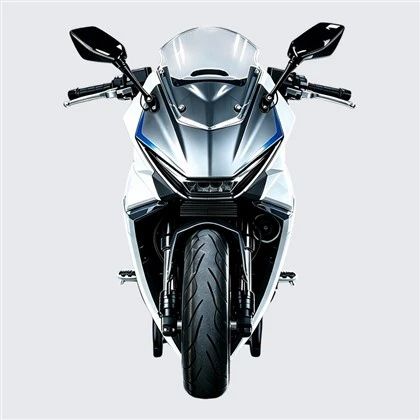
At the end of the day, the difference between an electric motorcycle and a motorbike isn’t just technical—it’s about what you want out of your ride. Both are great, but they’re built for different people. All you have to do is figure out which one aligns with your needs.
Delivery Scooter References
- U.S. Environmental Protection Agency. (2023). Light-Duty Vehicle Greenhouse Gas Emissions Standards.
- International Energy Agency. (2022). Global Electric Two-Wheeler Market Outlook.
- Motorcycle Industry Council. (2023). 2023 Motorcycle Maintenance Cost Report.
- Edison Electric Institute. (2022). Electric Vehicle Charging Infrastructure for Two-Wheelers.
- World Health Organization. (2021). Air Pollution from Road Transport: Urban Impacts.
Zhejiang Siekon Motor Technology Co., Ltd.
Zhejiang Siekon Motor Technology Co., Ltd. is one of the most professional electric motorcycle manufacturers and suppliers in China, featured by quality products and good service. Please feel free to wholesale advanced electric motorcycle made in China here from our factory. Also, custom service is available.
Address: Building 3, No. 112 Gaoxin East 1st Road, Tongxiang Economic Development Zone, Tongxiang City
E-mail: wsy@xkjsq.com
WebSite: https://www.siekonmotorcycle.com/
