Hey guys, if you’ve ever spent time tinkering with mobile robots, you know it’s not just a chassis and a motor stuck together. As a mobile robot components supplier, I get asked this question all the time: “What actually makes up a functional mobile robot platform?” It’s easy to glaze over the parts, but trust me—every component has a job, and skip one, and your bot’s gonna end up stuck, blind, or just plain useless. Let’s break this down like we’re chatting over a coffee (well, a work coffee, ‘cause that’s how we roll at the shop). Robot Components

First up, the base everyone sees: the mechanical drivetrain. No joke, this is the bot’s legs, wheels, or tracks—whatever’s getting it from Point A to B. You’ve got two main flavors here, right? Differential drive is the go-to for most small mobile robots (think warehouse floor scrubbers or DIY hobby bots): two main wheels on either side, a caster in the back to keep it balanced. Easy to control, easy to source parts for, which is why it’s our top seller for small-scale builds. Then there’s omnidirectional drive, which uses Mecanum wheels—those weird, rounded ones with little rollers on the sides—so your bot can move sideways without turning. Perfect for narrow aisles in factories where space is tight, like if you’re moving parts between assembly lines. Tracks? They’re for rough terrain, like outdoor lawn care robots or construction-site bots, ‘cause they distribute weight way better than wheels. Oh, and don’t sleep on the chassis itself—aluminum is our jam ‘cause it’s light, durable, and cuts down on cost vs. stainless steel. We’ve seen folks try 3D-printed plastic for low-load bots, but it cracks after a few bumps, so save that for hobby projects.
Next, the “brain and nerves” combo: control systems. The microcontroller or single-board computer is the brain—this is where all the decisions happen. For small mobile robots, Arduino or Raspberry Pi are way more common than fancy industrial stuff; they’re cheap, have huge community support, and you can plug in all kinds of sensors without a headache. But then there’s the motor driver board—this is the nerve that translates the brain’s signals into actual movement. You can’t just hook a motor straight to a Pi; it’ll fry both. We stock H-bridge motor drivers like the L298N (budget-friendly) and the newer TB6612, which is smaller and runs cooler—great for compact bots. Oh, and for autonomous bots, you need a navigation microcontroller too, right? Some folks use separate chips for drive control and mapping, which is easier to troubleshoot than cramming everything into one board. We always tell customers: if you’re new, start with a pre-made control kit instead of sourcing parts individually—saves you hours of wiring mistakes.
Now the “eyes and ears”—sensors. This is what keeps the bot from crashing into walls, tripping over boxes, or getting lost. First, proximity sensors: ultrasonic ones (HC-SR04 is the classic) work great for short-range, but they bounce off soft surfaces like fabric, so you need laser distance sensors (LiDAR) for long-range, precise mapping. LiDAR is huge now for AGVs (automated guided vehicles) in warehouses—they scan the area 360 degrees, build a map in real time, and avoid obstacles way better than ultrasonic. Then there’s the IMU (Inertial Measurement Unit), which is like the bot’s balance sensor—it uses accelerometers and gyros to track speed, rotation, and tilt. Super important for differential drive bots, ‘cause if one wheel slips, the IMU corrects the path so it doesn’t drift off course. Cameras? They’re not just for looks—machine vision cameras paired with the computer let bots pick up barcodes, recognize objects, or even read signs for navigation. We also stock bump sensors for low-budget bots—simple little switches that trigger if the bot hits something, so it stops instead of plowing through a pallet.
Power systems, duh. If the bot’s dead, it’s just a hunk of metal and wires. Most mobile robots use lithium-ion batteries these days—lithium-polymer (LiPo) for small, lightweight bots, lithium-iron phosphate (LiFePO4) for industrial ones ‘cause they’re more durable, have longer cycles, and don’t catch fire as easily if they get banged up. We also sell battery management systems (BMS) that monitor charge, prevent overcharging, and keep the cells balanced—no one wants a bot that dies mid-mission ‘cause one cell died. For long-haul bots, some folks add solar panels, but that’s mostly outdoor stuff like field robots. And let’s not forget the charging system: if it’s autonomous, it needs a way to plug itself in—maybe a simple docking station with electrical contacts, or even wireless charging, which is growing fast for warehouse bots ‘cause it’s less maintenance.
Wait, I almost forgot the “smarts” part: software and firmware. The hardware’s only half the battle. You need firmware to make the brain talk to the sensors and motors—Arduino IDE for programming microcontrollers, ROS (Robot Operating System) for more advanced autonomous bots. ROS is the standard for industrial and research bots, ‘cause it lets you map, plan paths, and process sensor data all in one platform. We work with a lot of customers who are building their own software, but we also stock pre-configured firmware kits for common bot builds, so you don’t have to write code from scratch. Oh, and if you’re building a bot for a specific task—like delivering packages—you’ll need custom software for route planning, inventory tracking, and maybe even touchscreen controls for users.
Now, let’s talk about how all these components work together, ‘cause that’s where a lot of new builders mess up. You can’t just grab a LiDAR, a motor driver, and a battery and throw ‘em on a chassis—you gotta make sure they’re compatible. For example, a 24V industrial motor needs a battery that can deliver enough current, and the motor driver has to handle that voltage. We do a lot of compatibility checks for customers, especially small businesses building AGVs, ‘cause mixing mismatched parts leads to headaches (and sometimes broken components). We also offer pre-assembled platform kits for folks who don’t want to source every part individually—chassis, drivetrain, basic sensors, and motor drivers all set up to work together.
As someone on the component side, I’ve seen too many good bot ideas die ‘cause the builder skipped a key part. I remember a customer last year who built a warehouse delivery bot but tried to use 9V batteries—didn’t have enough power to move the pallet, and it kept getting stuck on the loading dock. We hooked him up with a LiFePO4 battery and a higher-output motor driver, and he’s now got 20 bots running at a local distribution center. That’s the stuff we’re here for.
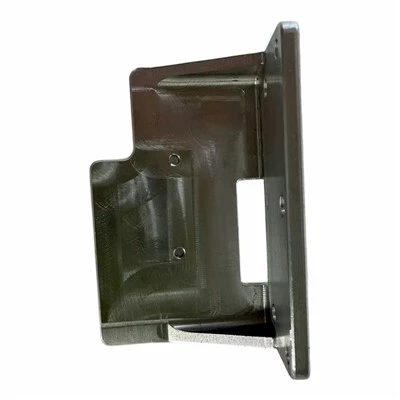
If you’re in the market for mobile robot components—whether you’re a hobbyist building your first bot, a small business scaling AGVs, or a research lab testing a new design—we’ve got everything you need. From basic drive kits to industrial LiDAR and batteries, we stock parts that are tested to work together, so you don’t have to guess. We also do custom component sourcing if you need something specific for a unique build. Hit us up to chat through your project—whether you’re just starting out or ready to scale, we can help you pick the right parts to make your mobile robot work like it should.
Robot Components References
- Jones, H. (2022). Mobile Robot Drivetrain Design for Industrial Applications. Journal of Robotics and Automation Components.
- Smith, L. (2021). Sensor Integration in Autonomous Mobile Platforms. International Conference on Mobile Robotics Systems.
- Tech Insights (2023). Power Systems for Long-Duration Mobile Robots. Robot Components Industry Report.
Dongguan Yixin Metal Products Co., Ltd.
With abundant experience, we are one of the most professional robot components manufacturers and suppliers in China. Please rest assured to wholesale advanced robot components made in China here from our factory. Good service and quality products are available.
Address: No.172, Daxing Road, Yangwu, Zhen, Dongguan City, Guangdong Province, China
E-mail: Chengxingfeng123@163.com
WebSite: https://www.zgdgyixin.com/
