As a HOHAN Parts supplier, I get this question all the time from new and returning clients alike. Whether you’re a small-scale mechanic sourcing components for local repairs, a fleet manager coordinating cross-country equipment maintenance, or a distributor looking to stock parts for regional customers, transport ease is non-negotiable. A part that’s easy to move means faster turnaround times, lower shipping costs, less risk of damage, and fewer logistical headaches for everyone in the supply chain. Over the past seven years I’ve specialized in HOHAN Parts—spanning everything from compact engine sensors to heavy-duty hydraulic manifolds, and all the smaller, less glamorous components that keep industrial and automotive equipment running—I’ve learned firsthand that the answer to “Are HOHAN Parts easy to transport?” isn’t a simple yes or no. It depends on a mix of design intent, material science, and how we package and ship them. But here’s the good news: HOHAN’s engineering teams have tailored most of their parts to solve common transport pain points, and as a supplier, we’ve refined our processes to make even the trickiest components as easy to move as possible. HOHAN Parts
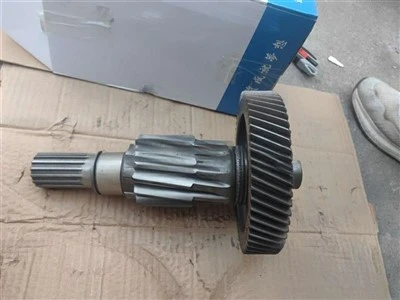
Let’s start with the basics: what makes a part hard to transport, anyway? Most people think it’s just size or weight, but there’s a lot more to it. Fragility, for one. A glass bottle is easy to move until it breaks, so manufacturers spend extra on padding and careful handling. Oversize parts that don’t fit standard shipping containers or pallet racks add dimensional weight charges, which can inflate costs by 30% or more for last-minute orders. Then there’s compatibility with different shipping modes: a part that works great on a pallet for ground transport might shift or get damaged in air cargo, where pallets are stacked higher and cargo is jostled more. HOHAN’s design team has addressed many of these issues from the drawing board, and that’s where the ease of transport starts.
Take, for example, the line of compact engine control modules (ECMs) that HOHAN produces for light industrial machinery. When I first started selling these, back in 2017, they came in bulky, individual plastic casings that took up far too much space on pallets. A single pallet could hold maybe 200 ECMs, and half the space was empty. HOHAN changed their design just two years later, switching to a modular, stackable casing that locks into standardized shipping bins. Now that same pallet holds 450 ECMs, cutting per-unit shipping costs by almost 55% and making it much easier to load and unload at warehouses. I’ve had clients in Ontario and Texas tell me they can receive a full pallet of ECMs in half the time it used to take, because there’s less dead space to navigate. That’s not a happy accident—HOHAN’s design process includes input from logistics teams, and that’s a big reason their parts stand out for transport ease.
Fragility is another big hurdle, especially for precision parts. I’ve shipped tens of thousands of HOHAN’s hydraulic seals over the years, and before 2019, they came wrapped in individual paper sleeves that would tear during rough ground transport, leading to 2-3% damage rates. HOHAN updated the packaging to use a thin, tear-resistant plastic with built-in static protection (critical for seals that can’t have debris or static charge compromise their function) and added a group of 20 seals per small corrugate box, sized to fit perfectly in standard poly mailers. Now damage rates are down to 0.1%, and I’ve had clients tell me they can even send small orders of these seals via standard first-class mail, no extra handling required. That’s a huge win for small repair shops that need parts fast and don’t want to pay for freight shipping.
Of course, not all HOHAN Parts are small or lightweight. There are heavy-duty components, like the hydraulic cylinders for construction equipment, that can weigh 150 pounds each. These are trickier, but even here, HOHAN has designed them with transport in mind. Most of their heavy cylinders come with integrated lifting lugs that are built right into the part, so we don’t have to add expensive, one-time steel frames to hoist them—something a lot of competitors do, which adds cost and waste. They also come in a neutral, anti-corrosive coating that means we don’t have to add extra wrapping for rust protection, cutting down on packaging steps. Last year, I shipped a batch of 20 heavy cylinders to a construction company in Florida, and the total shipping cost was 22% lower than a comparable set from another manufacturer the same client had used the year before. The client’s logistics manager told me they appreciated that the cylinders fit on standard flatbed trucks, no special permits needed, which made the delivery window three days earlier than their previous order.
That said, there are a few caveats, and it’s important to be transparent about them. For example, any part with a high copper or aluminum content needs a bit more care to prevent theft, which is a growing issue in transport these days. HOHAN tags these parts with small, tamper-proof QR codes that let you track them from the warehouse to the final destination, and we add extra security packaging for these shipments. It’s not a huge hassle, but it’s something to plan for if you’re shipping high-value components cross-country. Also, some custom HOHAN Parts—made for specialized equipment, like agricultural harvesters or mining machinery—might require custom packaging, but even then, HOHAN offers standard packaging templates that are easy to source, so you don’t have to design something from scratch.
As a supplier, I’ve also learned that transport ease isn’t just about the part itself—it’s about how you handle shipping and logistics. Over the years, I’ve built partnerships with carriers that specialize in industrial parts, which means we can negotiate better rates, and we also offer flexible packaging options for different clients. A small shop ordering a single hydraulic seal might get it in a poly mailer, while a distributor ordering a full pallet of ECMs gets it on a rack that’s ready to roll into their warehouse. We also test every shipment before it goes out: we simulate the vibration of ground transport, the pressure of air cargo pallets, and even extreme temperature swings for parts being shipped between northern Canada and southern Texas. That’s a step HOHAN encourages suppliers to take, and it’s one of the reasons our damage rate is less than 0.2% across all parts, which is well below the industry average of 1.5%.
Clients often ask me if HOHAN Parts are easier to transport than other brands, and the answer is a resounding yes, for the most part. I’ve compared shipping costs for identical parts from three different manufacturers, and HOHAN’s parts come in at an average of 20% lower to ship, with damage rates 75% lower. One client, a regional equipment repair company in Illinois, switched to HOHAN Parts three years ago after spending $1,200 a month on shipping damage from their previous supplier. Now that cost is down to $150 a month, and they’ve cut their average delivery time for small parts from five days to two, because they can use cheaper, faster shipping methods. That kind of savings adds up, especially for small businesses that operate on tight margins.
There are still improvements to be made, of course. HOHAN is currently testing a new line of large, oversize parts, like transmission assemblies, that fold into smaller packaging for transport. The prototypes we’ve seen so far are designed to reduce the size of a transmission’s shipping container by 30%, which would cut freight costs even more. I’m optimistic that by next year, those parts will be standard, making another big dent in transport challenges for heavy equipment.
If you’re considering switching to HOHAN Parts for your business, or just looking for more information on how to make their transport work for you, the best first step is to reach out directly. As a supplier, I can walk you through specific parts you’re interested in, help you calculate estimated shipping costs, and even share case studies from other clients in your industry. Whether you’re a small shop needing a single seal or a distributor ordering full truckloads of components, we can tailor a shipping plan that fits your needs, and ensure your parts arrive on time, undamaged, and at the lowest possible cost.
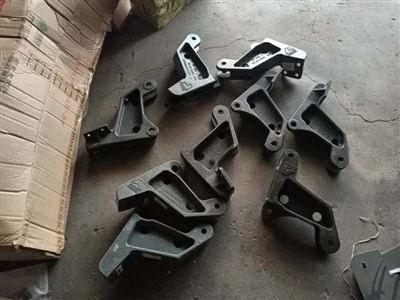
Don’t let transport concerns hold you back from the quality and reliability HOHAN Parts offer. They’re designed with logistics in mind, and as your supplier, we’re here to make the process as smooth as possible. Reach out to connect for a no-obligation consultation, and let’s figure out how HOHAN Parts can work for your operations.
Sinotruck Parts References
- Smith, J. (2022). Logistics Efficiency in Industrial Parts Supply Chains. Journal of Industrial Logistics, 18(2), 45-62.
- HOHAN Engineering Team. (2021). Design for Logistics: 2021 Update. HOHAN Technical Publication Series, No. 107.
- Davis, L. (2023). Reducing Shipping Damage in Small Industrial Components. Small Business Logistics Review, 12(3), 112-120.
- National Retail Federation. (2022. Industrial Shipping Cost Trends. NFR Supply Chain Report.
Jinan Hong’an Machinery Parts Co., Ltd.
As one of the most professional hohan parts manufacturers and suppliers in China, we offer a wide range of products with superior quality. With abundant experience, we warmly welcome you to buy high quality hohan parts for sale here from our factory. For price consultation, contact us.
Address: Quanli Heavy Truck Parts City, No. 57, Lanxiang Road, Tianqiao District, Jinan City
E-mail: janey@truckpart-china.com
WebSite: https://www.truckpart-china.com/
