Hey everyone, if you’ve ever handed a part to a machinist or inspected a finished metal component—like a car engine piston, a phone frame, or even a simple bolt—you know how wild a difference that “smooth” feel makes. But have you ever stopped to think what actually makes a surface go from rough, grainy, or marked to that consistent, flawless finish? 9 times out of 10, it’s abrasive compounds we supply, and let’s be real—we get asked more than you’d think: “What do these little powders, slurries, or pastes actually do to a surface? And can they mess up a job if I get the wrong stuff?” Abrasive Compounds

First off, let’s keep this simple—no confusing jargon, promise. Abrasive compounds are basically finely ground particles (usually things like aluminum oxide, silicon carbide, ceramic, even diamond for super tough jobs) mixed with a carrier—water, oil, sometimes a wax—to get them where they need to go. Their whole gig is cutting tiny bits of material off a surface, one tiny scratch at a time. But here’s the thing: it’s not just “scratch until it’s smooth.” The size, shape, and hardness of those abrasive particles, plus how you use them, totally changes the effect on the surface. That’s where most people slip up—using a coarse abrasive when they need fine, or vice versa, and ending up with a finish that’s too rough or actually has hidden damage.
Let’s break down the two main effects: the good, game-changing ones we’re here for, and the not-so-good ones that’ll make you want to toss a part in the trash.
Starting with the desired effects—this is why shops, manufacturers, and even hobbyists hit us up. First, they level the surface. If you’ve got a rough cast aluminum part with leftover casting bumps, or a milled steel part with tiny tool marks, abrasive compounds grind those high spots down evenly. Think of it like sanding a wooden table: coarse sandpaper (that’s a coarse abrasive) takes off the big lumps, then fine sandpaper (fine abrasive compounds) smooths out the scratches left behind. But compounds are way more consistent than hand sanding, especially for parts that need uniform finishes across 1000+ pieces. No uneven sanding spots here.
Then there’s surface texture control. This is where things get specific, and it’s not just “smooth vs. rough.” Some jobs need a matte, low-reflectivity finish for things like aerospace components that can’t catch glare, or bathroom fixtures that don’t show fingerprints. Others need a mirror finish for watches, surgical instruments, or high-performance engine parts that reduce friction. Abrasive compounds let you dial that in. For example, if you use a 120-grit alumina compound, you’ll get a rough, satin-like texture—great for non-slip grips on tools. Drop that down to 800-grit diamond paste, and you’ll get something so smooth light bounces off it evenly, no visible scratches under a microscope. We’ve had a customer making custom camera lenses tell us they switched from manual polishing to our consistent fine abrasive slurry, and their reject rate for uneven lens finishes dropped by 40%—that’s the kind of win we live for.
Another big one: edge preparation. A lot of people forget that edges matter too—like on a knife, or a drill bit, or even a metal sheet that gets folded into a part. Too sharp, and edges can chip or cut someone during assembly; too blunt, and a part might not fit right. Abrasive compounds let you hone edges perfectly, not just grind them down. For blades, a fine aluminum oxide compound creates a sharp but durable edge that doesn’t dull after a few uses. For medical tools, a mild slurry rounds edges just enough to eliminate sharp corners that could irritate tissue, without messing up the tool’s precision.
Now, let’s talk about the not-so-great effects—because abrasive compounds can actually ruin a part if you don’t pick the right ones. First, surface damage (we call it “burnishing” or “over-cutting” in the trade). If you use an abrasive that’s way too hard or coarse for the material you’re working on, you’ll end up with micro-scratches that are too deep to buff out later, or even tiny cracks in the surface (called “grinding burns”) that weaken the part. We had a customer last year who used a coarse silicon carbide compound on a soft brass plumbing fitting, and their parts had to be scrapped because the deep scratches caused leaks after a few months in use. It’s not the compound’s fault—they just didn’t match the abrasive to the material, which is why we’re always here to help people figure that out.
Then there’s loading. If the abrasive compound’s particles are too soft, or the carrier doesn’t rinse away easily, particles can get stuck in the surface’s tiny crevices. That’s a problem for parts that get coated later—paint or powder coating won’t stick right if there’s leftover abrasive grit, and even for uncoated parts, that trapped grit can cause extra wear over time. We once worked with a motorcycle shop that switched to a cheap generic paste, and their bike frames were showing rust spots six months later because tiny silicon particles were stuck in the frame’s pores and held moisture. Oops.
Wait, also—durability of the finish. A lot of people think a super smooth finish is always better, but if you use an abrasive that leaves a surface that’s too uniform (or too smooth), it can be slippery, or if the finish is made up of tiny flattened particles, it might wear off faster. For example, if you use a diamond compound to polish a stainless steel spoon, that mirror finish looks great, but it’ll scratch way easier than a satin finish from a mild alumina compound. It’s all about what the part is going to be used for—we’re big on not pushing one-size-fits-all here.
Now, let’s talk about how we factor all this into the compounds we make. We don’t just grind particles to a size and call it a day. We test every batch to make sure the hardness is matched to common materials (aluminum, steel, brass, titanium, you name it), the carrier mixes evenly so particles don’t clump up, and there’s no leftover residue that’s hard to rinse. For example, our alumina compounds come in a range of grits from 80 (coarse, for heavy grinding) all the way to 12,000 (ultra-fine, for mirror finishes), and we label each one with which materials it works best on. We even have specialized compounds for hard-to-work stuff like carbon fiber or ceramics—stuff that generic abrasives mess up all the time.
Here’s a common question we get: “Can I get the same effect from sandpaper as I do from abrasive compounds?” Short answer: no, not really. Sandpaper is good for hand sanding or quick jobs, but it wears down fast, and each piece of sandpaper has a lot of variation in particle size. Abrasive compounds have consistent particle sizes, so every part you process gets the same finish—no more worrying about one batch of parts being rougher than the next. That consistency is huge for manufacturing lines where 1000 parts need to be identical.
We also work with people to test the right compound for their specific job. Last quarter, a small aerospace parts maker hit us up because their mirror-finish turbine blades were failing inspection—too much surface wear during testing. We had them switch from a generic diamond paste to our ultra-fine ceramic slurry, and the wear rate dropped by 25% while keeping the required mirror finish. That’s the kind of problem-solving we do, not just selling a product.
So, let’s wrap this up—abrasive compounds don’t just “polish stuff.” They shape the surface’s levelness, texture, edge sharpness, and even how long the finish lasts. The good effects are what make parts functional, look good, and pass inspections, and the bad ones are totally avoidable if you pick the right compound for your material and job.
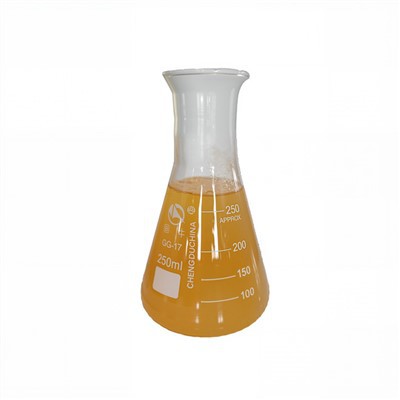
If you’re someone who’s dealing with part finishes, or you’ve been frustrated with abrasive compounds not getting the results you want, hit us up. We’ve been in this game long enough to help you figure out what grit, particle type, and mix will work for your specific project—no guesswork, no generic junk, just compounds tailored to what you need. We’re here to make sure your parts look and perform exactly how you want them to.
Barrel Polishing Machine References:
- ASM International. (2007). Surface Finish and Control in Manufacturing. ASM Handbook, Volume 9: Metallography and Microstructures.
- Tonn, J. (2019). Abrasive Finishing Processes for Metal Components. Journal of Manufacturing Processes.
- Kalpakjian, S., & Schmid, S. R. (2021). Manufacturing Processes for Engineering Materials (8th ed.). Pearson.
Dongguan Xindingsheng Intelligent Grinding Technology Co., Ltd.
Dongguan Xindingsheng Intelligent Grinding Technology Co., Ltd. is one of the most reliable abrasive compounds manufacturers and suppliers in China, also supports customized service. Please feel free to wholesale bulk high quality abrasive compounds in stock here from our factory. Contact us for pricelist.
Address: Room 101, Building 1, No. 73 Dahuangmei Road, Dalingshan Town, Dongguan City, Guangdong Province, China
E-mail: cndskj@126.com
WebSite: https://www.xdsfinishing.com/
