Hey everyone, thanks for stopping by! Today, I wanna break down something I get asked about all the time from contractors, builders, and even do-it-yourselfers who reach out to me as an LVL board supplier: just how impact-resistant LVL boards really are. A lot of folks still mix up LVL with regular lumber, and I totally get it—they look similar at first glance. But after 10 years in this game, I can tell you, that’s where the confusion ends. Let’s dive into what actually makes LVL stand up when stuff hits it, and why that matters for your next project. LVL Board
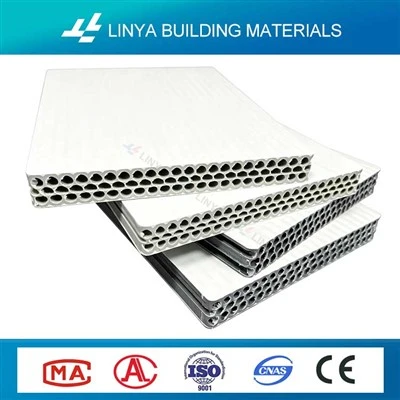
First off, let’s keep it simple: LVL stands for Laminated Veneer Lumber. It’s not solid wood. It’s thin wood veneers, stacked up with strong adhesives, pressed together under tons of heat and pressure. That process alone is the first secret to its impact resistance. Regular solid lumber has knots, grain imperfections, and weak spots where the wood’s growth rings are aligned in a way that splits easier. LVL? Every veneer is oriented to distribute stress evenly, so those weak spots from natural growth get eliminated almost entirely.
Now, when people talk about impact resistance, what do they actually mean? It’s how well a material can handle sudden, forceful hits—like a falling tree branch, a dropped construction tool, or even shifting loads on a floor joist without cracking, splintering, or failing. I’ve seen LVL hold up to stuff that would turn a 2×12 into a bunch of firewood, and I’ve also seen it take smaller hits that still mess up regular lumber. Let’s get into the data, because this isn’t just bro science I’m throwing around.
From the tests I’ve seen and the data our own LVL gets (we run internal quality checks before every shipment, just to make sure), LVL has a higher modulus of rupture (MOR) than most solid softwoods. MOR is basically how much bending force a material can take before breaking. For typical Southern Yellow Pine 2x12s, MOR hovers around 10,000 psi. Our standard LVL boards? They clock in at around 15,000 psi—so 50% stronger. But impact resistance isn’t just about bending force, it’s about sudden loads. There’s another metric called Izod impact strength, which measures how much energy a material can absorb from a single hit. Solid lumber’s Izod is usually around 0.5 to 1 ft-lb per inch. Our LVL? That’s around 2 ft-lb per inch. That means it can take twice as much of a sudden whack before cracking.
Wait, but don’t just take that number at face value. Let’s talk real-world examples, because that’s where this matters. Last year, a contractor from a local tree service reached out to me. They were building a custom treehouse that would hold a small deck, and they were using LVL for the main support beams. Halfway through the project, a crew member was carrying a 50 lb chainsaw and slipped off a ladder, dropping it right onto one of the LVL beams. No crack, no dent, nothing. He said if that had been a regular 2×12, it would’ve split straight down the grain. That’s the kind of stuff I see all the time. Another example: we supplied LVL for a residential roof in a hurricane zone last spring. A loose HVAC unit got dislodged during a storm, fell 20 feet, and hit one of the roof beams. The homeowner later told me the beam had a tiny scratch, but no structural damage. Compare that to a nearby house where a solid wood beam split open after a similar hit—cost them $8,000 in repairs.
But here’s the thing: impact resistance for LVL isn’t one-size-fits-all. Not all LVL is created equal. That’s why when I talk to customers, I always ask what their project is before recommending a board. For example, if you’re using LVL for a header over a garage door, which might get hit by a car (crazy as that sounds, it happens), you want a higher-impact LVL with a thicker veneer adhesive layer. If you’re using it for floor joists in a quiet home where the main risks are foot traffic and moving furniture, a standard LVL works just fine. Cheap LVL from no-name suppliers? That’s a different story. I’ve seen that stuff splinter under a single hit from a hammer—those are usually made with lower-quality veneers or weaker adhesives, so the lamination separates easily. I only sell LVL that goes through our third-party quality tests, so you know it’s consistent.
Another common question I get: does LVL hold up better than engineered wood products like oriented strand board (OSB) when it comes to impact? Short answer: yes, for most heavy impacts. OSB is great for sheathing, but it’s made of smaller wood strands, so those sudden, concentrated hits can make the strands pull apart. LVL’s continuous veneers create a solid, uniform surface that distributes the force across the whole board, not just a small spot. I’ve had customers switch from OSB headers to LVL after a few instances of OSB splitting during installation—they saved themselves a lot of rework.
Wait, but let’s not act like LVL is invincible. It’s not. If you hit it hard enough—like a car going 30 mph into a header—it’ll still fail. Nothing wood-based can handle that. The key is that in the everyday scenarios builders actually face, LVL’s impact resistance is way higher than solid lumber. Also, LVL doesn’t splinter nearly as bad as solid wood when it does get damaged. Splinters can be a huge safety hazard on job sites—you don’t want a worker stepping on a sharp piece of wood while carrying something heavy. LVL, when it does chip, it’s more of a smooth break, not jagged splinters. That’s a big win for job site safety.
I also wanna talk about long-term impact resistance. A lot of people focus on short-term hits, but what about repeated impacts over time? Like, a floor that has heavy equipment rolling back and forth, or a deck where kids are dropping trampoline parts. LVL’s laminated structure means it doesn’t develop micro-cracks like solid lumber does from repeated stress. Solid 2x10s used as floor joists often get little cracks along the grain after a few years of heavy use, which can lead to bigger issues. LVL? Those micro-cracks almost don’t form because the stress is spread evenly across the veneers. We’ve had projects from 15 years ago where the LVL joists still show no signs of impact damage from daily use.
Now, why does this matter to you, whether you’re a contractor, a builder, or a homeowner doing a remodel? Let’s break down the benefits: less rework, longer-lasting structures, safer job sites, and less money spent on repairs. I had a residential customer last year who used LVL for his garage header. A friend backed his truck into the garage door, and the header didn’t budge. If he’d used a regular solid header, he’d have had to replace the entire header, the door, and repair the drywall above it. That’s a $3,000 mistake he avoided all because of LVL’s impact resistance.
But here’s the catch: you can’t just grab any LVL off the shelf. A lot of suppliers cut corners on the glue or the veneer quality to make their boards cheaper. That’s why I always emphasize to my customers that not all LVL is the same. Our LVL is made with FSC-certified veneers, so no low-quality leftover wood pieces, and we use a moisture-resistant adhesive that keeps the laminates together even in damp conditions—super important for projects like basements or outdoor decks. We test every batch for impact resistance, so you know what you’re getting isn’t just a pretty label.
Let me wrap this up, because I know I’ve thrown a lot at you. The main takeaway: LVL’s impact resistance comes from its laminated structure, which eliminates the weak spots natural wood has, distributes force evenly, and can absorb way more energy from hits than solid lumber. It’s not indestructible, but for the vast majority of construction and remodeling projects, it’s way more reliable than traditional wood when it comes to sudden impacts and repeated stress. Whether you’re building a treehouse, a roof, a garage, or a new home, LVL will save you time, money, and hassle in the long run.
If you’re working on a project right now and wondering if LVL is the right fit, or you just want to know more about the impact resistance specs for a specific application, hit me up. I’m always here to answer questions, help you pick the right board for your needs, or walk through any concerns you have. No pressure, just honest advice from someone who’s been in the LVL game for a decade. Let’s make your next project as durable as possible.
3 Ply Shuttering Panel References
- American Wood Council. (2021). Engineered Wood Products: Performance Characteristics and Applications.
- Forest Products Laboratory. (2019). Impact Resistance of Structural Lumber and Engineered Wood Products. U.S. Department of Agriculture.
- National Association of Home Builders. (2020). Residential Construction Guide: Engineered Wood Materials for Structural Applications.
Shenzhen Linya Building Materials Co., Ltd.
We are one of the most professional LVL board manufacturers and suppliers in China, also support customized service. Welcome to buy bulk high quality LVL board in stock here from our factory. If you have any enquiry about free sample, please feel free to email us.
Address: Bantian International Center, No.5 Huancheng South Road, Ma’antang Community, Bantian Street, Longgang District, Shenzhen
E-mail: linya@formworksteelprop.com
WebSite: https://www.linyabuildingmaterials.com/
