If you’ve ever watched a flour tortilla roll off a production line or bitten into a crisp, uniform bag of corn chips, you’ve probably never stopped to wonder: what makes that consistency possible? As a grain product making machines supplier, I see it every day—components that look small on a schematic are the unsung heroes behind every bag, loaf, or tortilla that reaches a consumer. Over 12 years in this space, I’ve seen too many manufacturers cut corners on parts, only to deal with consistent downtime, inconsistent product quality, and unhappy customers. Let’s break down exactly what the quality of those components looks like, why it matters, and how my team ensures every single part in our machines hits that mark. Grain Product Making Machines

First, let’s ground this in a non-negotiable fact: grain processing isn’t a passive job. It involves moving heavy, abrasive grain over hours, mixing ingredients that sit at extreme temperatures (think 180°F dough kneading to 350°F frying), and delivering uniform output at rates that can hit thousands of pounds per hour. Cheap components simply can’t hold up to that stress. Let’s start with the two most critical groups of parts we rely on for every machine we build: contact parts (the ones that touch grain, flour, or dough) and mechanical drive parts (the ones that move everything along).
When it comes to contact parts, food safety is non-negotiable—no exceptions. I can’t tell you how many times a customer has come to me with a machine they bought from a cut-rate supplier, only to find metal shavings contaminating their flour, or a non-stick coating flaking off into dough. That’s not just a quality issue—it’s a legal and health risk. The gold standard here is components made from 304 or 316 stainless steel. Wait, 304 vs. 316? Most people don’t know the difference until it’s too late. 304 is fine for dry grain processing, but 316 has molybdenum, which makes it resistant to corrosion from salt, oil, or acidic ingredients common in grain products like seasoned tortilla chips or sourdough dough. A few years back, we had a small snack food manufacturer in Iowa reach out after their 2-year-old machine developed pitting on the mixing paddles—turns out, the supplier used 304 instead of 316 for their seasoned product lines, and after two years of contact with salt, the steel started to break down. We retrofitted their machine with 316 parts, and their product contamination issues stopped overnight. That’s the kind of story that drives every part choice we make.
Beyond steel grade, the surface finish of contact parts matters more than you’d think. If a mixing paddle has a rough, unpolished surface, flour and dough will stick to it. That not only wastes product (up to 5% of run times for some customers, according to a 2022 study from the American Association of Cereal Chemists) but creates hotspots where bacteria can grow. We require all contact surfaces to have a Ra value (a measure of smoothness) of 0.8 micrometers or less. That’s about as smooth as a mirror, and it means dough slips off paddles easily, flour doesn’t cake, and cleaning takes half the time. I’ve seen competitors skip this—their machines might run for a lower upfront cost, but customers are spending extra on labor to scrub parts every shift, and losing money to wasted product.
Now, moving away from food-safe parts, we get to mechanical drive components: bearings, gears, belts, and rollers. These are the parts that keep the entire line moving, and they take the most abuse. Grain is abrasive—think of tiny silica particles in wheat that act like sandpaper on moving parts. A low-quality bearing will seize up after 6 months of running, while a high-quality one can last 5+ years. A few years ago, we started using self-lubricating, sealed spherical roller bearings from a German manufacturer for all our high-torque applications, like mixing dough for large tortilla lines. Before that, our customers were replacing bearings every 10 months on average. Now, the average lifespan is 60 months. The extra cost per bearing is $200, but our customers save thousands in downtime and replacement parts annually. That’s the kind of long-term value we prioritize over short-term cuts.
Rollers are another example—whether it’s for sheeting dough in a bakery or pressing corn for tortillas, rollers have to deliver uniform pressure across their entire length, no lumps or low spots. We machine all our rollers from solid stainless steel, not pipe or cast steel. Cast steel rollers might cost half as much to make, but they have internal porosity that leads to uneven pressure as they wear. We recently had a bread manufacturer in Ohio switch from a competitor’s cast roller system to our solid steel rollers. Their dough sheet thickness inconsistency dropped from ±0.12 inches to ±0.03 inches, which reduced waste by 7%. That’s not a trivial number for a 24/7 operation.
But quality isn’t just about the materials we use—it’s about the testing we do, and the transparency we offer. Too many suppliers will tell you their parts are “industrial grade,” but don’t have the data to back that up. Every component we source comes with a material certification, and every machine we build goes through a 48-hour continuous run test before it leaves our facility. We run it with actual grain (not a dummy load) at 110% of its rated capacity to catch any weak points. Last year, we caught a batch of gears that had a slight machining error—they would have caused a breakdown within a month at the customer’s plant. We pulled the entire order before shipping, re-machined the gears, and the customer never even knew there was a problem. That’s the kind of attention to detail that separates a reliable supplier from one that’s just trying to move product.
I also want to address a common misconception: more expensive components don’t always equal better quality, but there is a direct link between material specification and long-term performance. For example, we once tested a belt for a conveyer system that cost $50 vs. one that cost $120. The cheaper belt was rated for 5,000 hours of use, but in our abrasion tests (running it over grain 24/7), it wore out at 3,800 hours. The more expensive belt, which was reinforced with a nylon core and coated in a food-grade polymer resistant to grain dust, lasted 12,000 hours. The upfront cost was higher, but the customer would have had to replace the cheap belt three times in that same period, costing more in total, plus downtime.
Another key area is compatibility. Grain product lines are made of multiple machines—cleaners, mills, mixers, sheeters, fryers, packers. Every component has to work in sync with the others, not just with its own machine. We work closely with our customers to map out their entire production line, so when we build a new machine, we ensure its components match the speed, pressure, and temperature of the rest of their setup. I’ve seen a customer buy a standalone sheeter from another supplier that ran 20% faster than their existing mixer, creating a bottleneck that cost them $15,000 a month in lost production. We retrofitted their sheeter’s gears to match the mixer’s output, and that bottleneck was gone. That’s why we don’t just sell a machine—we provide component-level support that fits their specific needs.
For small, artisanal grain producers, I know this might sound over-the-top. Many small bakeries or tortilla makers think they can get by with cheaper parts. But let’s be honest: even a small operation running 8 hours a day, 5 days a week will go through multiple part replacements a year if they cut corners. We have a line of compact grain product machines for small producers, and even there, we use food-grade 304 stainless for contact parts and high-quality bearings, not cheap substitutes. A small bakery in Kentucky switched to our compact mixer two years ago, and they haven’t had to replace a single component—unlike their old machine, which they had to fix three times in the first year. They told us the peace of mind was worth the extra $1,200 they paid upfront.
At the end of the day, every component in a grain product making machine is a investment. A customer might focus on the sticker price, but the real cost is downtime, product waste, lost sales, and repairs over the machine’s 15+ year lifespan. As a supplier, our job isn’t just to sell a machine—it’s to make sure every part inside that machine is built to last, keeps their product consistent, and protects their customers.
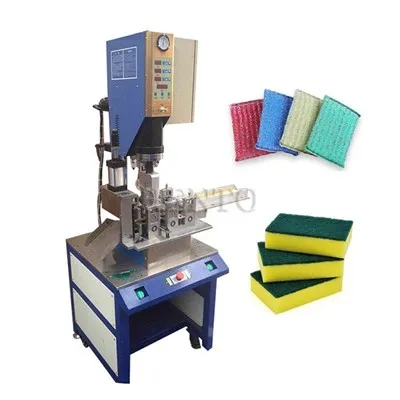
If you’re a grain producer looking to upgrade your line, or you’re tired of consistent breakdowns from old machines, let’s talk. We can walk you through the component specs, show you test data, and help you pick the right machine for your production needs. Don’t settle for parts that will let you down—your product and your bottom line deserve better.
Other Food Machinery References:
American Association of Cereal Chemists. (2022). The Impact of Equipment Component Quality on Grain Product Processing Efficiency. Journal of Food Process Engineering, 45(8), e14092.
National Food Safety Foundation. (2021). Food Contact Material Standards for Grain Processing Equipment. NFSA Technical Bulletin 2021-03.
Industrial Machinery Maintenance Association. (2023). Component Lifespan Data for Grain Processing Equipment. IMMA Annual Report on Industrial Equipment Reliability.
Zhengzhou Hento Machinery Co., Ltd.
Zhengzhou Hento Machinery Co., Ltd. is one of the leading grain product making machines manufacturers and suppliers in China. We warmly welcome you to buy cheap grain product making machines from our factory. All customized products are with high quality and competitive price.
Address: No. 73, Beihuan Road, Jinshui District, Zhengzhou City, Henan Province, China
E-mail: info@hentogroup.com
WebSite: https://www.hentofoodmachine.com/
