In the realm of electrical engineering and power management, DC contactors play a crucial role in controlling high – current DC circuits. These devices are widely used in various applications, from renewable energy systems like solar power plants and electric vehicles to industrial machinery and telecommunications equipment. As a DC contactor supplier, I’ve witnessed the growing demand for remote control capabilities of these contactors. In this blog post, I’ll share some insights on how to control a DC contactor remotely. DC Contactor

Understanding DC Contactors
Before delving into remote control methods, it’s essential to understand what a DC contactor is. A DC contactor is an electrically controlled switch designed to handle high DC currents. It consists of a coil and contacts. When a current passes through the coil, it creates a magnetic field that closes the contacts, allowing current to flow through the main circuit. When the coil current is interrupted, the magnetic field collapses, and the contacts open, cutting off the current.
Reasons for Remote Control
The need for remote control of DC contactors arises from several practical considerations. In large – scale industrial settings, operators may need to control contactors from a centralized control room to ensure safety and efficiency. In renewable energy systems, such as solar farms, remote control allows for quick response to changing weather conditions or system faults. Electric vehicles also benefit from remote contactor control for functions like battery charging management and safety shutdowns.
Remote Control Methods
1. Wired Remote Control
Wired remote control is one of the most straightforward methods. It involves using wires to connect the control signal source to the coil of the DC contactor.
- Relay – based Systems: In a relay – based wired remote control system, a low – voltage control signal is sent through a wire to a relay. The relay then switches the power to the coil of the DC contactor. This method is simple and reliable, and it can handle relatively high – power contactors. For example, in a factory, an operator can use a control panel connected to relays via wires to control multiple DC contactors in different parts of the facility.
- PLC – based Control: Programmable Logic Controllers (PLCs) are widely used in industrial automation. A PLC can be programmed to send control signals to DC contactors based on various input conditions, such as sensor readings or operator commands. The PLC is connected to the contactor coils through wires, and it can provide precise and flexible control. For instance, in a wastewater treatment plant, a PLC can control DC contactors to start and stop pumps based on the water level in the tanks.
2. Wireless Remote Control
Wireless remote control offers greater flexibility, especially in applications where wiring is difficult or expensive.
- Radio Frequency (RF) Remote Control: RF remote control systems use radio waves to transmit control signals. A transmitter sends a coded signal to a receiver connected to the DC contactor coil. These systems are easy to install and can operate over relatively long distances. For example, in a large outdoor solar power plant, an operator can use an RF remote control to switch individual DC contactors during maintenance or in case of system malfunctions. However, RF signals can be affected by interference from other electronic devices or environmental factors.
- Bluetooth and Wi – Fi Remote Control: Bluetooth and Wi – Fi are popular wireless communication technologies. Bluetooth is suitable for short – range applications, such as controlling a DC contactor in a small device or a local area. Wi – Fi, on the other hand, can provide longer – range and more stable connections, making it ideal for larger systems or those integrated with the Internet of Things (IoT). For example, in a smart home energy management system, a DC contactor controlling the battery charging circuit can be controlled via a smartphone app using Wi – Fi.
3. Internet – based Remote Control
In the era of the Internet of Things (IoT), Internet – based remote control of DC contactors has become increasingly popular.
- Cloud – based Platforms: Cloud – based platforms allow users to control DC contactors from anywhere in the world using an internet – connected device, such as a smartphone, tablet, or computer. The contactor is connected to a gateway device that communicates with the cloud platform. The user can then access the platform through a web browser or a dedicated app to send control commands. For example, a solar power system owner can monitor and control the DC contactors in their solar panels from their office while on a business trip.
- MQTT Protocol: The Message Queuing Telemetry Transport (MQTT) protocol is widely used in IoT applications for its lightweight and efficient communication. A DC contactor can be integrated with an MQTT – enabled device, which publishes its status and subscribes to control messages from a server. This allows for real – time monitoring and control of the contactor.
Considerations for Remote Control
When implementing a remote control system for DC contactors, several factors need to be considered.
- Safety: Safety is of utmost importance. The remote control system should have proper isolation and protection mechanisms to prevent electrical hazards. For example, in high – voltage applications, the control signals should be isolated from the main circuit to avoid short – circuits and electrical shocks.
- Reliability: The remote control system should be reliable to ensure continuous operation of the DC contactor. This includes using high – quality components, proper signal transmission methods, and backup power supplies. For instance, in a critical industrial process, a redundant control system may be required to prevent system failures.
- Compatibility: The remote control system should be compatible with the DC contactor. This includes considering the coil voltage, current requirements, and control signal specifications of the contactor. For example, if a contactor has a 12V coil, the control system should be able to provide a suitable 12V control signal.
Our Role as a DC Contactor Supplier
As a DC contactor supplier, we understand the diverse needs of our customers when it comes to remote control. We offer a wide range of DC contactors that are designed to be easily integrated with various remote control systems. Our contactors are built with high – quality materials and advanced manufacturing processes to ensure reliability and safety.
We also provide technical support to our customers. Whether you need help in choosing the right contactor for your remote – control application, or you have questions about the integration of the contactor with a specific control system, our team of experts is ready to assist you. We can offer detailed product specifications, installation guides, and troubleshooting advice.
Conclusion
Remote control of DC contactors is becoming increasingly important in modern electrical systems. Whether it’s for industrial automation, renewable energy applications, or smart home devices, there are various methods available for remote control, including wired, wireless, and Internet – based methods. When implementing a remote control system, considerations such as safety, reliability, and compatibility are crucial.
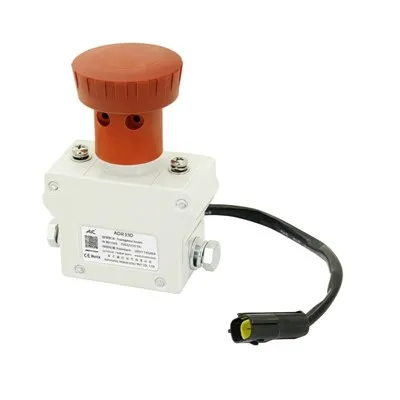
Emergency Stop Button As a trusted DC contactor supplier, we are committed to providing high – quality products and excellent technical support to meet your remote – control needs. If you are looking for a reliable DC contactor for your next project or need to upgrade your existing system with remote – control capabilities, we encourage you to contact us. Our sales team is eager to discuss your requirements and provide you with the best solutions. Let’s work together to achieve efficient and safe power management in your applications.
References
- Dorf, R. C., & Bishop, R. H. (2016). Modern Control Systems. Pearson.
- Grob, B. (2007). Basic Electronics. McGraw – Hill.
- Tanenbaum, A. S., & Wetherall, D. (2011). Computer Networks. Pearson.
Zhejiang Aokai Electric Co., Ltd.
Zhejiang Aokai Electric Co., Ltd. is your best source for the high quality dc contactor with CE certification. We have been one of the largest dc contactor manufacturers and suppliers in China since our establishment in 2008. Welcome to contact our factory for the products.
Address: No.166 Xiangbai Road, Huxi Industrial, Yueqing, China.
E-mail: akcontactor@aokai.com
WebSite: https://www.ak-contactor.com/
